
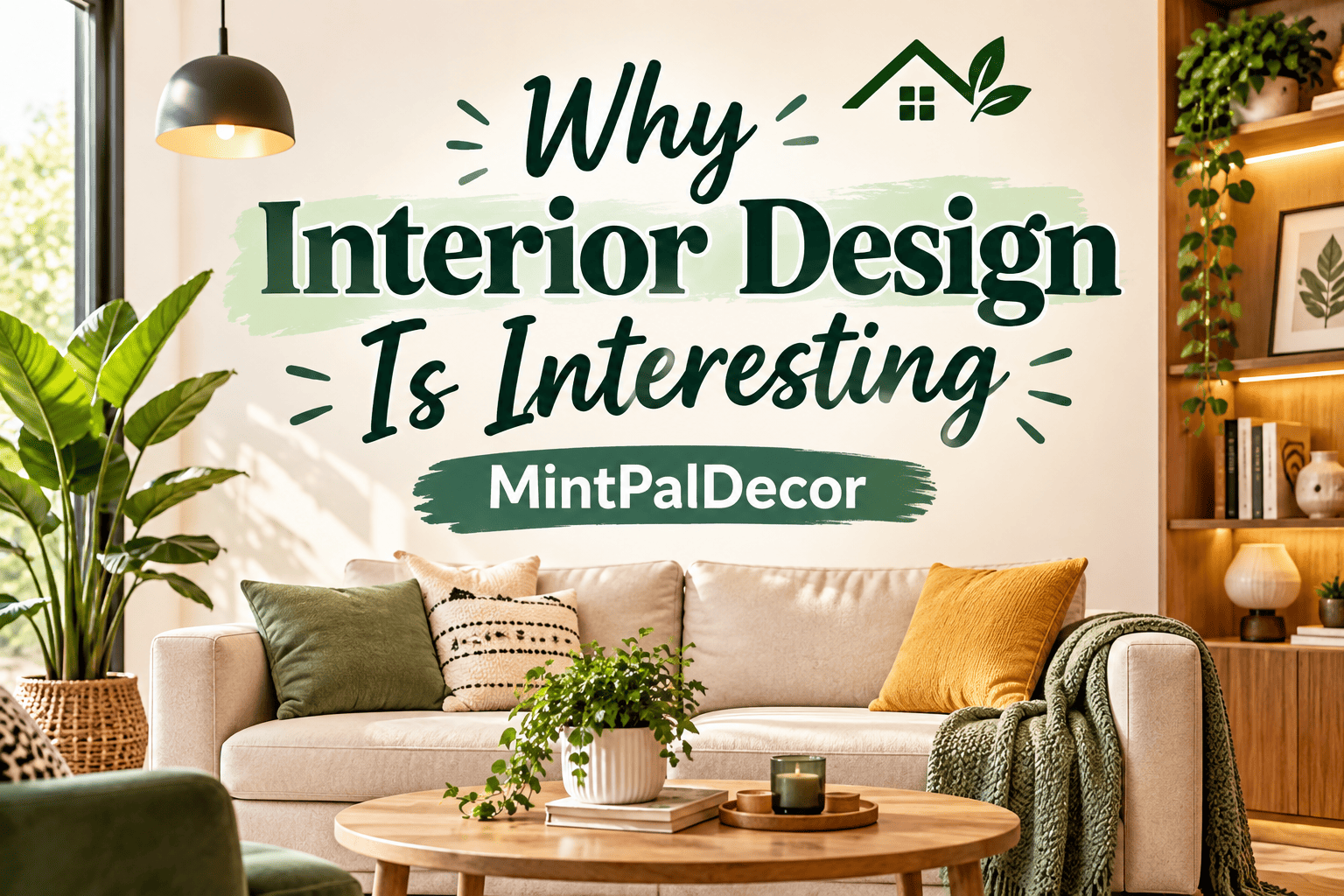
Why interior design is interesting comes down to its unique combination of creativity, functionality, psychology, personal expression, color, lighting, materials, and space planning. Interior design allows an ordinary room to become a reflection of the people who use it. From choosing an unexpected color combination to arranging furniture, layering textures, or transforming an unused corner, every decision can change how a space looks and feels. That endless freedom to experiment is what makes interior design fascinating.
Introduction
Why can one room feel instantly welcoming while another feels cold or forgettable? Often, the answer is interior design.
Interior design is much more than choosing attractive furniture or decorating walls. It is the process of shaping a space around the way people live, work, relax, entertain, and express themselves. A successful interior brings together beauty and practicality so naturally that the design can feel effortless.
What makes interior design particularly interesting is that there is rarely one correct solution. The same cozy living room can become minimalist, colorful, rustic, luxurious, artistic, or eclectic depending on the choices made. Change the lighting, move the furniture, introduce a new texture, or paint one wall, and the entire character of the room can shift.
That makes interior design part art, part problem-solving, and part personal storytelling. You are not simply filling a room; you are deciding what you want that room to communicate and how you want people to experience it.
Why Interior Design Is Interesting
1. An Empty Room Is a Blank Canvas
One of the most exciting parts of interior design is starting with an empty space. A blank room may look unfinished, but it also represents unlimited possibilities.
You can decide where the focal point should be, how people will move through the room, what colors will dominate, and which elements deserve attention. Instead of seeing four empty walls, a designer sees potential.
This creative freedom makes every project different. Even rooms with identical dimensions can develop completely different personalities.
2. Interior Design Tells a Story
A home can communicate a story without using a single word.
A collection of travel souvenirs may suggest adventure. Vintage furniture can create a sense of history. Handmade ceramics can introduce craftsmanship, while family photographs can make a room feel personal.
The most interesting interiors often contain details that reveal something about the people who live there. Rather than looking like a showroom, the space feels collected, lived-in, and meaningful.
3. Color Can Change the Entire Atmosphere
Color is one of the most powerful tools in interior decorating because it influences the visual character of a room immediately.
Soft greens and blues can create a relaxed atmosphere, while terracotta, ochre, and warm neutrals can add warmth. Darker shades can introduce drama, whereas lighter colors can help a room appear more open and airy.
The interesting part is that color does not need to cover every wall to make an impact. A painted ceiling, colorful chair, patterned rug, or single accent wall can completely redirect attention.
4. Furniture Placement Is a Creative Puzzle
Furniture arrangement combines creativity with practical thinking.
A beautiful sofa may look impressive, but if it blocks a walkway or makes conversation difficult, the room will not function well. Interior design requires thinking about proportion, scale, circulation, comfort, and purpose at the same time.
Moving a sofa away from the wall, placing two chairs opposite it, or creating a small reading zone can change how the entire room works.
This problem-solving aspect is one reason interior design remains interesting even after the decorating process begins.
5. Lighting Can Transform the Mood
Lighting does much more than make a room visible.
Ambient lighting provides general illumination, task lighting supports activities such as reading or cooking, and accent lighting draws attention to artwork, shelves, architectural details, or decorative objects.
Layering these different sources allows a room to change throughout the day. Bright lighting can support productivity, while softer lamps can create a relaxed evening atmosphere.
Natural light also plays an important role. Window placement, curtains, mirrors, and reflective surfaces can all influence how daylight moves through an interior.
6. Texture Adds Depth
Imagine a room where every surface is smooth and every material looks identical. It may feel visually flat.
Texture solves that problem.
Wood introduces natural warmth. Linen adds softness. Wool brings coziness. Rattan creates a woven, organic quality, while metal and glass can provide cleaner contrast.
The most appealing interiors often combine several textures without becoming visually chaotic. A textured rug beneath a smooth coffee table, for example, creates subtle contrast without requiring bold colors.
7. Design Can Reflect Personality
One of the most personal aspects of interior design is the ability to express identity through a physical environment.
Some people prefer clean lines and minimal decoration. Others enjoy layered textiles, vintage objects, bold artwork, or natural materials.
There is no requirement to follow one style perfectly. A home can combine modern furniture with antique pieces, traditional details with contemporary artwork, or earthy materials with sophisticated lighting.
Your interior style becomes interesting when it feels connected to the person living there.
8. Small Details Can Change a Room
Not every transformation requires expensive furniture.
A new cushion, curtain, mirror, lamp, plant, artwork, or decorative object can alter the balance of a room. These smaller elements create the final visual layers that make a space feel finished.
For example, a neutral sofa can look completely different when paired with patterned cushions, a textured throw, a large rug, and warm lighting.
This demonstrates an important design principle: impact does not always come from size or price; sometimes it comes from placement and context.
9. Mixing Old and New Creates Character
Perfectly coordinated furniture can sometimes make a room feel predictable. Mixing different periods introduces contrast and personality.
A contemporary sofa can work beautifully with a vintage side table. Modern artwork can sit above an older wooden console. A traditional rug can soften an otherwise minimalist room.
The goal is not to make everything look unrelated. Repeating a color, material, shape, or finish can connect different pieces and create visual harmony.
10. Patterns Create Visual Energy
Patterns give interiors rhythm and movement.
Stripes can make a room feel structured. Florals can introduce softness. Geometric designs can create a contemporary feel, while organic motifs can bring a natural quality.
The key is scale. If every pattern is equally bold, the room can become overwhelming. Combining a large-scale pattern with smaller, quieter motifs usually creates a more balanced composition.
20 Ideas That Inspire Interior Design Creativity
11. Create a Statement Wall
A statement wall can become the visual anchor of a room without requiring a complete redesign.
Try dramatic paint, wallpaper, wood slats, decorative panels, oversized artwork, or a textured finish. In a neutral room, one distinctive wall can provide the personality that the space was missing.
12. Build a Personal Gallery Wall
A gallery wall does not have to consist entirely of matching artwork.
Combine photographs, illustrations, mirrors, typography, small objects, and meaningful pieces. Before hanging everything, arrange the pieces on the floor to test different compositions.
Keeping one connecting element—such as a color family, frame finish, or theme—can prevent the collection from feeling random.
13. Use Mirrors as Design Features
Mirrors are both practical and decorative.
A large mirror opposite or near a window can reflect daylight and create a greater sense of openness. Unusual shapes can also turn mirrors into artwork.
Instead of automatically placing a mirror above a console, consider an oversized floor mirror, a collection of smaller mirrors, or an arched design that introduces a different architectural shape.
14. Try an Unexpected Color Combination
Creativity often begins where predictable choices end.
Consider combinations such as deep green with dusty pink, navy with warm ochre, charcoal with cream, or terracotta with soft blue.
You do not need to repaint the entire room. Start with one accent chair, artwork, rug, or group of accessories and see how the colors interact.
15. Layer Your Lighting
Instead of depending on a single ceiling fixture, combine several types of lighting.
Use overhead lighting for general illumination, a floor lamp beside seating, a table lamp on a console, and accent lighting around artwork or shelves.
Different heights of light create depth and make a room feel more dynamic.
16. Treat the Ceiling as the Fifth Wall
The ceiling is often the most neglected surface in a room.
A subtle paint color, decorative molding, wood detail, wallpaper, or statement pendant can make it part of the overall design.
This technique is particularly effective when the rest of the room is simple because the ceiling becomes an unexpected feature.
17. Turn an Unused Corner Into a Destination
An empty corner does not automatically need a large piece of furniture.
Create a reading nook with a comfortable chair, small table, floor lamp, and a few books. In a bedroom decor, the same concept can become a quiet dressing or relaxation area.
Giving an overlooked space a purpose makes the entire room feel more intentional.
18. Style Open Shelves Like a Collection
Open shelving offers an opportunity to display personality rather than simply store objects.
Mix books, plants, ceramics, framed artwork, baskets, and sculptural pieces. Vary the heights of objects and leave some empty space so the shelves can breathe.
Think of the shelves as a rotating collection rather than a place where every available object must be displayed.
19. Combine Contrasting Materials
Material contrast creates richness without relying on excessive decoration.
Try warm wood with cool metal, natural stone with soft fabric, smooth glass with woven rattan, or matte surfaces beside subtle glossy finishes.
These combinations give the eye different surfaces to explore and can make even a simple room feel thoughtfully designed.
20. Build the Room Around a Focal Point
A room becomes easier to design when you know what should attract attention first.
The focal point might be a fireplace, oversized artwork, statement sofa, beautiful window, architectural feature, or dramatic light fixture.
Once the anchor is established, supporting furniture and accessories can be arranged to reinforce it rather than compete with it.
How Interior Design Balances Beauty and Function
The most attractive room is not necessarily the most successful one.
A well-designed interior should work for real life. Furniture needs to be comfortable, walkways need to remain practical, storage should be accessible, and decorative choices should suit the people using the space.
For example, a family room may require durable fabrics and easy storage. A home office needs suitable task lighting and an efficient desk arrangement. A small bedroom benefits from furniture that serves more than one purpose.
This combination of aesthetics and usability is what separates thoughtful interior design from decoration alone.
How to Discover Your Own Interior Design Style
Finding your personal style does not mean choosing one category and following it rigidly.
Start by collecting rooms that consistently attract your attention. Look for patterns in those images. Perhaps you repeatedly choose warm wood, neutral walls, curved furniture, vintage accessories, or dramatic lighting.
Then build a simple design direction around those preferences.
Choose a foundation color palette, identify two or three favorite materials, select practical furniture, and gradually introduce personal accessories.
Most importantly, do not copy an entire room. Borrow the principle behind it and reinterpret that idea for your own space.
How to Make Interior Design More Creative
Creativity becomes easier when you allow yourself to experiment.
Rearrange furniture before purchasing anything new. Move artwork to a different wall. Test a bold accessory against a neutral background. Mix materials that you would normally keep separate.
You can also create a small mood board using colors, fabrics, furniture shapes, artwork, and lighting ideas. This helps reveal whether your choices work together before you commit to a larger change.
Another useful approach is to leave some empty space. A room does not need decoration on every surface. Negative space allows important pieces to stand out and gives the overall composition breathing room.
Common Interior Design Mistakes to Avoid
Even creative ideas can lose their impact when the room lacks balance.
Avoid using too many unrelated colors without a connecting element. Be careful with furniture that is too large or too small for the room. Do not depend entirely on one overhead light, and avoid filling every empty surface with accessories.
Another common mistake is prioritizing appearance over comfort. A beautiful chair that nobody wants to sit in is not a successful design choice.
Finally, avoid making everything perfectly coordinated. Repetition creates harmony, but controlled contrast gives a room personality.
Frequently Asked Questions
Why is interior design interesting?
Interior design is interesting because it combines creativity, functionality, personal expression, color, materials, lighting, and spatial planning. Every room presents a different design challenge and offers multiple possible solutions.
What makes interior design creative?
The ability to combine colors, textures, furniture, patterns, lighting, artwork, and architectural elements in different ways makes interior design highly creative.
Is interior design an art or a science?
It combines aspects of both. The artistic side involves aesthetics, creativity, and personal expression, while the practical side involves measurements, proportions, lighting, space planning, ergonomics, and functionality.
Why do people enjoy interior design?
Many people enjoy interior design because it provides a way to transform their surroundings and create spaces that match their personality, lifestyle, and preferences.
How does interior design affect a room?
Design choices can influence the room’s visual balance, atmosphere, functionality, perceived spaciousness, and overall character.
How can beginners become more creative with interior design?
Beginners can start by experimenting with furniture placement, color accents, lighting, artwork, plants, and textures. Small changes provide an easy way to learn what combinations work.
Can interior design reflect personality?
Yes. Furniture choices, colors, artwork, materials, collections, and decorative objects can all contribute to a space that feels personal.
What are the most important elements of interior design?
Color, lighting, furniture, texture, proportion, layout, materials, and personal details are among the fundamental elements that shape an interior.
Conclusion
Why interior design is interesting mintpaldecor becomes clear when you look beyond decoration. It is a creative process that combines beauty with problem-solving and turns everyday surroundings into meaningful experiences.
A room can change through color, lighting, furniture placement, texture, pattern, artwork, or even one unexpected object. You can mix old and new pieces, transform an unused corner, experiment with materials, or make the ceiling part of the design.
The most memorable interiors are not necessarily the most expensive or perfectly coordinated. They are spaces where function, creativity, and personality work together.
That is what makes interior design so fascinating: there is always another combination to try, another corner to transform, and another way to make an ordinary space feel uniquely yours.

Leave a Reply