
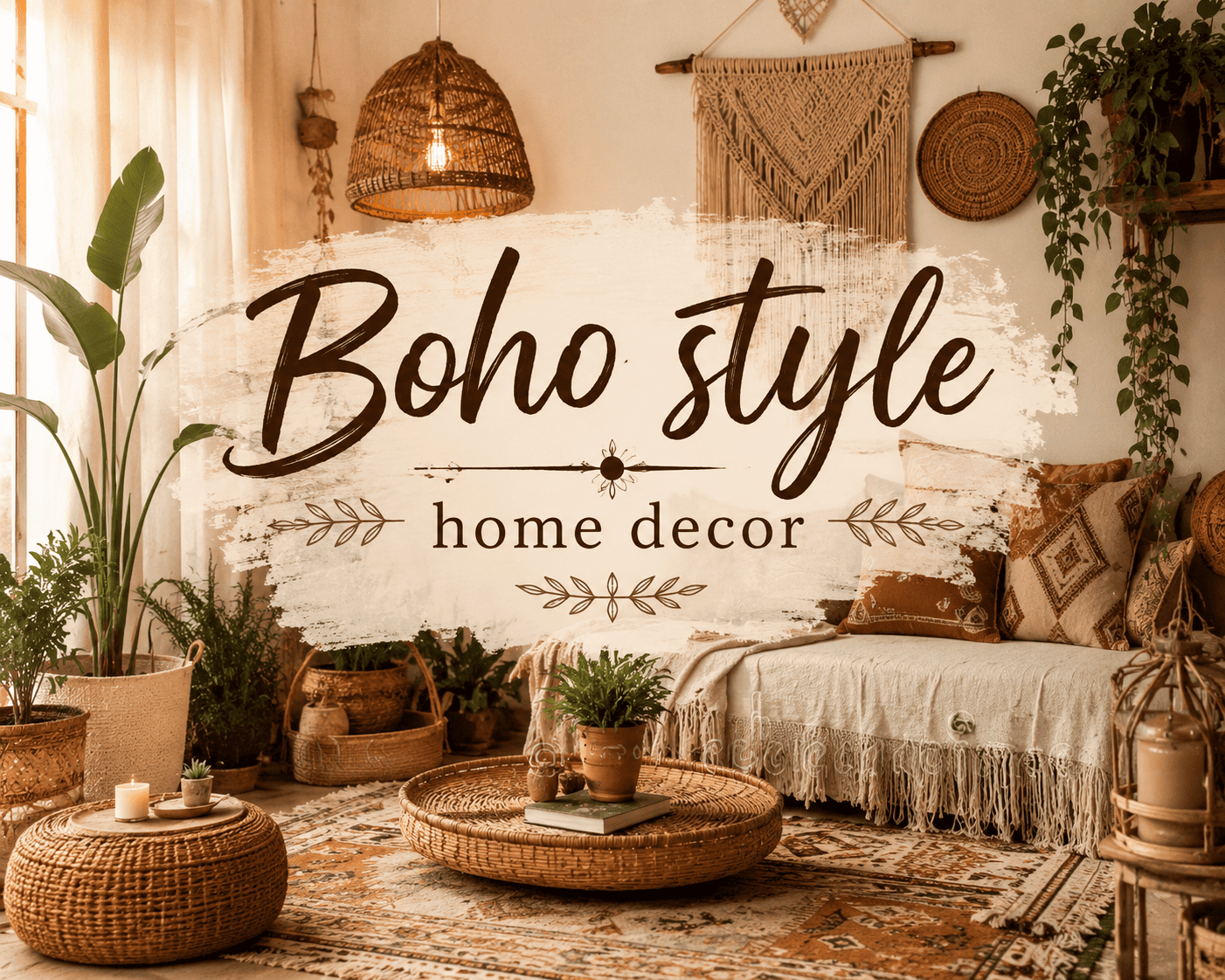
Boho style home decor combines earthy colors, natural materials, layered textiles, vintage or handmade pieces, organic shapes, greenery, mixed patterns, and personal objects. The secret is not matching everything but creating visual connections through repeated colors, textures, and materials while leaving enough negative space to keep the room relaxed.
Introduction
The best boho homes do not look like they were decorated in one afternoon. They feel collected, layered, personal, and slightly unexpected. A vintage chair sits beside a modern sofa. Handmade pottery shares a shelf with well-loved books. Woven textures soften raw wood, while earthy colors connect everything without making the room feel overly coordinated.
That is the beauty of boho style home decor. It is less about following a strict design formula and more about creating a space that feels relaxed and genuinely lived in.
Modern boho decor has also moved beyond the predictable combination of macramé, rattan, and endless beige. Today’s version can be moody, sophisticated, colorful, minimalist, rustic, or eclectic. The key is knowing how to combine natural materials, meaningful objects, layered textures, and imperfect details without turning the room into visual clutter.
If you want a home with warmth and personality rather than a showroom-perfect appearance, these 20 beautifully imperfect boho decorating ideas are worth stealing.
1. Start With One Piece That Has a Story
Instead of buying an entire room as a matching collection, begin with one piece that immediately gives the space character.
It could be a weathered wooden cabinet, an antique mirror, a vintage armchair, a hand-carved stool, or even artwork discovered at a secondhand shop. Let that piece influence the colors and textures you introduce around it.
This approach works particularly well in bohemian interiors because boho style is supposed to feel collected over time. When every object looks brand new and perfectly coordinated, the room can lose that relaxed personality.
Design tip: Choose one unusual piece first, then repeat one or two of its colors elsewhere in the room to create cohesion.
2. Make Imperfection Part of the Design
Boho interiors do not need flawless finishes. In fact, small imperfections can make a space feel more authentic.
Think distressed wood, slightly uneven ceramics, aged metal, handmade pottery, woven baskets with natural variations, and textiles that look softer with age. These details introduce the sense that the room has a history.
The trick is intentionality. One weathered piece can look charming; ten unrelated worn-out pieces can simply look neglected.
Pair an aged object with something cleaner and more contemporary. The contrast makes both pieces more interesting.
3. Build a Color Palette That Feels Naturally Collected
A successful boho color palette usually starts with warm neutrals such as cream, sand, oatmeal, beige, or warm white. From there, introduce earthy accent colors including terracotta, rust, olive, tobacco, camel, clay, or chocolate brown.
For a more contemporary interpretation, add a controlled dose of burgundy, dusty pink, charcoal, mustard, or deep green.
Rather than assigning every color to a separate object, repeat key shades throughout the room. A terracotta cushion can echo the color of a ceramic vase, while olive curtains can connect with greenery and artwork.
That repetition makes an eclectic room feel intentional instead of random.
4. Pair Rough Textures With Soft Ones
Texture is one of the easiest ways to make boho home decor feel rich without adding more furniture or accessories.
Combine rough materials such as rattan, raw wood, jute, stone, and woven fibers with softer elements like linen, cotton, velvet, wool, or chunky knits.
Imagine a rough wooden coffee table surrounded by a soft linen sofa, or a woven rattan chair topped with a plush cushion. The contrast creates depth because the eye experiences different surfaces rather than one repetitive texture.
This technique is especially useful in neutral rooms where color contrast is limited.
5. Break the Matching-Furniture Habit
A boho room rarely needs every piece of furniture to come from the same collection.
Try pairing a modern sofa with a vintage side table, mismatched bedside tables, or dining chairs in slightly different styles. What keeps the arrangement from looking chaotic is a shared visual element.
That connection might be similar wood tones, a repeated color, matching upholstery, or related shapes.
The result feels more personal and less like a furniture showroom. It also makes decorating easier because you can gradually add pieces instead of replacing everything at once.
6. Turn a Blank Wall Into a Collected Display
Forget the perfectly symmetrical gallery wall if it does not suit your personality.
A more relaxed boho wall can combine framed artwork, photographs, woven baskets, small mirrors, textiles, sketches, and found objects. Vary the sizes and shapes while keeping a loose visual relationship between them.
You can also mix frame finishes instead of using identical frames.
The goal is to make the wall feel like a collection that developed naturally. Leave small areas of empty wall between groupings so the display has room to breathe.
7. Choose a Rug With Character
A rug can determine the entire mood of a boho room, so do not automatically choose the safest neutral option.
Faded vintage patterns, muted geometric designs, tribal-inspired motifs, natural jute, distressed finishes, and textured flatweaves can all work beautifully.
Layering rugs is another way to create depth. Place a larger neutral or natural-fiber rug underneath a smaller patterned rug, making sure the colors share at least one visual connection.
The imperfect appearance of a faded or slightly irregular rug often works better with boho interiors than a perfectly pristine design.
8. Make the Sofa Look Lived-In
The perfect boho sofa should look comfortable enough that someone actually wants to sit on it.
Layer cushions in different shapes, fabrics, and patterns rather than using a perfectly symmetrical arrangement. Add a loosely draped throw instead of folding it with showroom precision.
Keep the look controlled by repeating one or two colors. For example, cream, rust, and olive can appear across cushions, artwork, and nearby accessories.
This creates a relaxed atmosphere without making the sofa look messy.
9. Don’t Forget the Ceiling
One of the most overlooked opportunities in home decorating is the ceiling.
A woven pendant, sculptural light fixture, rattan shade, or carefully placed hanging plant can instantly strengthen a boho interior. Lighting is particularly important because warm illumination brings out the richness of natural textures in the evening.
Instead of depending entirely on one ceiling fixture, combine overhead lighting with table lamps, floor lamps, and smaller accent lights.
This creates layers of light and gives the room a softer, more intimate atmosphere.
10. Give Forgotten Corners a Purpose
Every home has awkward corners that are difficult to decorate. Rather than filling them with random accessories, create a small moment with a purpose.
A vintage chair and floor lamp can become a reading corner. A narrow wooden table can create a tiny display area. A tall plant can soften an empty architectural corner.
The important thing is proportion. A small corner does not need a large collection of objects. One chair, one lamp, and one plant can sometimes create more impact than ten decorative pieces.
11. Treat Plants Like Sculptural Decor
Plants are a natural match for bohemian interiors, but placing them randomly around the room can make the space feel cluttered.
Instead, think about shape, height, and movement.
Use one larger plant to create vertical interest, trailing greenery to soften shelves, and smaller plants to fill selected gaps. Choose pots made from terracotta, ceramic, stone, or woven materials so the containers become part of the overall design.
Plants should enhance the composition rather than compete with every other decorative element.
12. Create a Bedroom That Feels Like a Retreat
A boho bedroom should feel relaxed rather than overly styled.
Start with breathable bedding in linen, cotton, or soft neutral fabrics. Add a textured blanket, a few patterned cushions, natural wood, and warm bedside lighting.
A low wooden bench, woven pendant, vintage mirror, or handmade ceramic lamp can add character without overwhelming the room.
Keep the color palette calm, but introduce one earthy accent such as rust, olive, caramel, or deep brown to prevent the bedroom from feeling flat.
The result should feel like a private retreat rather than a themed bedroom.
13. Add a Little Darkness for Sophistication
Boho does not have to mean bright, pale, and overwhelmingly beige.
Dark shades can give earthy interiors a more sophisticated personality. Chocolate brown, charcoal, black, deep olive, and burgundy work especially well as accents.
You might use a dark wooden cabinet, black picture frames, a deep brown leather chair, or charcoal cushions.
Because these colors are visually heavy, use them strategically. A few darker elements can ground a light room without making it feel gloomy.
14. Make Handmade Pieces the Luxury Detail
Mass-produced accessories can fill a room quickly, but handmade objects give boho interiors something more valuable: individuality.
Look for artisan pottery, handwoven baskets, carved wooden objects, woven wall hangings, imperfect ceramics, and textiles with visible craftsmanship.
Their slight variations are exactly what make them interesting.
You do not need dozens of handmade pieces. One beautifully crafted vase or sculptural ceramic object can become more memorable than an entire shelf of generic decorations.
15. Choose Mirrors for Shape, Not Just Function
Mirrors are useful for reflecting light and visually expanding a room, but in boho interiors their frames can be decorative focal points.
Consider arched mirrors, irregular organic shapes, antique finishes, carved wooden frames, or woven borders.
A large statement mirror can balance a textured wall, while several smaller mirrors can create an eclectic display.
Pay attention to what the mirror reflects. Positioning it opposite a window, plant, artwork, or attractive architectural feature can make the entire room feel more layered.
16. Style Shelves Like a Personal Collection
Boho shelving should never look like a shop display where every object is positioned at the same height.
Create small groups instead. Combine books with ceramics, artwork with plants, and woven objects with personal treasures. Vary the heights and leave intentional gaps between groups.
A useful rule is to alternate visual weight. If one shelf has a large object, keep the neighboring area lighter.
This creates rhythm and prevents the shelves from becoming an overwhelming wall of accessories.
17. Let One Pattern Steal the Attention
Boho interiors can handle pattern, but that does not mean every surface needs a print.
Choose one major pattern as the visual star. It might be an expressive rug, patterned accent chair, embroidered textile, or bold piece of artwork.
Then support it with quieter textures and solid colors.
This works because the eye gets one clear focal point. The rest of the room becomes a supporting cast rather than competing for attention.
18. Give the Dining Area a More Relaxed Personality
A boho dining room does not need a formal matching table and chair set.
A natural wood table paired with slightly different chairs can immediately create a more relaxed atmosphere. Add linen napkins, handmade ceramics, a woven pendant, and a simple centerpiece made from branches or greenery.
The imperfections of handmade dinnerware are particularly attractive here because they make everyday meals feel less formal.
The objective is not to make the dining area look unfinished; it is to make it feel welcoming.
19. Use Negative Space to Control the Clutter
One of the most important lessons in boho interior design is that more decoration does not always mean more style.
Negative space gives layered elements room to stand out.
If a coffee table already has a large vase and several books, you may not need five more accessories. If a gallery wall is visually busy, keep the furniture beneath it simpler.
Think of empty space as part of the composition. It creates contrast, improves visual balance, and makes carefully chosen objects feel more valuable.
20. Finish With Something Only You Could Choose
The final layer of a boho home should be personal.
Display photographs, travel finds, inherited objects, favorite books, handmade gifts, artwork, or anything that carries a memory. These pieces are often more powerful than expensive accessories because they give the room a story.
This is ultimately what separates authentic boho decorating from simply buying boho-style products.
Your home does not need to look like anyone else’s. It needs to look like it belongs to you.
How to Make Boho Decor Look Expensive Without Looking Cluttered
The secret is editing.
Choose a limited group of colors and repeat them throughout the room. Mix materials rather than collecting dozens of accessories. Create contrast between rough and soft textures, old and new furniture, and light and dark accents.
Most importantly, establish visual hierarchy. Every room should have a few elements that attract attention first, while smaller details support them.
When everything is competing for attention, nothing feels special. When every piece has breathing room, even affordable decor can look sophisticated.
Common Boho Decorating Mistakes to Avoid
The biggest mistake is assuming that boho means putting as many decorative objects as possible into one room.
Too much beige can make a space look flat, while too many patterns can make it visually exhausting. Filling every shelf removes the relaxed feeling that makes boho interiors attractive. Using identical rattan furniture throughout the room can also make the style feel overly themed.
Another common mistake is buying accessories simply because they are labeled “boho.” Authentic bohemian style comes from the relationship between pieces, not from a shopping category.
Choose objects because they contribute color, texture, function, history, or personality.
Frequently Asked Questions
What is boho style home decor?
Boho style home decor is a relaxed and eclectic approach that combines earthy colors, natural materials, layered textiles, vintage pieces, handmade objects, plants, and personal accessories. It focuses on creating a warm, individual space rather than a perfectly coordinated interior.
What colors are best for boho home decor?
Popular boho colors include warm white, cream, beige, sand, terracotta, rust, olive, caramel, tobacco, brown, and muted pink. Deeper shades such as charcoal, burgundy, and deep green can be added for a more modern and sophisticated look.
How can I make my home boho without making it cluttered?
Use fewer but more meaningful pieces, repeat a small number of colors, combine different textures, and leave intentional negative space. A boho room should feel layered but still allow the eye somewhere to rest.
Final Thoughts
The most beautiful boho style home decor does not come from following a perfect checklist. It comes from knowing when to mix, when to contrast, and when to stop.
Let an old piece sit beside something modern. Pair rough textures with soft fabrics. Introduce earthy colors without being afraid of darker accents. Leave some spaces deliberately empty. Most importantly, surround yourself with objects that have meaning rather than simply filling the room.
Don’t try to make everything match. Make everything connect.
That is what turns boho decor from a recognizable style into a home that feels warm, collected, imperfect, and completely your own.

Leave a Reply