
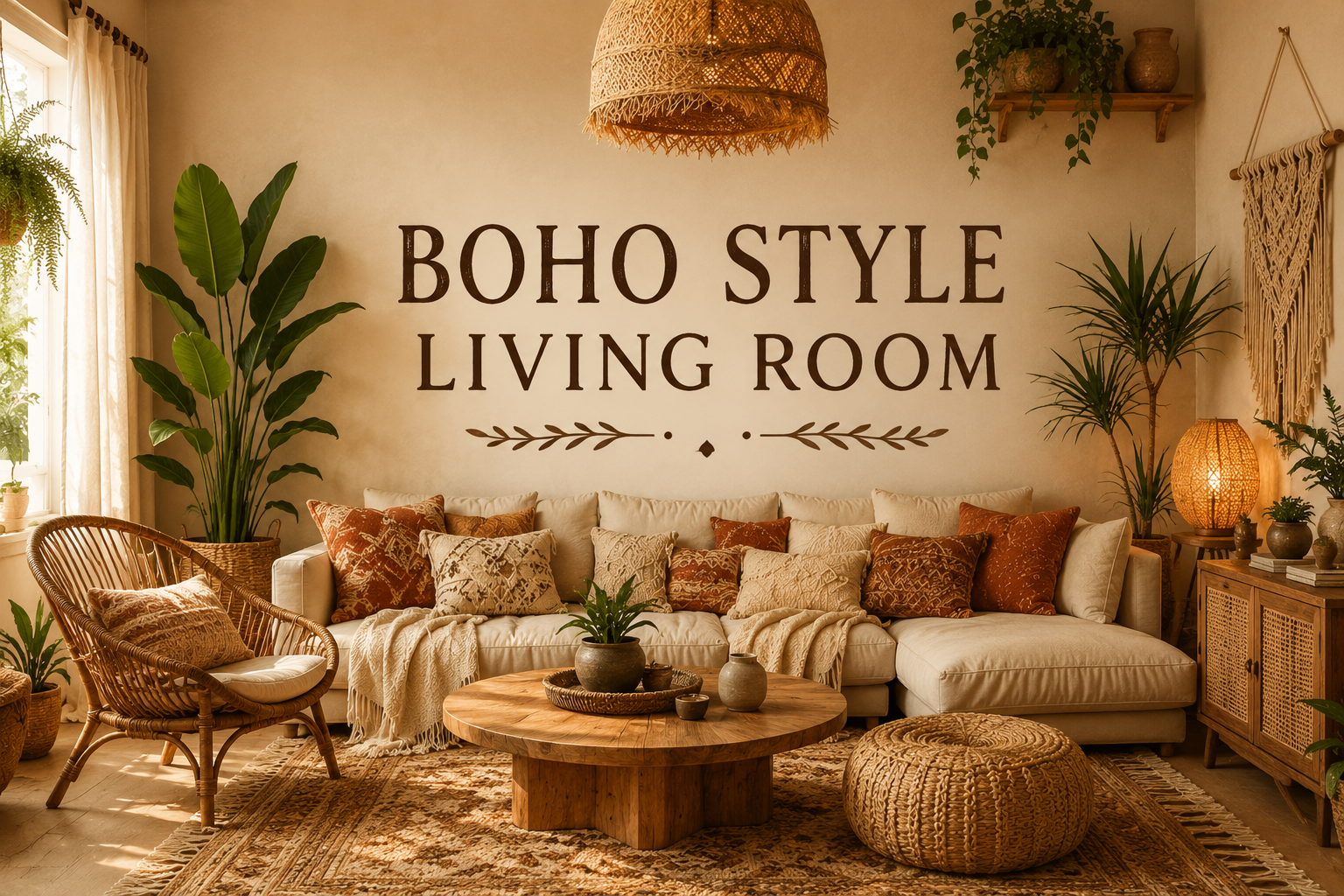
A boho style living room is all about creating a space that feels warm, personal, relaxed, and naturally collected. Instead of matching every piece, bohemian design combines earthy colors, natural materials, layered textures, greenery, vintage furniture, handmade accents, and meaningful objects.
But modern boho style has changed. You no longer need a room overflowing with macrame, rattan, colorful cushions, and patterned rugs to create a bohemian atmosphere. Today’s boho living room ideas can be minimalist, elegant, contemporary, rustic, or even quietly luxurious.
The real secret is balance. Mix rough and smooth textures, old and new furniture, neutral colors and unexpected accents, then leave enough empty space for everything to breathe. The result should look like a room that developed naturally around the people who live there, not a space decorated from a showroom catalog.
If you want your living room to feel stylish without becoming predictable or cluttered, these 21 ideas will help you create a more distinctive and livable boho interior.
What Makes a Living Room Truly Boho?
Bohemian interior design is less about a specific furniture style and more about atmosphere. A successful boho space usually combines natural decor, earthy colors, layered textures, plants, craftsmanship, vintage character, and personal details.
Materials such as jute, rattan, linen, cotton, wool, wood, leather, and clay create the tactile quality associated with bohemian interiors. Plants introduce organic shapes, while handmade and vintage pieces prevent the room from feeling mass-produced.
The most important principle is intentional imperfection. A slightly worn wooden table, mismatched chair, handmade vase, or thrifted lamp can make the space feel more authentic than a perfectly coordinated furniture set.
21 Beautiful Boho Style Living Room Ideas
1. Start With a Rug That Has Character
A rug can establish the personality of your entire living room, so choose it early rather than treating it as a finishing touch.
Vintage-inspired, faded, geometric, tribal-style, and handwoven rugs work particularly well in bohemian spaces. Look for subtle variation instead of a pattern that dominates everything around it.
Once you choose the rug, repeat one or two of its quieter colors in your cushions, artwork, curtains, or accessories. This creates visual connection without making the room look overly matched.
2. Build the Room Around Contrasting Textures
Texture is one of the strongest tools for creating a cozy boho living room.
Imagine a linen sofa beside a woven jute rug, a rough wooden coffee table, a smooth ceramic vase, and a soft wool throw. Each surface feels different, which gives the room depth even when the color palette is restrained.
A useful rule is to combine at least three noticeably different textures rather than relying on multiple versions of the same material.
3. Make the Sofa Look Collected
A coordinated sofa-and-chair set can make a living room feel generic. For a more relaxed bohemian look, introduce seating with different shapes or materials.
A neutral sofa can work beautifully with a vintage accent chair, leather pouf, woven stool, or oversized floor cushion. They do not need to match perfectly. Connect them through a repeated tone, fabric, or natural material.
This creates the relaxed eclectic character that makes boho interiors feel personal.
4. Create a Statement Plant Corner
Plants are an important part of boho home decor, but covering every surface with small plants can quickly make the room feel crowded.
Instead, create one dramatic green corner. Use a tall plant for height, a smaller plant underneath, and a woven basket or textured planter to anchor the arrangement.
Positioning plants near natural light also makes the space feel more organic while giving an otherwise empty corner a clear purpose.
5. Replace a Crowded Gallery Wall With Oversized Art
Boho decorating often includes wall art, but more is not necessarily better.
One large abstract artwork, vintage textile, woven wall piece, or handmade canvas can create a stronger focal point than ten small frames.
This approach works particularly well in modern boho living rooms because the oversized piece adds personality without competing with the room’s other textures.
6. Give an Awkward Corner a Purpose
Every living room has at least one difficult corner. Instead of filling it with random decoration, turn it into a functional retreat.
Add an accent chair, small wooden table, floor lamp, and comfortable cushion to create a reading or relaxation zone.
When decorating, always ask what the space can do, not just what it can hold. Functional styling generally produces a more believable and comfortable interior.
7. Mix Vintage, Handmade, and Contemporary Pieces
One of the easiest ways to make a boho living room look sophisticated is to mix different design periods.
A contemporary sofa can sit beside a vintage wooden coffee table and handmade ceramic lamp. This contrast gives the room history without forcing everything into a rustic style.
Secondhand furniture is especially useful because small imperfections, aged finishes, and unusual shapes naturally add character.
8. Use the Ceiling as a Design Element
The ceiling is often forgotten when decorating a cozy living room, yet it offers valuable vertical space.
A woven pendant light, natural-fiber shade, sculptural fixture, or hanging plant can draw attention upward and make the room feel taller.
In a small living room, vertical details are particularly effective because they add visual interest without consuming floor space.
9. Layer Your Lighting Instead of Relying on One Fixture
Lighting can completely change how boho decor looks at night.
Rather than depending on a single ceiling light, combine a floor lamp, table lamp, wall light, or warm decorative light. Place the sources at different heights so the room has several soft areas of illumination.
Warm, layered lighting emphasizes wood grain, woven fibers, textiles, and plants while creating the cozy atmosphere associated with bohemian interiors.
10. Add One Unexpected Accent Color
A warm neutral palette is a natural starting point for boho design, but using only beige, cream, and brown can make the room feel flat.
Choose one unexpected accent such as deep emerald, dusty blue, muted pink, mustard, or burgundy. Introduce it through a cushion, artwork, ceramic object, or throw.
Keeping the stronger color limited prevents it from overwhelming the earthy foundation.
11. Style the Coffee Table Like a Personal Collection
A coffee table should look lived in, not like a display shelf in a furniture store.
Try combining a few favorite books, a handmade bowl, a small plant, and one unusual object with personal meaning. Vary the heights and shapes, then leave part of the surface empty.
This creates a relaxed composition while keeping the table practical for everyday use.
12. Highlight Handmade Decor
Handmade accessories bring something mass-produced decor cannot easily replicate: visible craftsmanship.
Woven baskets, imperfect ceramics, carved wooden pieces, artisan textiles, and locally made objects can become subtle focal points.
Rather than scattering many handmade items throughout the room, choose one or two pieces that genuinely interest you and give them enough space to be noticed.
13. Use Vintage Furniture to Add History
Vintage pieces make an eclectic living room feel as though it has a story.
Look for a wooden cabinet, aged side table, leather chair, or unusual mirror with visible character. Minor scratches and variations in finish can actually make these pieces more appealing.
The key is moderation. One or two vintage elements can provide contrast without making the room feel like an antique shop.
14. Soften the Windows With Natural Fabrics
Window treatments can dramatically change the atmosphere of a living room.
Linen, cotton, gauze, and lightweight woven fabrics allow natural light to filter through while softening the room’s harder architectural lines.
If possible, mount the curtain rod slightly above and wider than the window. This can make the window appear larger and visually increase the height of the room.
15. Create a Low, Relaxed Seating Area
Boho style is naturally suited to informal living, so consider adding seating closer to the floor.
A textured floor cushion, low pouf, soft rug, and small table can create a comfortable conversation or reading area.
This works especially well in homes where the living room needs to serve multiple purposes because the low seating can be moved easily when the space needs to change.
16. Balance Rustic Materials With Clean Shapes
A common mistake in boho decorating is using too many rustic elements at once.
Instead, balance natural materials with contemporary silhouettes. Pair a woven chair with a streamlined sofa, a rustic wooden table with a sleek lamp, or clay accessories with simple modern shelving.
This combination creates modern boho decor rather than an overly rustic room.
17. Let Books Add Personality
Books can be decorative without feeling like traditional home accessories.
Display a few favorite titles on a coffee table, open shelf, or side table. Their covers naturally introduce small amounts of color while their subjects reveal something about your interests.
Avoid arranging every book perfectly. A slightly relaxed arrangement fits the collected character of bohemian interiors better.
18. Use a Mirror to Multiply Light
A well-positioned mirror can make a small or dark living room feel noticeably brighter.
Choose an organic, arched, vintage, woven, or textured frame that works with your existing materials. Position it opposite a window or where it can reflect greenery or artwork.
This creates depth while giving the room another decorative layer without adding furniture.
19. Integrate the TV or Fireplace Into the Design
Functional features do not have to interrupt your decorating style.
If your television dominates one wall, soften the surrounding area with natural wood, plants, baskets, artwork, or simple shelving. A fireplace can be treated similarly with textured accessories and organic materials.
The goal is not necessarily to hide these features but to visually connect them with the rest of the room.
20. Introduce a Hint of Quiet Luxury
Boho design can be relaxed and sophisticated at the same time.
Add one refined element such as a sculptural lamp, brass fixture, tailored linen sofa, stone side table, or elegant accent chair. Then balance it with natural textures such as rattan, jute, wood, or woven fabric.
This contrast creates an elevated bohemian living room without losing its casual character.
21. Leave Some Imperfection
The final step is often the one people overlook: stop decorating.
A boho room should not feel as though every shelf has been carefully filled. Leave some negative space. Allow natural wood grain to show. Keep an imperfect vintage object instead of replacing it simply because it is not flawless.
That breathing room is what separates an authentic bohemian home from a room that is merely filled with boho accessories.
How to Choose a Boho Living Room Color Palette
The easiest approach is to begin with a warm neutral foundation. Cream, beige, sand, warm white, and taupe create a flexible background for natural materials.
Next, introduce earthy shades such as terracotta, olive, rust, camel, chocolate brown, or muted ochre. If the room needs more contrast, add a single deeper accent color.
Before choosing paint or large furniture, consider how much natural light enters the room. Cooler, darker rooms usually benefit from warmer neutrals, while bright rooms can handle deeper earthy shades.
Best Textures for Bohemian Interiors
A successful boho interior should feel interesting even before you add decorative accessories.
Combine jute, rattan, linen, cotton, wool, wood, leather, ceramics, and woven textiles. The goal is to create contrast between soft and hard, rough and smooth, matte and slightly polished surfaces.
This is also a useful way to create a cozy living room without relying on excessive patterns or bright colors.
How to Keep Boho Decor From Looking Cluttered
Boho and clutter are not the same thing.
The difference is intentionality. Group related accessories together instead of spreading them randomly across every surface. Repeat a few colors or materials to connect different pieces, and leave visible empty space between decorative groups.
If an item does not add function, beauty, memory, or texture, consider removing it. Editing the room is just as important as decorating it.
How to Make a Boho Living Room Look Modern
Modern boho design keeps the warmth of traditional bohemian decor while reducing visual excess.
Use natural materials and plants, but combine them with clean-lined furniture and simple silhouettes. Choose fewer statement accessories and let their textures do more of the visual work.
Avoid buying every item from the same collection. A modern boho room looks more sophisticated when contemporary, vintage, handmade, and natural elements appear together.
Small Boho Living Room Ideas
Small spaces can work beautifully with boho decor when you prioritize openness.
Choose furniture with visible legs, lighter upholstery, mirrors, vertical plants, and curtains mounted high on the wall. Use a large rug to visually anchor the seating area rather than several small rugs that break up the floor.
Instead of filling the room with tiny accessories, choose a few larger pieces with strong texture and character. This creates impact while preserving valuable breathing room.
How to Create a Boho Living Room on a Budget
You do not need a complete furniture makeover to achieve a bohemian look.
Start with the pieces you already own. Add a textured throw, a few cushions, plants, warm lighting, or a secondhand side table. Thrift stores and local markets can be particularly useful because older pieces often have the imperfect character that makes boho spaces feel authentic.
You can also refresh existing furniture through new upholstery, paint, baskets, or styling. The most effective budget strategy is to change the atmosphere rather than replace everything.
Boho Decorating Mistakes to Avoid
The biggest mistake is treating boho as a theme instead of a design philosophy.
Too many macrame pieces, excessive patterns, identical rattan accessories, crowded shelves, and poor lighting can make a room look dated or chaotic. Another common mistake is buying decorations before deciding on the room’s main color and texture direction.
Start with the largest elements first, then add smaller details gradually. This gives you more control over balance and prevents unnecessary purchases.
Quick Answer: What Makes a Boho Style Living Room Stand Out?
A boho style living room stands out through natural materials, layered textures, earthy colors, greenery, warm lighting, vintage or handmade furniture, and personal objects. The most successful spaces balance these relaxed elements with clean shapes and negative space, creating a room that feels collected, cozy, stylish, and genuinely lived in.
Frequently Asked Questions About Boho Style Living Rooms
What makes a living room truly boho?
A boho living room combines natural materials, earthy colors, layered textures, greenery, relaxed furniture, vintage finds, handmade objects, and personal details. It should feel collected rather than perfectly coordinated.
What colors work best in a boho living room?
Warm neutrals such as cream, beige, sand, taupe, and warm white work well as a foundation. Add terracotta, olive, rust, camel, ochre, or muted jewel tones for depth.
How do I make a boho living room look modern?
Pair natural materials such as rattan, jute, wood, and linen with streamlined furniture, simple silhouettes, refined lighting, and fewer decorative accessories. The contrast keeps boho style contemporary.
How can I decorate a boho living room cheaply?
Use your existing furniture and update the room with plants, textiles, warm lighting, secondhand furniture, books, baskets, and handmade accessories. Unique thrifted pieces often provide more character than inexpensive mass-produced decor.
How do I keep boho decor from looking cluttered?
Use negative space, group accessories intentionally, repeat a few colors and materials, and avoid decorating every empty surface. Editing unnecessary objects will make the room feel calmer.
Can boho style work in a small living room?
Yes. Use light colors, mirrors, vertical plants, high-mounted curtains, low-profile furniture, and fewer but stronger decorative pieces. Keeping some floor visible will make the room feel more spacious.
Final Thoughts
A beautiful boho style living room is not created by buying every piece of bohemian decor you can find. It comes from combining materials, colors, furniture, plants, craftsmanship, and personal objects in a way that feels natural to your home.
Start with the largest elements, build your texture and color palette, then introduce vintage, handmade, and meaningful pieces slowly. Mix old with new, rustic with refined, and soft with structured forms.
Most importantly, give the room space to breathe.
The goal is not to create a perfect boho room. It is to create a living room that feels comfortable, expressive, collected, and unmistakably yours.

Leave a Reply