
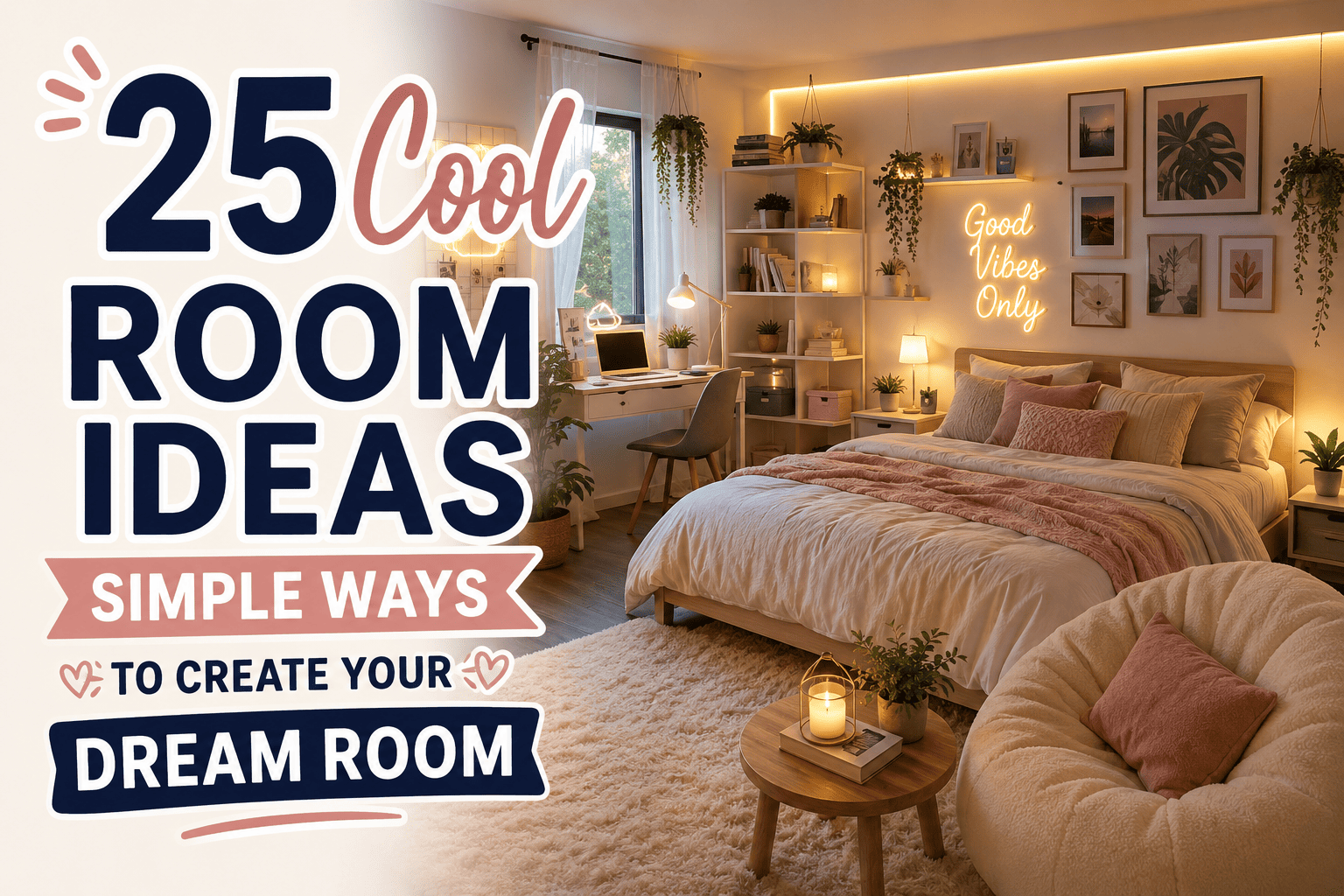
Introduction: Create a Room You’ll Love
Your room should feel comfortable, functional, and unmistakably you. You don’t need an expensive renovation or brand-new furniture to create a space that feels stylish. Often, a few thoughtful changes to your lighting, color scheme, furniture layout, storage, and decor can make a room feel completely different.
Whether you prefer a modern, minimalist, cozy, boho decor, or aesthetic look, the best room design is one that fits your personality and everyday routine. The goal isn’t to copy a picture from Pinterest or fill every corner with decorations. It’s to create a balanced space that looks good, feels comfortable, and works for the way you actually live.
Here are 25 cool room ideas to help you create a room you’ll genuinely enjoy spending time in.
1. Choose a Room Style That Fits You
Before buying new decor, decide how you want your room to look and feel. A minimalist room might use clean lines, neutral colors, and fewer accessories, while a cozy room can rely on warm tones, soft fabrics, and layered lighting.
You don’t have to follow one decorating style perfectly. Pick the elements you like most and combine them in a way that feels natural. Having a general direction also prevents random purchases that don’t work together.
2. Refresh the Walls With Color
Changing your wall color is one of the most noticeable ways to refresh a room. Soft neutrals, warm whites, muted greens, and gentle blues can create a calm atmosphere, while a deeper accent color can add contrast and personality.
You don’t have to repaint the entire room. Try one accent wall decor, removable wallpaper, artwork, or colorful accessories if you want an easier and more affordable update.
3. Upgrade Your Room Lighting
Lighting affects both the appearance and mood of a room. Instead of relying entirely on one bright ceiling fixture, combine general lighting with task and accent lighting.
A bedside lamp can create a softer evening atmosphere, while a desk lamp provides focused light for studying or working. Warm-toned bulbs can also make bedrooms and relaxation areas feel more inviting.
4. Create a Cozy Bed Setup
In most bedrooms, the bed is the largest and most noticeable piece of furniture. Make it a comfortable focal point with quality-looking bedding, a few pillows, and a layered blanket or throw.
Keep the colors coordinated with the rest of the room. You don’t need dozens of pillows or complicated patterns to make your bed look inviting.
5. Add a Statement Headboard
A statement headboard can instantly give your bed a more finished and intentional appearance. Upholstered headboards create a soft look, while wood, rattan, and paneled designs can add warmth and texture.
If a new headboard isn’t within your budget, consider a painted accent behind the bed, a fabric backdrop, or simple wood panels as a DIY alternative.
6. Decorate Your Walls With Art
Blank walls can make an otherwise well-decorated room feel incomplete. Framed prints, photography, posters, or a carefully arranged gallery wall can add personality without taking up floor space.
For a cohesive appearance, choose artwork that connects with at least one color, material, or theme already present in your room.
7. Add a Stylish Mirror
A mirror can serve both a practical and decorative purpose. A full-length mirror is useful for getting dressed, while a round, arched, or uniquely framed mirror can act as a statement piece.
For the best visual effect, place the mirror where it can reflect natural light or an attractive part of the room. This can help the space feel brighter and more open.
8. Bring Natural Elements Into the Room
Plants add color, texture, and a natural feel to indoor spaces. A larger plant can fill an empty corner, while smaller plants can work well on shelves, desks, or bedside tables.
If you’re new to plant care, start with a low-maintenance variety suited to your room’s light conditions. Artificial greenery can also add visual interest if maintaining live plants isn’t practical.
9. Add a Cozy Area Rug
An area rug can make a room feel warmer while visually connecting furniture. It can also help define separate zones, such as a sleeping area, seating corner, or workspace.
Pay attention to proportion when choosing a rug. A rug that’s too small can make the furniture arrangement feel disconnected, while the right size can make the entire space feel more cohesive.
10. Create a Small Seating or Chill Corner
An unused corner doesn’t have to stay empty. Turn it into a small reading or relaxation area with a comfortable chair, floor cushion, side table, or soft lamp.
The key is choosing furniture that matches the scale of the room. In a small bedroom decor, even one comfortable chair can be enough to create a useful and attractive corner.
11. Upgrade Your Curtains
Curtains can change the proportions and atmosphere of a room. Hanging them closer to the ceiling and allowing the fabric to reach the floor can create the visual impression of taller windows and higher ceilings.
Choose lightweight curtains when you want a bright, airy feeling. For bedrooms where privacy and light control matter, lined or blackout curtains may be more practical.
12. Add Floating Shelves
Floating shelves provide storage and display space without taking up much floor area. Use them for books, framed photos, small plants, collectibles, or a few favorite decorative pieces.
Avoid filling every inch of the shelf. Leaving some empty space helps the arrangement look intentional rather than crowded.
13. Create a Functional Desk Area
If your room doubles as a study or work space, give your desk area some thought. Choose a desk that fits the available space and provide enough lighting for reading, writing, or computer work.
Keep everyday supplies organized with drawers, small containers, or wall shelves. A well-organized workspace can make the room more functional without sacrificing its style.
14. Personalize Your Room With Photos
Personal details make a room feel lived-in and unique. Display favorite photographs, artwork, travel memories, or meaningful objects instead of relying entirely on generic decorations.
A simple photo wall above a desk or beside the bed can add character without requiring a major makeover.
15. Use Smart Storage Solutions
Good storage is one of the most important parts of a stylish room. Clutter can quickly make even beautiful decor look messy, so give everyday items a designated home.
Use baskets, storage boxes, bedside drawers, wardrobes, and under-bed containers where appropriate. In smaller rooms, consider multifunctional furniture such as storage ottomans or beds with built-in drawers.
16. Mix Different Textures
Using too much of one material can make a room feel flat. Introduce depth by combining different textures such as cotton, linen, wood, woven fibers, metal, and knit fabrics.
For example, smooth bedding can be paired with a textured throw, a woven basket, and a wooden side table. These small contrasts can make a room feel richer without adding unnecessary clutter.
17. Add One Statement Decor Piece
Instead of covering the room with small decorations, choose one or two pieces that naturally attract attention. An oversized artwork, sculptural lamp, bold mirror, or distinctive chair can become the room’s focal point.
A strong statement piece often has more impact than a collection of unrelated accessories. Keep the surrounding decor simpler so the main feature can stand out.
18. Create a Dedicated Reading or Relaxation Corner
A room can be more enjoyable when it includes a space specifically for relaxing. A comfortable chair, floor cushion, small bookshelf, and warm lamp can turn an unused area into a personal retreat.
Keep this corner simple and comfortable. Its purpose should be relaxation rather than becoming another place to store things.
19. Make a Small Room Feel Bigger
Small rooms benefit from careful furniture placement and visual simplicity. Choose furniture that fits the scale of the space, keep pathways clear, and use vertical storage to make better use of the walls.
Mirrors and lighter colors can also make a room appear more open. Most importantly, avoid filling every surface with decor.
20. Add LED or Decorative Lighting for Ambiance
LED strips, fairy lights, backlit shelves, and small accent lamps can give a room a completely different mood after dark. They’re especially useful for creating an aesthetic or cozy atmosphere.
Use decorative lighting as an additional layer rather than the room’s only light source. This keeps the room practical during the day and atmospheric at night.
21. Keep Your Room Clutter-Free
A clean and organized room usually looks more stylish than one filled with expensive decor. Give everyday items a designated place and regularly remove things you no longer use.
A simple daily reset can help: put clothes away, clear your desk, return items to their storage areas, and keep important surfaces reasonably clear.
22. Add Stylish Accessories
Small accessories can finish a room without requiring a major redesign. Decorative trays, cushions, vases, books, baskets, candles, and small artworks can add personality and visual interest.
The trick is restraint. Choose accessories that complement your existing colors and materials instead of adding something simply because an empty surface is available.
23. Hide and Organize Cables
Visible cables can make a room look messy even when everything else is organized. Use cable clips, sleeves, ties, or cable-management boxes to keep wires grouped and out of sight.
This is especially useful around desks, televisions, gaming setups, charging stations, and bedside tables.
24. Try Budget-Friendly DIY Decor
You don’t have to replace your furniture or spend a lot of money to refresh your room. Paint an old frame, update a small piece of furniture, create simple wall art, or repurpose items you already own.
Before shopping for new decor, look around your home. Moving an existing lamp, artwork, plant, or accessory into another room can sometimes create a surprisingly fresh look at no additional cost.
25. Rearrange Your Furniture for a Fresh Look
One of the easiest room makeovers costs nothing. Try moving your bed, desk, chair, or storage furniture to improve the flow of the room.
Before moving heavy pieces, measure the available space and make sure doors, windows, outlets, and walking paths remain accessible. A better layout can make a room feel larger and more functional without buying anything.
How to Combine Cool Room Ideas Without Overdecorating
You don’t need to use all 25 ideas in the same room. Start with the changes that solve your biggest problems. If your room feels dark, improve the lighting. If it feels cluttered, focus on storage. If the walls feel empty, start with artwork or shelves.
Keep your main color palette consistent and repeat a few materials or colors throughout the space. If you introduce one bold statement piece, balance it with simpler furniture and accessories.
Most importantly, leave some open space. A room doesn’t need to be filled to feel complete.
How to Make Your Room Look Expensive on a Budget
A room can look polished without being expensive. Consistency is often more important than price. Choose a simple color palette, keep surfaces organized, and invest attention in the details people notice most.
Coordinated bedding, properly hung curtains, attractive storage baskets, layered lighting, matching hangers, and a few carefully chosen decorative pieces can make an ordinary room feel more intentional.
You can also save money by refreshing what you already own. Rearranging furniture, repainting small pieces, changing textiles, and moving decor between rooms are all inexpensive ways to create a new look.
Common Room Decorating Mistakes to Avoid
Overdecorating the Space
Too many accessories can make a room feel crowded. Give your favorite pieces enough space to stand out.
Choosing Style Over Comfort
A room should look good, but it also needs to work for everyday life. Choose furniture and textiles that you actually enjoy using.
Mixing Too Many Colors
A simple color palette usually creates a more cohesive appearance. Use accent colors intentionally rather than adding several unrelated shades.
Ignoring Storage
Without enough storage, clutter can quickly take over. Consider where everyday belongings will go before adding more decorative items.
Blocking Light or Walkways
Don’t sacrifice functionality for appearance. Keep windows, doors, outlets, and main walking paths accessible.
Final Thoughts: Create a Room That Feels Like You
Creating your dream room doesn’t require a full renovation or a huge budget. The most successful room makeovers usually come from thoughtful improvements to comfort, lighting, organization, color, and personal style.
Start with one or two changes that will make the biggest difference in your space. Then gradually add texture, artwork, storage, lighting, and personal touches.
The goal isn’t to create a room that only looks good in photographs. It’s to create a space that feels comfortable, functional, personal, and enjoyable every day.
FAQs About Cool Room Ideas
What are some cool room ideas for a small bedroom?
Use appropriately sized furniture, light or balanced colors, mirrors, vertical storage, and multifunctional furniture. Keeping floors and surfaces clear can also make a small bedroom feel more open.
What is the easiest way to update a room on a budget?
Rearranging furniture, decluttering, improving lighting, changing textiles, and trying simple DIY decor are some of the easiest low-cost ways to refresh a room.
How can I make my room look bigger?
Use furniture that fits the room, keep walkways clear, take advantage of vertical storage, and use mirrors strategically. Lighter colors can also contribute to a more open visual effect.
What lighting works best for a cozy room?
A combination of warm ambient lighting, task lighting, and accent lighting generally creates a more comfortable atmosphere than relying on one bright overhead fixture.
How many decor ideas should I use in one room?
There is no fixed number. Choose ideas that suit the size, purpose, and style of your room. Using fewer, well-coordinated pieces often creates a more balanced result than trying to use everything.
What’s the quickest way to refresh a room without spending money?
Declutter first, then experiment with a new furniture arrangement. You can also move artwork or accessories from one room to another and reorganize shelves for a fresh look.
How can I make my room look aesthetic without spending much?
Focus on a consistent color palette, warm lighting, clean organization, comfortable textiles, and a few personal decorations. Rearranging existing furniture and creating simple DIY decor can also make a noticeable difference without a large budget.

Leave a Reply