
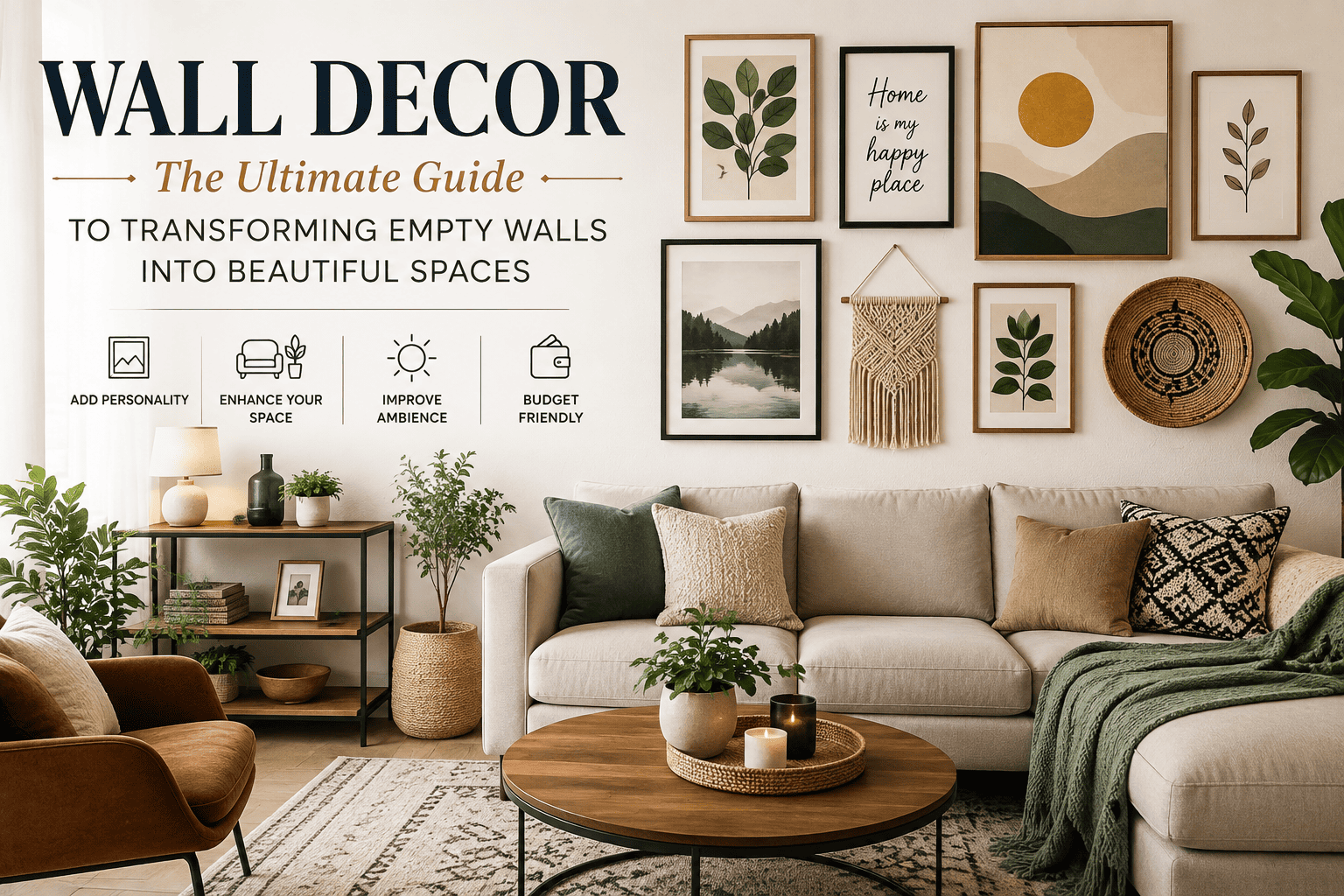
Empty walls can make even a beautifully furnished home feel incomplete. You may have comfortable furniture, attractive lighting, and a carefully chosen color palette, yet the room can still feel as though something is missing. Often, that missing element is wall decor
The right wall decorations can introduce personality, warmth, color, texture, and balance without requiring a major renovation. A large artwork can create a focal point, a mirror can enhance the sense of space, and a thoughtfully arranged gallery wall can turn an ordinary surface into a meaningful display.
Wall decorating also does not have to be expensive. Affordable prints, family photographs, floating shelves, textiles, plants, vintage finds, and simple DIY projects can all make a room feel more complete when they are chosen and arranged thoughtfully.
This guide covers practical wall decor ideas for different rooms, styles, wall sizes, and budgets, along with simple tips for choosing the right pieces and arranging them with confidence.
Why Wall Decor Matters in Interior Design
Walls are among the largest uninterrupted surfaces in a home, so they naturally have a strong influence on the overall appearance of a room. Leaving them completely bare can sometimes make a space feel unfinished, while filling every available area can create unnecessary visual clutter.
Well-chosen wall decor connects the different elements of a room. It can repeat a color found in a rug or cushion, complement the texture of furniture, introduce contrast against a plain wall, or create a focal point that helps organize the space visually.
Wall decoration can also serve a practical purpose. Mirrors can reflect natural light, shelves can provide additional storage, and wall-mounted lighting can combine function with style. In open-plan homes, artwork, shelving, or an accent wall can also help visually distinguish one area from another.
The goal is not to decorate every empty wall. Instead, the aim is to create a balanced environment where the walls feel naturally connected to the rest of the room.
How to Choose the Right Wall Decor
Choosing wall decor starts with understanding the room rather than shopping for individual pieces. Consider the wall’s size, the furniture around it, the existing color palette, and the overall style of the space before making a decision.
Consider the Size and Shape of the Wall
The proportions of a wall should influence both the size and number of decorative pieces you choose.
A narrow wall may benefit from a vertical mirror or tall artwork, while a wide wall can accommodate a horizontal painting, several coordinated prints, or a larger gallery arrangement. Large rooms generally need enough visual weight to ensure the decoration feels connected to the surrounding furniture.
However, a large wall does not automatically require one enormous piece. Several smaller pieces can work just as effectively when they are arranged as a cohesive composition.
Consider the Furniture Below
The furniture underneath your wall decor provides an important visual reference.
Artwork above a sofa, console, bed, or sideboard often looks balanced when the overall arrangement is roughly two-thirds the width of the furniture beneath it. This is a useful starting point rather than a strict design rule.
The most important consideration is the relationship between the artwork and the furniture. The two should feel connected rather than appearing as unrelated objects.
Match Your Interior Style
Wall decor should complement the existing character of your home.
A modern room may suit abstract artwork, simple frames, sculptural mirrors, or minimalist photography. Rustic interiors can incorporate natural wood, woven baskets, vintage-inspired pieces, and botanical prints. Traditional spaces often work well with framed artwork, decorative mirrors, and symmetrical arrangements.
You do not have to follow one design style perfectly. Mixing influences can make a room feel more personal and collected. The key is to create some visual connection through color, material, shape, or theme.
Choose Colors With Intention
Wall art does not need to match the wall color exactly. In fact, some contrast can make a room more visually interesting.
Instead of matching every color, look for one or two shades already present in the space. These might come from a rug, cushion, curtain, vase, or furniture piece. Repeating those colors in the wall decor can create a sense of continuity.
For a calm atmosphere, neutral artwork and muted tones can work beautifully. If the room is mostly neutral, colorful artwork can introduce energy without requiring a complete redesign.
Best Wall Decor Ideas for Every Room
Every room has a different purpose, so wall decoration should respond to how the space is used. A relaxing bedroom may benefit from softer artwork, while a living room can support a stronger focal point and a kitchen often needs a combination of style and practicality.
Living Room Wall Decor
The living room is often one of the most visible areas of the home, making it an ideal place for expressive wall decoration.
A large painting above the sofa can establish a focal point, while a gallery wall can create a more personal and collected appearance. An oversized mirror can also work well, particularly when it reflects natural light or an attractive part of the room.
If the furniture already includes bold patterns or strong colors, simpler artwork can provide balance. Conversely, neutral furniture creates an opportunity to introduce more expressive colors and textures through the walls.
The television wall can also become part of the overall design. Instead of allowing the screen to dominate the room, consider surrounding it with built-in shelving, carefully selected artwork, wood paneling, or streamlined storage.
The best living room decor should feel comfortable and intentional without making the space feel overcrowded.
Bedroom Wall Decor
Bedrooms generally benefit from wall decor that contributes to a calm and restful atmosphere.
The wall behind the bed is a natural focal point. A large artwork piece, woven wall hanging, pair of framed prints, or upholstered wall treatment can add interest without overwhelming the room.
Symmetrical arrangements work particularly well around beds. Matching artwork or wall lights on either side can create a balanced appearance, while an asymmetrical arrangement can give the room a more relaxed and contemporary character.
There is no need to decorate every bedroom wall. Leaving areas of negative space can make the room feel calmer and more spacious.
Kitchen Wall Decor
The kitchen requires a slightly different approach because decoration must work alongside cooking, cleaning, and everyday activity.
Framed botanical prints, decorative shelves, cutting-board displays, ceramics, small paintings, and carefully selected kitchen artwork can add character without interfering with food preparation.
Open shelving can also become part of the wall design. Displaying attractive dishes, glassware, cookbooks, ceramics, or small plants can combine practical storage with visual interest.
When choosing kitchen decor, pay attention to placement. Items positioned close to cooking areas may be exposed to heat, moisture, or grease, so easy-to-clean materials and sensible locations are preferable.
Dining Room Wall Decor
Dining rooms offer an excellent opportunity for slightly more dramatic wall decoration.
A large painting above a sideboard, a decorative mirror, or a coordinated collection of framed artwork can establish a strong focal point. If the dining table is long and rectangular, horizontal artwork can echo its shape and create a more balanced composition.
Decorative plates, botanical illustrations, vintage-inspired artwork, and textured wall pieces can also add warmth and personality.
Entryway Wall Decor
The entryway creates the first impression of your home, even though it is often overlooked when decorating.
A mirror above a console table is a practical and stylish combination. It provides a place to check your appearance while also making the entryway feel brighter and more open.
Small artwork, wall hooks, a narrow shelf, or a compact gallery wall can add personality without taking up valuable floor space.
For narrow entryways, vertical artwork or a tall mirror can emphasize height while keeping the area visually light.
Home Office Wall Decor
A home office should support productivity while still feeling comfortable and personal.
Artwork, floating shelves, photographs, calendars, pinboards, and meaningful objects can all contribute to the atmosphere. Rather than covering the wall with motivational quotes, choose one or two pieces that genuinely inspire you.
Functional wall organization can be especially helpful in smaller offices because it keeps frequently used items accessible without taking up desk space.
Popular Types of Wall Decor
Understanding the different types of wall decoration makes it easier to choose the right option for your space.
Wall Art and Paintings
Paintings and prints remain among the most versatile choices because they can suit almost any interior style.
Abstract artwork can introduce color and movement, landscape photography can add depth, and botanical prints can bring a natural feeling indoors. Personal photographs can make a room feel more meaningful when displayed as part of a thoughtful arrangement.
When choosing artwork, consider not only whether you like the piece but also what atmosphere it creates. The right artwork should support the mood you want the room to have.
Gallery Walls
A gallery wall allows multiple pieces to function as one larger visual feature.
It does not have to consist entirely of photographs. Artwork, family pictures, typography, illustrations, small mirrors, and other lightweight decorative elements can be combined to create a more personal display.
For a clean and organized look, use similar frames and consistent spacing. For a more collected appearance, mix frame sizes and finishes while maintaining a common color palette or theme.
Before making holes in the wall, arrange the pieces on the floor or create paper templates to test the composition.
Decorative Mirrors
Mirrors combine decoration with practical functionality.
A large mirror can increase the visual sense of space, while an unusual frame can make the mirror itself a statement piece. Round mirrors can soften rooms filled with straight lines, whereas rectangular mirrors often complement contemporary furniture.
Placement is particularly important. A mirror tends to be most effective when it reflects something attractive, such as a window, artwork, plant, or architectural feature.
Floating Shelves
Floating shelves are useful when you want to combine decoration with storage.
They can display books, photographs, plants, ceramics, candles, and collected objects. In kitchens, they can hold attractive dishware, cookbooks, or frequently used items while adding warmth to an otherwise plain wall.
Avoid filling every inch of a shelf. Leaving some empty space allows individual objects to stand out and keeps the arrangement from looking cluttered.
Wall Panels and Feature Walls
A feature wall can change the character of a room without requiring every wall to be redesigned.
Paint, wallpaper, wood slats, decorative molding, textured finishes, and stone-look materials can all create visual depth. Feature walls are particularly effective behind sofas, beds, dining tables, or televisions.
The strongest accent walls usually have a clear relationship with the room rather than being different simply for the sake of contrast.
Woven and Textile Wall Decor
Textile wall decor introduces softness and texture that traditional framed artwork cannot always provide.
Macramé, woven baskets, fabric panels, tapestries, and handcrafted pieces work particularly well with boho, rustic, coastal, and organic interiors.
These materials can also help balance rooms containing harder surfaces such as glass, metal, stone, and polished wood.
Wall Decor Styles to Try
Modern and Minimalist Wall Decor
Modern and minimalist interiors generally benefit from simplicity and intentionality.
Clean-lined frames, abstract artwork, geometric forms, sculptural mirrors, and limited color palettes can create a refined appearance. Instead of filling a wall with numerous objects, allow one strong piece to become the focal point.
Negative space is an important part of minimalist design. An undecorated area is not necessarily unfinished; it can give surrounding elements greater visual impact.
Boho Wall Decor
Bohemian interiors are well suited to layered textures and individual pieces.
Woven wall hangings, macramé, natural wood, baskets, dried botanicals, handmade artwork, and eclectic frames can create a warm and relaxed atmosphere.
Rather than making everything symmetrical, allow different textures and shapes to work together naturally.
Rustic and Farmhouse Wall Decor
Rustic wall decor often emphasizes natural materials, traditional craftsmanship, and nostalgic details.
Wooden frames, vintage-inspired signs, botanical artwork, antique-style mirrors, baskets, and handcrafted pieces can add warmth to kitchens, dining rooms, and living areas.
Modern farmhouse interiors often look more polished when rustic details are balanced with cleaner furniture and simpler accessories.
Traditional and Classic Wall Decor
Traditional interiors often benefit from symmetry, framed artwork, decorative mirrors, architectural details, and timeless patterns.
A pair of matching pieces can create balance around a fireplace, console, or bed. Larger walls can accommodate coordinated collections of frames without appearing overly busy.
How to Decorate a Large Empty Wall
Large walls provide an opportunity to create one of the room’s main visual features.
An oversized artwork piece is one of the simplest solutions. A large painting, photograph, or textile can provide enough visual weight to connect the wall with a substantial sofa, bed, or console.
A large gallery wall offers another option. Instead of adding frames randomly, think of the entire arrangement as one composition. Decide on the approximate shape first and then arrange the individual pieces within that boundary.
A feature wall can also transform the entire surface. Wallpaper, decorative molding, wood slats, or a bold paint color can make the architecture itself part of the decoration.
Layering is another effective technique. A large artwork piece can be combined with a narrow shelf, wall lights, or a few smaller objects to create depth.
One mistake to avoid is placing a very small piece in the middle of an expansive wall without any supporting elements. If you prefer minimalism, make the simplicity intentional by choosing a piece with enough presence and allowing generous surrounding space.
How to Decorate a Small Wall
Small walls usually benefit from restraint.
A medium-sized artwork piece, compact mirror, vertical print, or small floating shelf may be enough. In narrow areas, vertical shapes can draw the eye upward and make the wall feel taller.
Small walls near doorways, corners, and kitchen areas can also benefit from functional decoration. A slim shelf, wall hook system, or small collection of frames can add character without making the space difficult to use.
When a wall is already interrupted by doors, windows, switches, or furniture, a simple arrangement often looks better than a complicated display.
Budget-Friendly Wall Decor Ideas
Creating attractive walls does not require an unlimited decorating budget.
Create Your Own Artwork
DIY artwork is an affordable way to create something specifically suited to your home.
Simple abstract paintings, geometric designs, pressed botanical displays, fabric art, and textured canvases can all become attractive wall features.
The objective is not to recreate expensive artwork. It is to make something that works with your room and feels personal.
Use Affordable Prints
Digital artwork and poster prints can provide an inexpensive alternative to original paintings.
The frame can make a significant difference in the final appearance. A simple, well-proportioned frame can make an affordable print look much more polished.
Repurpose Existing Objects
Before buying new decorations, look around your home.
Old photographs, postcards, children’s artwork, fabric pieces, vintage trays, baskets, and other interesting objects can sometimes be transformed into distinctive wall displays.
Secondhand shops, flea markets, and local craft markets can also be useful sources for unique frames and decorative pieces.
Decorate With Plants
Plants can bring life and natural texture to an empty wall.
Hanging planters, wall-mounted pots, and shelves filled with greenery can introduce color without relying entirely on artwork. If a room has limited natural light, choose plants suited to those conditions or use realistic artificial alternatives.
How to Arrange Wall Decor Like a Professional
You do not need professional training to create a balanced wall arrangement. A few simple principles can make the process much easier.
Start at a Comfortable Viewing Height
Artwork is generally most comfortable when its center is positioned around average eye level. A commonly used guideline is approximately 57–60 inches from the floor to the center of the artwork.
However, this should not be treated as an absolute rule. When artwork hangs above furniture, the relationship between the artwork and the furniture is often more important than its exact distance from the floor.
Leave Consistent Spacing
Gallery wall pieces generally look more cohesive when the spacing between them is consistent.
Around 2–4 inches is a useful starting point for many arrangements, although the ideal distance depends on the size of the artwork and the overall composition.
Connect Decor With Furniture
Wall decor should feel visually connected to the furniture beneath it rather than appearing to float independently.
A large sofa can support a substantial artwork arrangement, while a small console may be better suited to a smaller mirror, painting, or compact collection.
Balance Visual Weight
Think about the arrangement as a complete composition.
If one side contains a large or dark piece, consider balancing it with another visually strong element elsewhere. Balance does not require perfect symmetry. An asymmetrical arrangement can look equally polished when its visual weight is distributed thoughtfully.
Plan Before Hanging
Planning first can save time and prevent unnecessary holes in the wall.
Lay the pieces on the floor, take a photograph, and view the arrangement from a distance. For gallery walls, paper templates can be taped to the wall so you can experiment with placement before installing anything permanently.
Wall Decor for Renters: Ideas Without Permanent Damage
Renting does not mean you have to live with completely bare walls.
Depending on the wall surface and the weight of the decoration, removable adhesive hooks, renter-friendly hanging systems, leaning artwork, removable wallpaper, and freestanding shelves can provide attractive alternatives to permanent installation.
Large artwork can sometimes be leaned against a wall on a sturdy console or shelf. This creates a relaxed, layered appearance while avoiding unnecessary wall damage.
Always follow the manufacturer’s instructions and weight limits when using adhesive hanging products, especially for mirrors or heavier artwork.
Common Wall Decor Mistakes to Avoid
Even beautiful and expensive wall decorations can look awkward when they are poorly positioned.
One of the most common mistakes is hanging artwork too high. When a piece sits too close to the ceiling, it can appear disconnected from the furniture below.
Incorrect scale is another problem. A tiny frame above a large sofa can make the wall look unbalanced, while an oversized piece can overwhelm a very small space.
Overcrowding is equally important to avoid. Walls need breathing room, and leaving some empty space can actually make the decorations you choose more noticeable.
Another common issue is making everything match too perfectly. Identical frames, colors, patterns, and accessories can sometimes make a room feel staged. A little variation in texture, shape, and finish can create more personality.
Finally, do not choose wall decor in isolation. A piece may look beautiful in a store or online but feel out of place once it is surrounded by your actual furniture, curtains, lighting, flooring, and accessories.
Wall Decor Trends for 2026
Current wall decorating continues to move toward more personal, tactile, and character-filled interiors.
Textured and dimensional pieces are becoming increasingly popular, including plaster-inspired artwork, woven materials, sculptural objects, wood details, and other designs that add depth to the wall.
Personal gallery walls are another strong approach. Instead of relying entirely on coordinated sets of generic prints, homeowners can combine family photographs, travel memories, collected artwork, handmade pieces, and meaningful objects.
Warm neutrals and earthy tones remain versatile choices for creating comfortable interiors, while richer accent colors can introduce contrast and personality.
There is also continued interest in vintage, secondhand, and handcrafted decor. Older frames, antique mirrors, locally made artwork, and reused materials can give a home a more individual appearance.
Multifunctional wall design is another practical direction. Shelving, storage, lighting, mirrors, and artwork can be combined so that the wall contributes to both the beauty and functionality of the room.
Rather than following every decorating trend, choose ideas that complement your home and are likely to remain enjoyable long after the trend has passed.
How to Make Wall Decor Feel Personal
The most memorable homes often contain objects that have meaning.
Instead of purchasing every decoration from the same collection, combine new pieces with items that tell a story. Family photographs, locally created artwork, travel souvenirs, inherited pieces, handmade crafts, vintage finds, and personal collections can all make a room feel more authentic.
Personalization does not mean covering every wall with sentimental objects. A small number of meaningful pieces can often have more impact than dozens of decorations with no connection to the people living in the home.
Your walls should ultimately reflect your personality, interests, memories, and lifestyle.
Frequently Asked Questions About Wall Decor
What is the best wall decor for a living room?
Large artwork, gallery walls, decorative mirrors, floating shelves, and feature walls are among the most versatile choices for living rooms. The best option depends on the room’s size, furniture, color palette, and design style.
How high should wall art be hung?
A common guideline is to place the center of the artwork approximately 57–60 inches above the floor. When artwork is positioned above furniture, however, the relationship between the artwork and the furniture should also guide the placement.
How much space should be between gallery wall frames?
Around 2–4 inches is a useful starting point for many gallery walls. The exact spacing can vary, but consistency throughout the arrangement is usually more important than following one fixed measurement.
Should wall decor match the furniture?
Wall decor does not need to match the furniture exactly. Instead, it should complement the room through related colors, materials, shapes, or design influences. A little contrast can make the overall space more interesting.
How do I decorate a large blank wall?
Consider an oversized artwork piece, a large gallery wall, a feature wall, a combination of shelving and artwork, or a large decorative mirror. The best choice depends on the wall’s dimensions and the furniture surrounding it.
What is the cheapest way to decorate a wall?
DIY artwork, affordable prints, repurposed objects, secondhand frames, removable wallpaper, and simple painted accent walls can all create significant visual impact without requiring a large budget.
How can I decorate walls without making holes?
Renters can consider appropriate adhesive hanging systems, removable wallpaper, leaning artwork, freestanding shelves, and lightweight decorative pieces. Always check the manufacturer’s weight and surface recommendations before installation.
Should every wall have decorations?
No. Empty space is an important part of interior design. Leaving some walls undecorated can give the room breathing room and make the decorated areas more visually significant.
Final Thoughts
Great wall decor is not about filling every empty surface. It is about creating a thoughtful relationship between walls, furniture, lighting, colors, textures, and the people who live in the space.
Start by considering the size and shape of the wall and the furniture around it. Then choose artwork, mirrors, shelves, textiles, plants, or architectural details that support the room’s overall style. Pay attention to scale and placement, but remember that design guidelines are starting points rather than strict rules.
Whether you are refreshing a living room, creating a calmer bedroom, updating your kitchen decor, or making a small entryway feel more welcoming, the right wall decoration can make a noticeable difference.
The most successful walls are rarely the ones decorated with the most expensive pieces. They are the ones that feel intentional, balanced, and personal. When your walls reflect your taste and the way you actually live, an ordinary room can become a space that truly feels like home.

Leave a Reply