
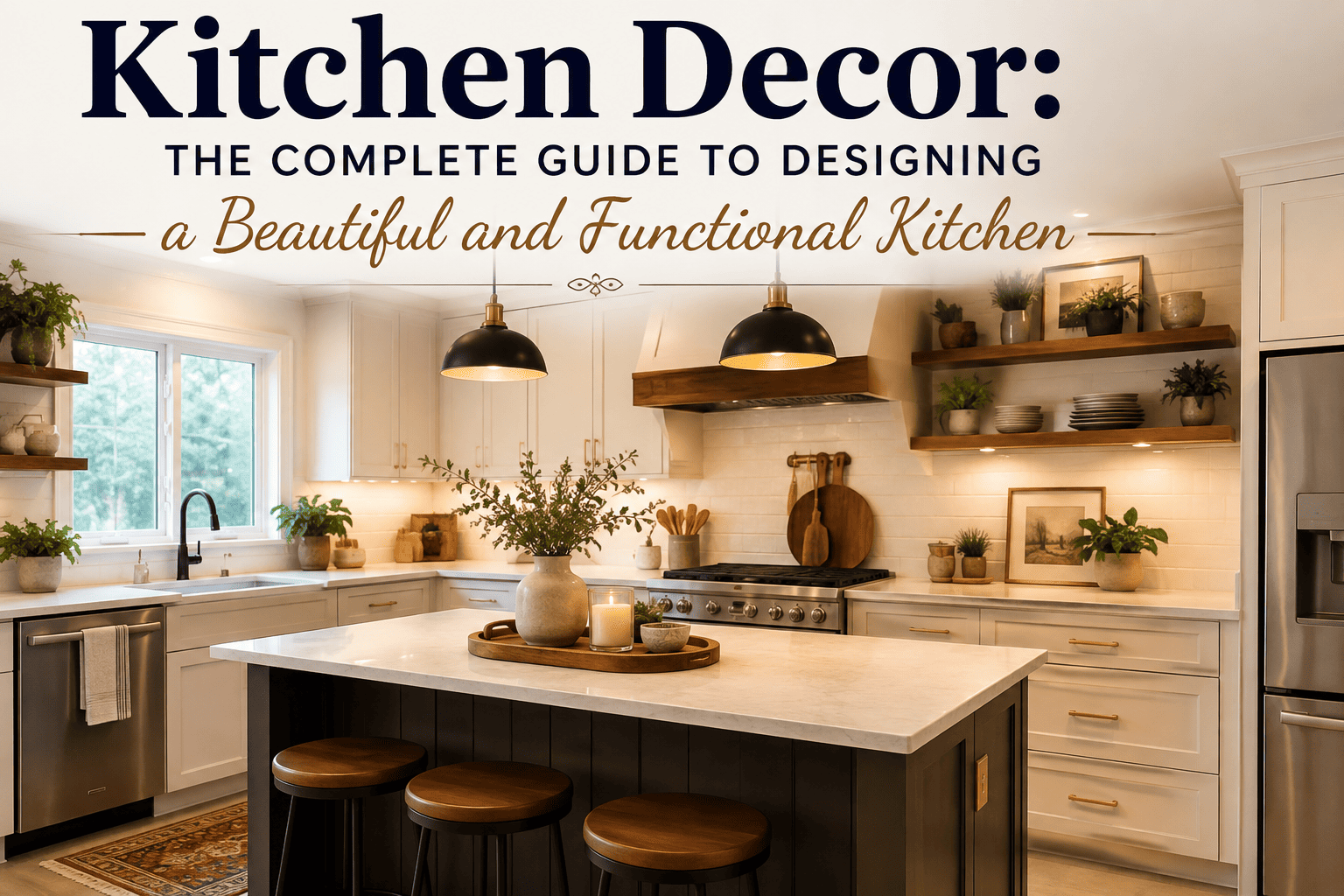
The kitchen has become much more than a place to prepare meals. It is where families gather, mornings begin, guests sit and talk, and everyday routines take place. That is why good kitchen decor should do more than make the room look attractive. It should make the space feel comfortable, organized, practical, and connected to the way you actually live.
A beautiful kitchen and a functional kitchen are not competing goals. The most successful spaces combine both. Counters remain useful, storage is easy to access, lighting supports everyday tasks, and decorative elements add personality without creating unnecessary clutter.
The good news is that you do not need a complete renovation to create this effect. Changes to color, lighting, cabinet hardware, wall decor, textiles, shelving, and countertop styling can dramatically change the atmosphere of an existing kitchen.
This complete guide explains how to approach kitchen decor from the ground up, including decorating styles, color schemes, small-kitchen solutions, cabinets, countertops, wall decor, lighting, natural textures, budget ideas, common mistakes, and practical ways to create a cohesive kitchen that looks beautiful while still working hard every day.
What Is Kitchen Decor?
Kitchen decor refers to the decorative and finishing elements that give a kitchen its personality. These include colors, artwork, lighting, textiles, plants, accessories, countertop displays, shelving arrangements, and hardware.
Kitchen decor is different from kitchen design. Design generally deals with structural and functional elements such as the floor plan, cabinetry layout, plumbing, appliances, countertops, and permanent fixtures. Decor works primarily with the elements layered onto that foundation.
This distinction is important because you can significantly improve the appearance of your kitchen without changing its structure. A dated kitchen may need new cabinets eventually, but changing the wall color, replacing cabinet handles, improving lighting, adding a runner, and editing countertop clutter can make the existing room feel completely different.
Good decor also requires restraint. Adding more objects does not automatically make a kitchen look more finished. The goal is to create visual balance so that useful objects and decorative pieces support each other rather than compete for attention.
Many of the same principles used in living room decor also apply to kitchens. Color repetition, scale, focal points, texture, and negative space all help create a cohesive interior. This becomes particularly important when the kitchen opens directly into a living or dining area.
How to Choose a Kitchen Decor Style
Choosing a general decorating direction before buying accessories makes the entire process easier. Without a clear style, it is easy to collect individual items that look attractive by themselves but do not work together.
Modern Kitchen Decor
Modern kitchen decor focuses on clean lines, simple shapes, restrained decoration, and a relatively controlled color palette. Matte finishes, streamlined hardware, simple pendant lights, and uncluttered countertops often work well in this style.
The key is not to make the kitchen completely empty. A few carefully selected accessories can prevent a modern kitchen from feeling cold or impersonal.
Farmhouse Kitchen Decor
Farmhouse style creates a warm, welcoming atmosphere through natural wood, simple textiles, vintage-inspired accessories, open shelving, and comfortable colors.
Rather than filling the room with obvious farmhouse signs and decorations, a more timeless approach is to use natural materials and subtle rustic details.
Minimalist Kitchen Decor
Minimalist kitchens focus on simplicity and purposeful choices. Surfaces are kept relatively clear, storage is carefully planned, and decorative objects are limited to pieces that genuinely contribute to the room.
Minimalism works particularly well in smaller kitchens because visual clutter can make limited space feel even smaller.
Traditional Kitchen Decor
Traditional kitchen decor uses classic materials, detailed cabinetry, decorative hardware, richer colors, and layered accessories. The style feels established and timeless rather than heavily trend-driven.
Rustic Kitchen Decor
Rustic decor emphasizes natural imperfections and earthy materials. Wood, stone, woven textures, handmade ceramics, and warm neutral colors can create a relaxed and lived-in appearance.
Transitional Kitchen Decor
Transitional kitchen decor combines traditional warmth with modern simplicity. It is particularly useful if you like classic details but do not want your kitchen to feel old-fashioned.
You do not have to follow one decorating style perfectly. In fact, many of the most comfortable kitchens combine elements from two styles. The important thing is to repeat colors, materials, and shapes so the combination looks intentional.
Decorating by Kitchen Layout and Size
The best kitchen decor depends partly on the amount of available space and the way the kitchen is arranged.
Small Kitchen Decor Ideas
Small kitchens benefit from visual simplicity. Light colors can make walls feel less imposing, while reflective surfaces can help distribute available light.
Instead of filling countertops with decorative accessories, use the walls and vertical areas for storage and display. Floating shelves, hanging rails, magnetic storage, and tall narrow organizers can make better use of limited space.
Choose accessories that perform more than one job whenever possible. A wooden cutting board can function as both a practical kitchen tool and an attractive display piece. A decorative bowl can hold fruit rather than simply occupying space.
The goal is not to make a small kitchen look larger through decoration alone. It is to make every visible element earn its place.
Decorating a Large Kitchen
Large kitchens have the opposite challenge. Too little decoration can make a spacious room feel unfinished.
Instead of spreading small accessories across every surface, create intentional zones. A kitchen island might become the main focal point, while open shelving, a large piece of artwork, or a collection of pendant lights provides additional visual structure.
Scale matters here. Larger kitchens can usually handle bigger artwork, substantial lighting fixtures, larger bowls, taller plants, and more substantial textiles than a compact kitchen.
Open-Concept Kitchen Decor
Open-concept kitchens need to work visually with the rooms around them. Because the kitchen is visible from the living or dining area, dramatic differences in color or decorating style can make the spaces feel disconnected.
A better approach is to repeat one or two elements between the areas. The same wood tone, metal finish, accent color, or artwork style can create continuity.
For example, if your living room decor uses warm wood and muted green accents, introducing those same elements through kitchen shelving, stools, plants, or textiles can connect the two spaces without making them identical.
Choosing the Right Kitchen Color Scheme
Color establishes the emotional atmosphere of a kitchen before most decorative details are noticed.
Best Kitchen Wall Colors
Soft neutrals such as warm white, greige, beige, muted sage, and other understated shades are flexible choices because they work with many cabinet and countertop finishes.
The amount of natural light should also influence your decision. A color that looks warm and inviting in a bright kitchen may appear significantly darker in a room with limited windows.
Neutral Kitchen Color Ideas
Neutral colors provide a reliable foundation because they allow other elements to become focal points. Wood, artwork, plants, decorative ceramics, and colorful textiles can then introduce personality without making the room feel visually chaotic.
Neutral does not have to mean boring. Different textures can make a neutral kitchen feel layered and sophisticated.
Adding Color Without Overdoing It
If you want more color, introduce it through elements that are easy to replace. A kitchen runner, vase, artwork, dishware, flowers, or countertop accessories can add personality without committing you to a permanent trend.
This approach is especially useful if you enjoy changing your decor seasonally.
Coordinating Cabinets, Walls, and Accessories
A simple approach is to choose one dominant color family, one supporting neutral, and one accent. Repeat those colors throughout the kitchen instead of introducing a new color every time you add an accessory.
For example, warm white walls, natural wood, and muted green accents can appear through cabinetry, shelving, plants, textiles, and artwork.
Kitchen Cabinet Decor Ideas
Cabinets occupy a large portion of a kitchen’s visual area, so even small changes can have a noticeable effect.
Styling Upper Cabinets
If you have glass-front cabinets or open upper storage, avoid treating every shelf as a display case. A smaller selection of coordinated dishes, glasses, bowls, and decorative objects generally looks more polished than a completely filled shelf.
Leave some empty space between groups of objects. That breathing room makes the items that remain more noticeable.
Open Shelving vs. Closed Cabinets
Open shelving creates a lighter and more personal appearance, but it requires regular editing because everything remains visible.
Closed cabinetry provides more visual calm because it hides everyday clutter. A combination of open and closed storage often offers the best balance between display and practicality.
Decorating Above Kitchen Cabinets
The space above kitchen cabinets can be difficult to style because small decorative objects often become visually lost or create a cluttered appearance.
If the gap is large enough to decorate, choose a few larger elements such as baskets, greenery, ceramic pieces, or coordinated containers. Avoid filling every inch simply because the space is available.
The same principles used in living room wall decor apply here: consider scale, grouping, balance, and negative space.
Choosing Cabinet Hardware
Cabinet hardware is one of the easiest ways to update the appearance of a kitchen without replacing the cabinets.
Choose a finish that works with the rest of the room. Brass, matte black, brushed nickel, and other finishes can all work beautifully, but consistency is usually more important than following a particular trend.
If the kitchen already contains several metal finishes, repeating one of them through cabinet handles or lighting can make the room feel more intentional.
Kitchen Countertop and Island Decor
Countertops are where kitchen decor can easily become impractical. Because these surfaces are used constantly, decoration needs to leave enough room for cooking and cleaning.
What to Keep on Kitchen Countertops
The most successful countertop displays usually contain objects that are either used regularly or genuinely contribute to the appearance of the room.
A fruit bowl, cutting board, coffee station, stand mixer, ceramic container, or small plant can all work because they combine function and decoration.
Creating Attractive Countertop Displays
Grouping objects creates more visual order than scattering them across the entire counter.
Varying height and texture can also make a display more interesting. For example, a wooden board placed behind a ceramic bowl and a small plant creates more depth than three objects of identical size placed in a straight line.
Styling a Kitchen Island
The kitchen island is often the natural centerpiece of the room. However, because it is also a working surface, decoration should remain simple.
A wooden bowl, vase, tray, or small arrangement can provide a focal point without interfering with food preparation or seating.
Balancing Decoration With Practicality
Before leaving anything on the countertop, ask whether it is useful, beautiful, or ideally both.
If an object constantly has to be moved before cooking, it may eventually become frustrating rather than decorative.
Kitchen Wall and Backsplash Decor
Kitchen walls provide an opportunity to introduce personality without taking away valuable countertop space.
Artwork and Framed Prints
One carefully chosen piece of artwork can have more impact than several small decorations.
Choose artwork that complements the kitchen’s color palette and keep its scale appropriate for the wall. If the kitchen connects to a living room, repeating a frame material or accent color can create visual continuity.
Decorative Plates and Wall Collections
Decorative plates can work particularly well in farmhouse, traditional, cottage, and eclectic kitchens. A coordinated arrangement can introduce pattern and texture without requiring a major renovation.
Kitchen Signs and Typography
Typography can add personality, but excessive kitchen-themed signage can quickly make a room feel overly decorated.
If you like signs, choose one meaningful or visually interesting piece rather than covering every available wall with words.
Creating an Accent Wall
An accent wall can be created through paint, wallpaper, textured materials, or tile. The strongest results usually come from choosing one clear focal surface instead of creating several competing accent areas.
Backsplash Styling
The backsplash is both functional and decorative. Subway tile provides a classic look, while patterned tile can introduce personality and natural stone can create a more luxurious appearance.
When selecting backsplash materials, consider the relationship between the tile, cabinetry, countertops, and wall color. A backsplash should complete the overall palette rather than become an isolated feature.
Kitchen Shelving and Display Ideas
Open shelving can make a kitchen feel more spacious and personal, but successful shelf styling requires editing.
Styling Open Shelves
Combine everyday dishes with a few decorative pieces. A stack of plates, a bowl, a small plant, and a couple of cookbooks can create an arrangement that feels useful rather than staged.
Mixing Decorative and Functional Items
The most practical shelves usually contain a mixture of both. Everyday objects provide authenticity, while decorative pieces add visual interest.
Instead of following a strict percentage rule, aim for a balance where the shelves still look attractive while remaining genuinely useful.
Creating Balanced Arrangements
Vary height, shape, texture, and color. Place heavier-looking pieces lower or toward the back, and leave areas of empty space so the arrangement can breathe.
What Not to Put on Open Shelves
Avoid displaying objects that become greasy, dusty, or difficult to clean unless you are willing to maintain them regularly.
Open shelving is attractive precisely because everything is visible, so maintenance should be part of the decorating decision.
Kitchen Lighting and Its Decorative Impact
Lighting is one of the most important parts of kitchen decor because it affects both appearance and everyday functionality.
Layered Kitchen Lighting
A well-lit kitchen generally benefits from three layers:
Ambient lighting provides overall illumination.
Task lighting helps with food preparation and other activities, such as under-cabinet lighting.
Accent lighting adds atmosphere and highlights features such as glass cabinets, shelves, artwork, or an island.
Using multiple layers gives you more control than relying on one central ceiling fixture.
Pendant Lights
Pendant lights above an island or dining area can become a major design feature. Their size should be proportional to the island and the overall kitchen rather than chosen only because the fixture looks attractive by itself.
Under-Cabinet Lighting
Under-cabinet lighting improves visibility on work surfaces and adds depth to the kitchen after dark.
It can also make cabinets and backsplash materials appear more finished by creating a subtle layer of light.
Warm vs. Cool Kitchen Lighting
Warm light around 2700–3000K tends to create a comfortable, welcoming atmosphere. Cooler light can feel brighter and more contemporary but may sometimes make a kitchen appear overly clinical.
A warm-to-neutral lighting approach is often a comfortable compromise for kitchens that need to support both work and relaxation.
How Lighting Changes the Mood
The same kitchen can feel completely different depending on its lighting. A single harsh overhead fixture may make a room feel flat, while layered lighting creates depth and allows different areas to stand out.
For this reason, improving lighting can sometimes make a bigger visual difference than purchasing several new accessories.
Texture, Natural Elements, and Kitchen Accessories
A kitchen contains many hard surfaces: cabinets, countertops, appliances, tile, and flooring. Without softer elements, the room can feel visually cold.
Wooden cutting boards, stools, shelves, and serving pieces introduce warmth. Woven baskets and textiles soften straight lines, while ceramic objects add handcrafted texture.
Plants and fresh greenery can also make a noticeable difference. A small herb pot near a window provides both visual interest and a practical purpose.
Natural stone, wood, ceramic, woven fibers, glass, and metal can be combined to create depth. The goal is not to use every material available but to introduce enough variation that the kitchen does not feel flat.
Kitchen runners and rugs are another effective way to add softness and color, particularly in front of a sink or along a long work area. Choose washable or easy-care materials if the kitchen receives heavy daily use.
How to Make a Kitchen Look More Expensive
An expensive-looking kitchen is not necessarily one filled with expensive products. Often, the appearance of quality comes from consistency, proportion, lighting, and restraint.
Start with a controlled color palette. Two or three main colors usually create a more intentional appearance than a collection of unrelated shades.
Next, pay attention to details that are used or seen frequently. Cabinet hardware, faucets, lighting fixtures, and textiles can have a disproportionate effect on how polished the kitchen feels.
Lighting is equally important. Well-positioned layered lighting can highlight attractive surfaces while reducing the harshness that makes some kitchens look basic.
Finally, reduce visual clutter. Empty counter space creates breathing room and allows the materials and decorative elements that remain to stand out.
One carefully selected statement piece can often have more impact than several inexpensive accessories competing for attention.
Kitchen Decor on Any Budget
Decorating a kitchen does not have to involve a large budget.
Decorating Without Remodeling
Replacing cabinet hardware, repainting walls, adding a runner, changing light fixtures, introducing artwork, and reorganizing countertops can produce substantial visual changes without altering the kitchen layout.
These updates are particularly useful when the cabinets and countertops are still functional but the room feels outdated.
DIY and Repurposed Kitchen Decor
Simple DIY projects can add personality without requiring expensive materials. Old jars can become coordinated storage containers, wooden crates can become rustic display pieces, and personal artwork can be framed for inexpensive wall decor.
The strongest DIY decor usually looks intentional rather than overly crafty, so keep colors and materials consistent with the rest of the room.
Where to Spend and Where to Save
Spend more on elements you touch or use frequently, such as cabinet hardware, faucets, lighting, and durable textiles.
Save on accessories that are easy to replace. Decorative bowls, vases, seasonal pieces, and artwork can often be changed later without affecting the overall kitchen.
Mid-Range and Luxury Updates
If your budget allows, make improvements in stages. Start with organization and visual clutter, then move to hardware and lighting, followed by larger upgrades such as backsplash materials or premium surfaces.
This approach helps you avoid spending heavily on decorative changes before fixing the basic visual problems.
Renter-Friendly Kitchen Decor
Renters can still make significant improvements through removable and non-permanent decor.
Removable wallpaper, peel-and-stick backsplash materials, freestanding storage, temporary lighting solutions, rugs, curtains, artwork, and countertop accessories can add personality without permanently altering the property.
Always check your rental agreement before making changes that could affect walls or fixtures.
Common Kitchen Decor Mistakes to Avoid
Adding Too Many Decorative Items
A kitchen is already visually busy because of appliances, cabinets, utensils, and food-preparation equipment. Adding decoration to every available surface can make the room feel smaller and harder to maintain.
Edit your displays instead of constantly adding to them.
Ignoring Scale and Proportion
A tiny vase can disappear on a large island, while oversized artwork can overwhelm a narrow wall.
Before buying decor, consider the size of the surface and the surrounding objects.
Choosing Poor Lighting
A kitchen that looks attractive during the day can feel completely different at night if it relies on one harsh overhead light.
Layered lighting provides better function and atmosphere.
Mixing Too Many Styles
Combining styles can work, but there should be a visual connection between them. Repeating colors, materials, or shapes helps different styles feel intentional rather than accidental.
Sacrificing Function for Appearance
Decor should never make the kitchen difficult to use.
If an accessory blocks a preparation area, prevents a cabinet from opening, creates a cleaning problem, or constantly needs to be moved, it may not belong there.
How to Create a Cohesive and Functional Kitchen Look
Cohesion comes from repetition. Choose a few visual elements and repeat them throughout the space.
For example, a particular wood tone might appear in shelving, cutting boards, stools, and serving pieces. A metal finish might appear in cabinet handles, lighting, and faucets.
Balance open and closed storage so that the kitchen has personality without requiring constant tidying.
Whenever possible, combine decoration with storage. Attractive canisters, baskets, serving bowls, and cookbooks can contribute to the appearance of the kitchen while still serving practical purposes.
A focal point is also important. This could be a kitchen island, pendant lights, a range hood, an artwork piece, a backsplash, or a beautifully styled open shelf.
Finally, keep frequently used items accessible. A functional kitchen should not require you to move half the decor before preparing a meal.
Connecting Kitchen Decor With Living Room Decor
In open-concept homes, kitchen decor should not be treated as completely separate from the surrounding living space.
The kitchen and living room do not need to match exactly. Instead, they should share a visual relationship.
You can create this connection by repeating an accent color, using similar wood tones, choosing related metal finishes, or selecting artwork with a complementary color palette.
For example, if the living room contains warm wood furniture and black metal accents, those same materials can appear through kitchen stools, shelving brackets, pendant lights, or cabinet hardware.
The result is a home that feels connected without looking overly coordinated.
Kitchen Decor Ideas for Different Lifestyles and Seasons
Family-Friendly Kitchens
Family kitchens need decor that can survive daily activity. Durable materials, washable rugs, easy-to-clean surfaces, and storage that keeps fragile objects out of reach can make the room both attractive and practical.
Small Apartment Kitchens
Apartment kitchens benefit from multifunctional accessories, vertical storage, removable decor, and carefully controlled countertop displays.
Entertainer-Friendly Kitchens
If you frequently host guests, make the island and lighting part of the experience. Attractive serving bowls, practical drink stations, comfortable stools, and warm lighting can make the kitchen feel welcoming without turning it into a showroom.
Minimalist Kitchens
Minimalist kitchens work best when every visible object has a purpose. Choose fewer accessories and focus on quality, texture, and proportion.
Busy Everyday Kitchens
If you have little time for maintenance, avoid delicate decorative objects that require frequent cleaning. Washable textiles, durable materials, and functional accessories are better choices.
Seasonal and Holiday Kitchen Decor
Seasonal decorating works best when it remains subtle. A seasonal runner, small centerpiece, fresh flowers, or a few decorative accents can introduce the season without requiring a complete kitchen makeover.
A Step-by-Step Kitchen Decorating Process
1. Define Your Style
Choose one primary style and, if desired, a secondary influence. Think about how you want the kitchen to feel as well as how you want it to look.
2. Choose Your Color Palette
Select a dominant color, supporting neutral, and accent color. Use these choices consistently across walls, accessories, textiles, and artwork.
3. Declutter the Space
Remove unnecessary objects before purchasing new decor. A clean starting point makes it easier to see what the kitchen actually needs.
4. Improve the Lighting
Look at ambient, task, and accent lighting. Improving illumination can dramatically change the appearance of the room.
5. Style Cabinets, Shelves, and Countertops
Start with the largest visible surfaces and create small, intentional groups instead of spreading decorations everywhere.
6. Add Texture and Accessories
Introduce wood, ceramic, textiles, plants, artwork, and other materials gradually. Stop when the room feels balanced rather than when every empty surface is filled.
7. Review the Final Balance
Walk through the kitchen and look at it from different angles. Remove anything that feels unnecessary, blocks movement, or attracts attention for the wrong reason.
This final editing step is often what separates a thoughtfully decorated kitchen from an overcrowded one.
Frequently Asked Questions About Kitchen Decor
How Can I Decorate My Kitchen Without Remodeling?
Focus on changes that do not require structural work, such as cabinet hardware, lighting, wall art, runners, countertop styling, plants, and removable decor.
What Are the Best Colors for Kitchen Decor?
Warm whites, greige, beige, muted sage, soft gray, and natural wood tones provide flexible foundations. Accent colors can then be introduced through accessories and textiles.
How Do I Decorate a Small Kitchen?
Keep countertops relatively clear, use vertical storage, choose appropriately scaled accessories, and use light or reflective finishes where they suit the room.
How Can I Make My Kitchen Look Expensive?
Use a consistent color palette, improve lighting, upgrade visible details such as hardware, reduce clutter, and choose a few high-quality-looking statement pieces instead of many small decorations.
What Should I Put on My Kitchen Countertops?
Choose items that you use regularly or that genuinely improve the appearance of the space. A fruit bowl, cutting board, plant, coffee setup, or attractive canister can work well.
How Do I Decorate Above Kitchen Cabinets?
If the space is suitable for decoration, use a small number of larger pieces such as baskets, greenery, or coordinated ceramics. Avoid filling the entire gap with small objects.
What Kitchen Decor Styles Are Timeless?
Transitional, classic, neutral, and restrained farmhouse-inspired styles tend to remain adaptable because they combine familiar materials with relatively simple shapes and colors.
What Color Cabinets Never Go Out of Style?
White, natural wood, warm neutrals, and other understated cabinet colors have remained versatile choices because they work with many decorating styles.
How Much Does Kitchen Decor Typically Cost?
Costs vary significantly. Small changes such as hardware, accessories, textiles, and artwork can be inexpensive, while lighting, backsplash materials, and larger decorative upgrades require a greater investment.
How Do I Decorate a Kitchen Island?
Keep the center relatively simple. A bowl, vase, tray, or small centerpiece can create a focal point while leaving enough room for food preparation and everyday use.
How Do I Match Kitchen Wall Decor With My Living Room Decor?
Repeat one or two visual elements between the spaces. Shared colors, wood tones, frame styles, artwork themes, or metal finishes can make an open-concept kitchen and living room feel connected without making them identical.
Conclusion
Great kitchen decor is not about filling every shelf, countertop, and wall. It is about making thoughtful choices that combine beauty, comfort, organization, and everyday functionality.
Start with the way you actually use your kitchen. From there, choose a decorating style, establish a color palette, reduce unnecessary clutter, improve lighting, and gradually introduce texture, artwork, plants, textiles, and functional accessories.
For smaller kitchens, prioritize vertical space and visual simplicity. For larger kitchens, focus on scale and intentional focal points. For open-concept homes, connect the kitchen with the surrounding living room decor through repeated colors, materials, and design details.
Most importantly, remember that the best kitchen is not the one with the most decoration. It is the one where everything feels purposeful, comfortable, and genuinely suited to the people who use it every day.

Leave a Reply