
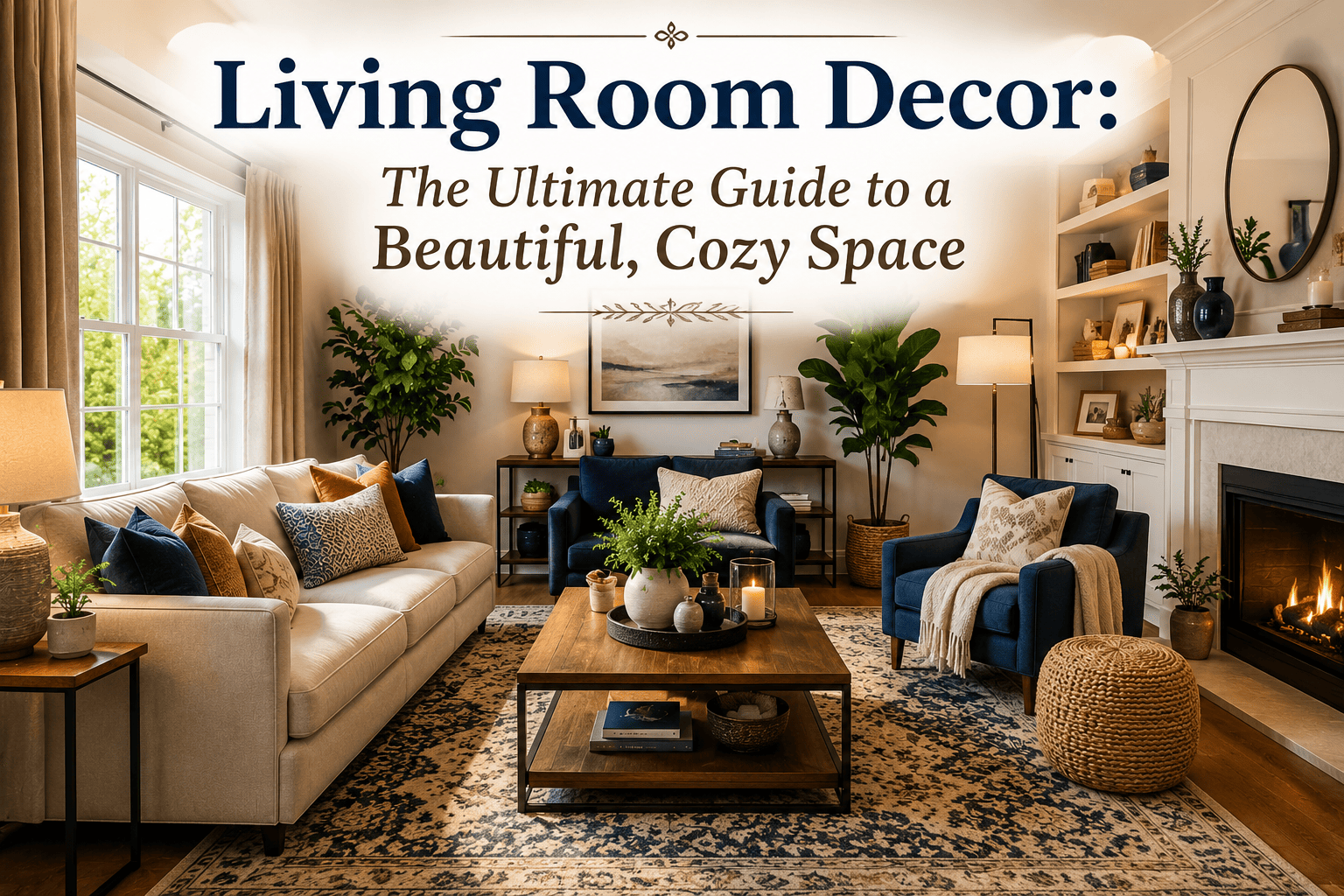
Living room decor is the art of arranging color, furniture, lighting, and personal touches to turn an empty room into a warm, functional space that reflects how you actually live. Done well, it balances three things: comfort, style, and flow — and it doesn’t require a big budget or a design degree to get right. I still remember the first apartment I decorated on my own. The sofa was secondhand, the walls were bare, and the room felt more like a waiting area than a home. It took a few weekends, a can of paint, and one bold gallery wall to turn that flat, forgettable space into a room I actually looked forward to walking into. That small transformation taught me something powerful: small, intentional choices matter more than a big budget ever could.
Your living room is the heart of your home. It’s where you unwind after a long day, chat with friends over coffee, and build memories with family. A thoughtfully styled living room doesn’t just look stunning — it makes you feel good every single time you step inside. The best part? Anyone can pull this off. With a handful of smart choices, you can shape a living room that feels comfortable, elegant, and completely yours. Let’s get started.
Why Living Room Decor Matters More Than You Think
Your surroundings quietly shape your mood. This isn’t just a hunch — it’s backed by solid research. Environmental psychologists have long shown that our physical spaces influence stress levels, focus, and overall happiness. A messy, dull room can silently drain your energy, while a bright, tidy, and thoughtfully arranged room can lift your spirits and help you relax.
That’s why living room decor is about so much more than appearances. It’s about designing a space that genuinely supports how you live, unwind, and connect with the people you love.
Start With a Clear Plan (Not a Shopping Cart)
Before you grab a single throw pillow, pause for a moment. Every jaw-dropping living room begins with a simple, thoughtful plan — not an impulsive shopping spree.
Define How You Use the Room
Think honestly about your daily habits. Do you binge-watch shows most evenings, host friends and family often, share the space with kids or pets, or sometimes work from the sofa? Your answers shape everything, from furniture placement to storage needs.
Set a Realistic Budget
You don’t need a bottomless bank account to make a striking impact. Many of the most inviting rooms blend affordable finds with one or two splurge pieces, such as a statement rug or a plush, comfortable sofa.
Pick a Style Direction
Choose two or three words that capture your dream space, such as cozy and warm, bright and airy, bold and contemporary, or calm and minimal. This keeps your decisions consistent and helps you dodge a mismatched, cluttered look.
Choose a Color Palette That Feels Right
Color sets the mood for your entire room. Color theory — a well-established field within design and psychology — confirms that different hues spark different emotional reactions. Soft neutrals like beige, cream, and warm gray create a calm, timeless backdrop, while blues and greens promote tranquility and relaxation. Warm shades like terracotta and mustard add energy and coziness, and bold jewel tones like emerald or navy bring drama and richness.
A simple formula that never fails: pick one dominant color, one supporting shade, and one accent tone. This “60-30-10” method is a trusted approach used by professional designers to create balanced, visually pleasing spaces.
Furniture Layout: The Secret to a Room That Flows
Even the most gorgeous furniture can make a room feel clumsy if it’s arranged poorly. Start by creating a clear focal point — a fireplace, a television, a large window, or a striking piece of art — and arrange your furniture around it. Leave at least 30 inches of walking space between pieces so the room feels open rather than cramped.
Instead of shoving every piece against the wall, pull your sofa and chairs slightly inward. This “floating” trick instantly makes a room feel more inviting and sparks natural conversation. Finally, balance large furniture, like sofas, with smaller accent pieces, like side tables and ottomans, to create visual rhythm that keeps the eye moving comfortably around the room.
Lighting: The Underrated Power Move
Lighting design experts agree on one point: good lighting can transform a room more dramatically than almost anything else. The most well-designed living rooms layer three types of light — ambient light for overall brightness, task light for reading or working, and accent light to spotlight art, shelves, or plants. Layering these sources creates depth and warmth, whether it’s day or night.
Keep windows uncluttered whenever possible, and let light, breathable curtains allow sunlight to pour in. This instantly makes any room feel bigger and more radiant. When choosing bulbs, go warm: warm white bulbs, roughly 2700K to 3000K, create a cozy, welcoming glow, while cool white bulbs can feel harsh and sterile in a relaxing space like your living room.
Textiles and Textures: Add Comfort and Depth
A room full of hard, flat surfaces can feel cold, even when it looks tidy. Soft textures instantly boost comfort and warmth. A rug anchors your seating area, throw pillows bring color and softness to sofas and armchairs, blankets add a cozy, lived-in charm, and curtains soften windows while visually adding height to the room.
Mix textures like woven baskets, smooth wood, plush fabric, and glass or metal accents. This contrast is what makes a room feel rich and intentional instead of flat and forgettable.
Wall Decor: Turn Blank Space Into a Statement
Bare walls are a missed opportunity — and honestly, one of my favorite places to get creative. When I moved into my current place, I spent one Saturday afternoon arranging thrifted frames on a single wall, and that one project completely changed how the entire room felt.
A curated gallery wall of framed photos, art prints, or sketches adds personality and charm when the spacing stays even and clean. If a gallery feels like too much work, one large statement art piece can instantly become the star of the room with far less effort. Mirrors are another designer favorite, since they bounce light around and make rooms feel larger and airier — an effect grounded in basic principles of optics and interior design. Floating shelves and woven wall hangings are wonderful ways to layer in extra texture without overwhelming the space.
Bring in Plants for Instant Life
Adding greenery is one of the simplest, most budget-friendly upgrades you can make. Studies in environmental psychology consistently link indoor plants to improved mood and a stronger sense of well-being. Beginner-friendly options like pothos, snake plant, peace lily, and ZZ plant are nearly impossible to kill, and even a single plant can make a room feel fresher, greener, and more alive.
Storage and Organization: Beauty Needs Function
A gorgeous living room also needs to be a functional one, since clutter is one of the quickest ways to undo great decor. Tuck away remotes, chargers, and toys in baskets or bins, choose furniture with built-in storage like ottomans or console tables with shelves, and keep surfaces mostly clear, styling just a few items like books or a candle. A tidy, organized room instantly feels calmer and more welcoming.
Personal Touches That Make It Feel Like Home
The most beautiful living rooms aren’t just stylish — they’re deeply personal. Framed family photos, travel souvenirs, well-loved books, a favorite candle scent, and art that makes you smile all add character no store-bought decor can replicate. I’ve found that a single travel souvenir on a shelf sparks more compliments — and more conversation — than any expensive decor piece ever could. These small touches turn a “nice room” into a space that truly feels like home.
A Quick Word on Kitchen Decor and Flow
Your living room rarely exists in isolation — for many open-concept homes, it flows directly into the kitchen. Echoing one or two colors, materials, or textures from your kitchen decor into your living room creates a smooth, unified feel throughout the home. A wooden accent in your kitchen, for instance, can be gently mirrored with a wood-framed mirror or shelf in your living space. This subtle continuity makes the whole home feel intentional, not disjointed.
Common Living Room Decor Mistakes to Avoid
Even well-meaning decorators fall into a few traps. Pushing all furniture against the walls creates a disconnected, empty-feeling center, while a rug that’s too small leaves furniture looking like it’s floating awkwardly in space. Ignoring scale — oversized furniture in a small room, or tiny furniture in a big room — throws off the balance, and a perfectly matched furniture set can feel flat and impersonal rather than warm. Finally, don’t forget lighting layers; one overhead light is rarely enough for a cozy, inviting feel. Sidestepping these simple mistakes instantly elevates your entire space.
Your Quick-Start Action Plan
Ready to transform your living room? Here’s a simple, exciting roadmap:
- Define your style in a few words.
- Set your color palette using the 60-30-10 rule.
- Arrange furniture around a clear focal point.
- Layer your lighting.
- Add soft textiles for comfort.
- Decorate your walls with art, shelving, or mirrors.
- Bring in a plant or two.
- Add storage to keep things tidy.
- Echo a touch of your kitchen decor for a unified flow.
- Finish with personal touches you love.
Small changes, done thoughtfully, create a powerful result. You don’t need to tackle everything at once — even one or two updates can make your living room feel brand new.
Frequently Asked Questions
What is the best color for a small living room?
Soft, light neutrals like white, cream, or light gray work best. They reflect light and make a small space feel open and airy.
How do I make my living room feel cozy?
Layer soft textures like rugs, pillows, and blankets. Use warm lighting and add personal touches like photos or candles.
What size rug should I use in my living room?
Choose a rug large enough for at least the front legs of your sofa and chairs to sit on it. This creates a connected, balanced look.
How many throw pillows should I put on my sofa?
A common guideline is three to five pillows, mixing sizes and patterns for visual interest without overcrowding.
What lighting is best for a living room?
A mix of ambient, task, and accent lighting creates the most comfortable and flattering glow for everyday living.

Leave a Reply