
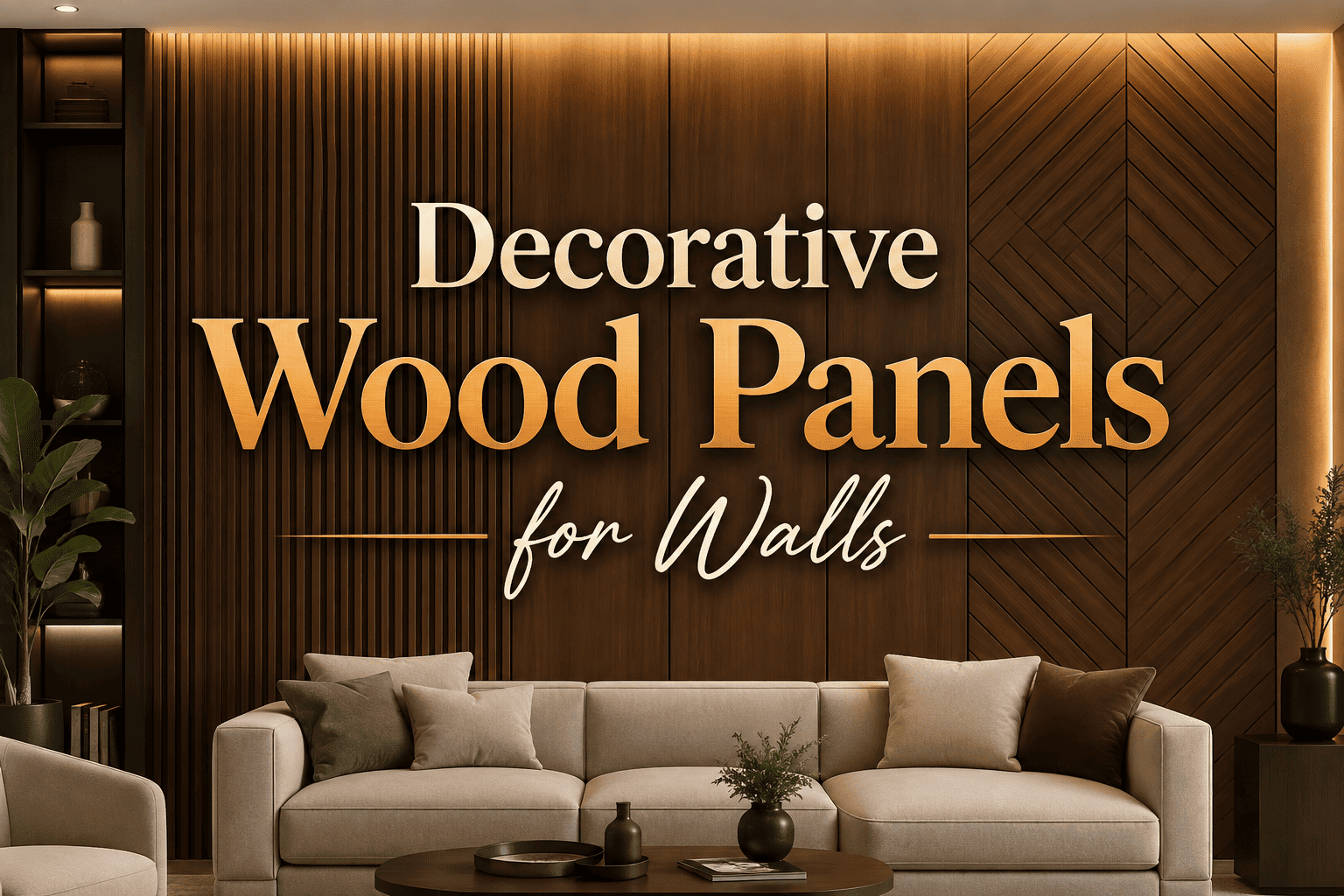
The most striking decorative wood wall panels include dark walnut, black fluted slats, floor-to-ceiling vertical panels, smoked oak, geometric arrangements, reeded textures, and backlit wood walls. For the most expensive-looking result, focus on rich wood tones, clean installation, layered warm lighting, and enough negative space to let the texture stand out on its own.
Introduction
A room can have beautiful furniture, expensive-looking lighting, and a perfectly chosen rug and still feel strangely unfinished. Often the problem isn’t what’s in the room — it’s the wall behind it.
That’s where decorative wood panels change the atmosphere entirely. Unlike paint, wood adds physical depth, natural grain, shadow, and architectural character. Choose a darker finish — rich walnut, smoked oak, black slats, sculptural fluting — and the effect becomes even more dramatic. These aren’t the dated wood-paneled walls of the past; today’s versions are cleaner, moodier, and far more intentional.
The secret isn’t covering every surface with wood. A single well-designed wall almost always creates more impact than an entire room competing for attention.
Why Wood Panels Work So Well in Moody Interiors
Wood has something paint can’t reproduce: texture that changes with light. A flat painted wall stays static throughout the day, while wood panels create highlights and shadows that shift as light moves across the surface — which makes even a simple design feel architectural.
Dark finishes add another layer of drama. Instead of an ordinary accent wall, a deep brown or charcoal surface can make a cozy living room feel intimate, a bedroom feel cocooning, or a dining room feel like a boutique restaurant. Moody doesn’t mean gloomy, though — the best results pair darker wood with warm lighting, lighter upholstery, and a few reflective or stone accents so the room still feels inviting.
1. Dark Walnut — Instant Expense
Few materials create visual richness like dark walnut. Its deep brown color and varied grain give a wall enough character to become the room’s main feature without extra artwork. Use it behind a sofa, fireplace, or dining area, paired with cream upholstery, black details, and aged brass. Let the grain be the decoration — resist adding more.
2. Black Slat Walls With Serious Drama
Vertical black slats create repetition, while the gaps between them add negative space that keeps the finish from feeling like a heavy block. Pair with warm white lighting, beige or cream seating, and natural textiles. Behind a TV, the slats help the screen visually recede rather than dominate the room.
3. Floor-to-Ceiling Panels for Maximum Impact
Vertical paneling draws the eye upward, making ceilings feel taller and giving a plain wall real architectural presence. Panel one wall rather than all of them — behind a bed, sofa, or fireplace is usually enough. Narrow lines feel lighter and more contemporary; wider panels give the grain more visual weight.
4. Fluted Wood That Turns Shadows Into Decor
Fluted panels are about light and shadow — the repeated grooves create tiny valleys that shift in appearance throughout the day, sharper in daylight and softer under evening lamps. Use it behind a bed, TV, console, or entryway bench, and keep the surrounding furniture simple so the grooves stay the focus.
5. A Moody TV Wall That Looks Custom-Built
A television can be the least attractive object in an otherwise well-decorated room. Install vertical slats or a clean panel behind it, add concealed storage, and keep cables out of sight. The goal: make the wall the feature and let the screen disappear into it.
6. Wood + Stone for a Boutique-Hotel Feel
Dark wood brings warmth; marble or travertine brings coolness and solidity — together they make both materials look more interesting. Try a wood-paneled wall with a stone fireplace, or a stone console against walnut paneling. Keep accessories minimal; the materials should carry the drama.
7. A Bedroom Wall That Feels Like a Private Cocoon
Placing panels behind the bed frames the sleeping area and anchors the room. Dark walnut or smoked oak, softened with linen bedding, wool throws, and upholstered furniture, turns a bedroom into a private boutique-suite feel rather than simply a dark room.
8. Deep Green Paint Meets Warm Wood
Wood and deep green share earthy undertones, making them natural partners. Olive feels relaxed, forest green feels dramatic, and deep sage keeps things lighter. Add black hardware or aged brass to keep the palette refined rather than rustic.
9. Geometric Panels as Contemporary Art
Angled sections, layered strips, or sculptural arrangements create movement across a wall and can function like oversized art on their own. This works best when the rest of the room stays calm — skip busy artwork or extra shelving on top of the pattern.
10. Reeded Wood for Softer Drama
Reeded wood’s rounded grooves feel gentler and more tactile than sharp fluting. It suits smaller spaces — entryways, powder rooms, hallways — and pairs well with soft lighting and understated color when you want texture without intensity.
11. Chevron Wood With Real Personality
Chevron paneling turns the grain’s direction into the main event. It works especially well behind a sofa, bed, or dining table, but because the pattern is already active, keep the surrounding decor quiet — neutral upholstery, simple lighting, one statement wall.
12. A Fireplace Wrapped in Moody Wood
Wood paneling turns a fireplace from functional feature into architectural centerpiece, especially next to stone, concrete-effect finishes, or light plaster. Always install with the clearances and materials required around heat sources per the fireplace manufacturer and local building codes.
13. Hidden LED Lighting Behind Wood Panels
Concealed LED strips along panel edges or grooves give a wall an entirely different personality after sunset. Choose warm light over cool-white — it emphasizes brown tones and makes texture feel richer. This works particularly well behind beds, around TV walls, and near fireplaces.
14. Two-Tone Wood Panels That Feel Bespoke
You don’t need an elaborate pattern to look custom-made. A deeper brown framing a lighter center section, or alternating grain directions, creates subtle contrast. Keep the palette to two related tones, and repeat one of them elsewhere in the room — furniture, frames, small accessories — to tie it together.
15. The Minimal Wood Wall That Lets Texture Talk
Sometimes the quietest wall decor is the most luxurious. A beautiful, uninterrupted grain becomes the feature on its own — especially effective in minimalist interiors where extra decoration would break the calm. Add one sculptural piece nearby if you like, but don’t feel obligated to fill the space.
How to Make Decorative Wood Panels Look Expensive
- Choose the right undertone. Walnut, espresso, smoked oak, and charcoal-stained wood all read differently. Check them against your existing flooring and furniture before committing.
- Use lighting to reveal texture. Sconces, floor lamps, and concealed LEDs create the layered light that makes grain actually visible — brightness alone isn’t the goal.
- Leave negative space. A textured wall doesn’t need shelves, art, and mirrors piled on top of it. Empty space is often what makes it look expensive.
- Repeat the tone subtly. Echo the wood in a coffee table, cabinet, or frame so the wall doesn’t feel like an isolated object.
- Balance hard and soft textures. Linen, wool, velvet, and boucle keep a heavily paneled room from feeling cold or overly architectural.
Mistakes That Make Wood Paneling Look Cheap
- Covering every wall — more paneling doesn’t mean more luxury; repetition kills the impact.
- Wrong undertone — strong orange or red-leaning finishes date a room fast.
- Too much gloss — high-shine surfaces read as artificial; matte finishes feel calmer and more contemporary.
- Flat, overhead-only lighting — even beautiful wood looks dull without layered illumination.
- Overdecorating the wall — a textured feature wall already has visual weight; piling objects on top makes it cluttered, not curated.
Real Wood vs. Veneer vs. MDF
| Factor | Solid Wood | Wood Veneer | MDF |
|---|---|---|---|
| Appearance | Most natural | Real wood surface | Can imitate wood |
| Cost | Highest | Mid-range | Most budget-friendly |
| Durability | Excellent with care | Good if well sealed | Good indoors, moisture-sensitive |
| Grain | Fully natural | Real wood grain | Printed or applied finish |
| Best for | Long-term statement walls | Large-scale feature walls | Budget-conscious projects |
Solid wood suits long-term statement walls where authenticity matters most. Veneer offers a real-wood look with less material, useful for larger installations. MDF works well when budget and design flexibility come first. For bathrooms, kitchens, or humid spaces, always confirm the specific panel product is rated for that environment before installing.
Where Should You Put Decorative Wood Panels?
- Behind the sofa — anchors the seating area and adds depth.
- Behind the bed — creates a strong, cocooning headboard effect.
- Around the TV — turns a media setup into a custom-looking feature.
- Behind a dining table — makes the dining zone feel more intentional.
- Around a fireplace — turns a functional feature into a focal point.
- In an entryway — sets the tone the moment someone walks in.
- On a home office wall — warms up an often-overlooked space.
Final Take — One Dramatic Wall Can Change Everything
The best decorative wood panels aren’t necessarily the biggest, darkest, or most complicated — they’re the ones that give a room something it was missing: depth, texture, warmth, or atmosphere. A dark walnut wall can make a living room feel luxurious. Fluted panels turn changing light into part of the decor. A backlit wood wall transforms the mood entirely after sunset.
The real trick is knowing when to stop. Choose one wall, give the material room to breathe, layer the lighting, and let the wood become the anchor. Done that way, a single paneled wall doesn’t just cover a blank surface — it gives the whole room a new personality.
FAQs
Are decorative wood panels for walls are still trendy in 2026? Yes. Clean-lined slats, fluted surfaces, reeded textures, and darker wood tones remain popular, with a more restrained approach than traditional wall-to-wall paneling.
What wood color makes a room look luxurious? Deep walnut, smoked oak, espresso, and medium-to-dark browns read as the most luxurious, especially in matte or natural finishes rather than high gloss.
Do dark wood panels make a room look smaller? Not automatically — they can make a room feel more intimate rather than cramped, especially with good natural light, lighter furniture, and layered lighting to balance the depth.
Which wall is best for wood paneling? The wall that already draws attention — behind a bed, sofa, fireplace, dining table, or TV — gives the paneling a clear purpose.
How do you make wood paneling look modern? Stick to clean lines, restrained patterns, matte finishes, and layered lighting. Avoid excessive ornamentation or strongly orange-toned wood.
What colors go best with dark wood walls? Cream, warm white, beige, taupe, deep green, charcoal, and select black accents all pair well, depending on the wood’s undertone and the room’s natural light.
Are wood wall panels difficult to install? It depends on the design. Simple slat panels are relatively straightforward; custom geometric layouts, solid-wood sections, and integrated lighting typically need professional installation.
Can decorative wood panels make a room look bigger? Certain designs can — vertical slats and floor-to-ceiling panels draw the eye upward and make ceilings feel taller, though the overall effect also depends on lighting, color, and room proportions.

Leave a Reply