
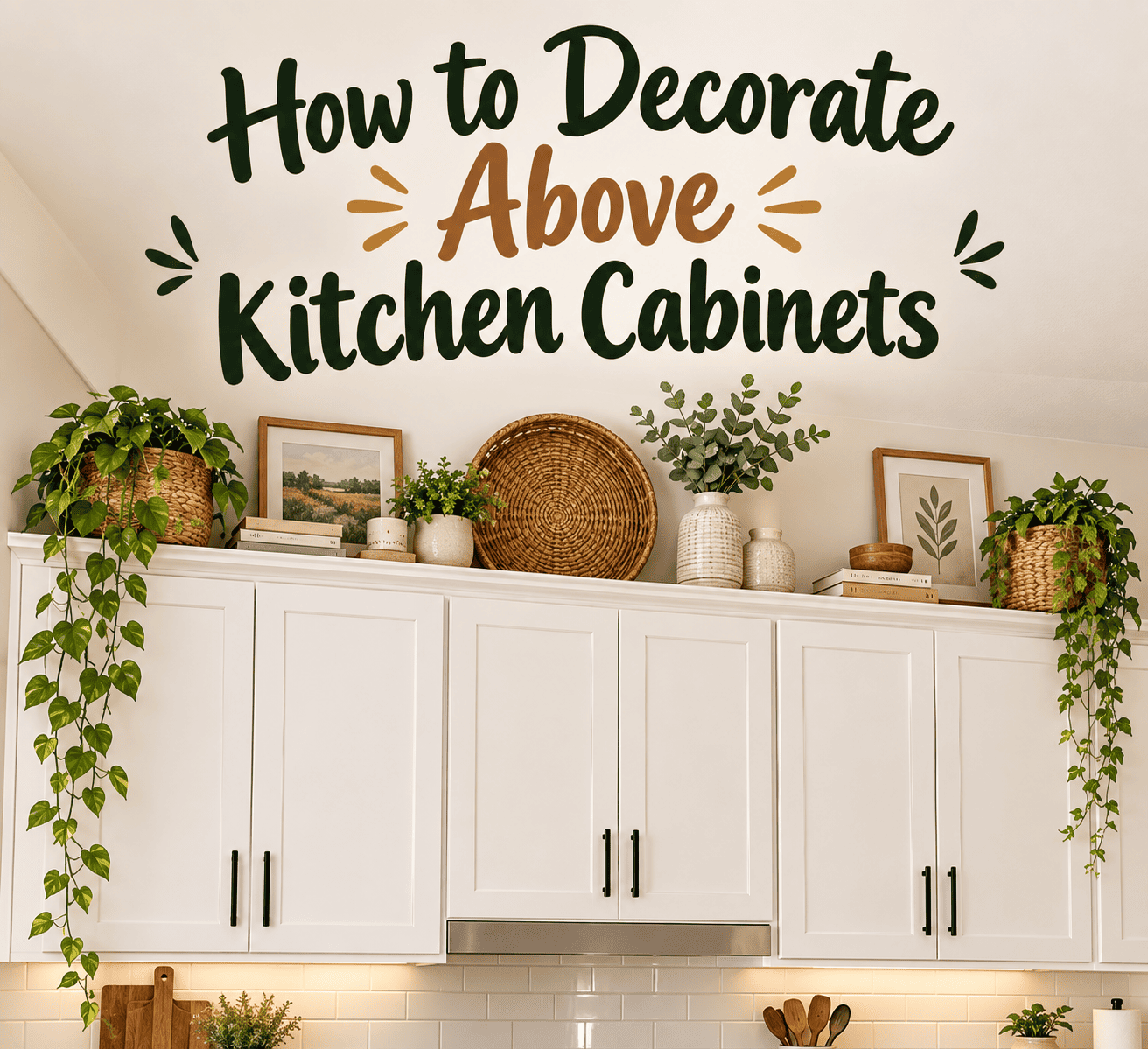
The best way to decorate above kitchen cabinets is to treat the empty space as part of the kitchen rather than a place to store random accessories. Use a mix of artwork, pottery, woven baskets, greenery, wooden boards, vintage pieces, cookbooks, and architectural accents that complement your cabinets, backsplash, countertops, and overall kitchen style. Start with the size of the gap, choose a few pieces with different heights and textures, repeat colors already present in the room, and leave enough negative space to keep the display from feeling crowded.
Introduction
The space above kitchen cabinets can be one of the most overlooked areas in a kitchen. It sits directly between the cabinetry and ceiling, so it is highly visible but rarely gets the same decorating attention as a backsplash, kitchen island, or countertop.
That empty strip doesn’t have to become a dumping ground for unused baskets and dusty decorations. With the right approach, above-cabinet decor can add warmth, personality, color, texture, and visual height to the entire room.
The secret is not filling every inch. Instead, think about scale, proportion, repetition, layering, and balance. A tall ceramic vase can fill a high gap beautifully, while a shallow cabinet space may need nothing more than a small artwork or a few low-profile objects. Mostly people don’t know how to decorate above kitchen cabinets. So there are 21 ways to make the space above your kitchen cabinets feel intentional, stylish, and connected to the rest of your home.
1. Build a Layered Pottery Display
Ceramic pitchers, handmade vases, bowls, urns, and stoneware can create an effortless display above upper cabinets.
Choose pieces with different silhouettes rather than buying a matching set. A tall vessel can anchor one side while smaller pottery pieces create a visual transition toward the center.
For a cohesive look, repeat colors already found in your kitchen. Cream ceramics work beautifully with warm wood, while muted green or blue pottery can connect with colorful backsplashes.
2. Lean Oversized Artwork
Artwork is an easy way to make the top of your kitchen cabinets feel more like a designed space.
Instead of using several tiny frames, try one oversized canvas, vintage print, landscape, abstract piece, or architectural illustration. Lean it against the wall if the cabinet depth allows.
Choose artwork that shares at least one color with the kitchen. This creates a visual connection without making the decor look overly coordinated.
3. Add Woven Baskets for Texture
Woven baskets introduce softness and natural texture against hard cabinet surfaces.
Try combining different shapes, such as a shallow round basket with a taller rectangular one. Neutral rattan, seagrass, and wicker work particularly well with farmhouse, coastal, rustic, boho, and organic modern kitchens.
Avoid lining up identical baskets across the entire cabinet run. A small grouping usually feels more intentional.
4. Bring in Carefully Chosen Greenery
Plants can soften the straight horizontal lines created by upper cabinets.
Use trailing greenery, olive branches, eucalyptus, dried grasses, or realistic faux stems depending on the amount of natural light and maintenance you want.
Rather than covering the whole cabinet top with plants, create one or two greenery moments. This adds life without turning the kitchen into a jungle.
5. Display Oversized Wooden Cutting Boards
Large cutting boards can function as decorative objects when leaned vertically against the wall.
Choose boards with interesting shapes, handles, grain patterns, or natural imperfections. Pair one large board with a smaller board or ceramic vessel to create height variation.
This works especially well in farmhouse, rustic, Mediterranean, and organic kitchens where natural materials are already part of the design.
6. Create a Small Vintage Collection
Vintage kitchenware can give a new kitchen more personality.
Look for old pitchers, stoneware crocks, ceramic containers, antique-style bottles, clocks, or unusual kitchen accessories. You don’t need a large collection. Three or four related pieces can tell a stronger story than a shelf packed with unrelated objects.
The goal is to create a collected kitchen look, not a miniature antique shop.
7. Use Decorative Trays as Visual Anchors
A decorative tray can organize several smaller pieces into one cohesive group.
Place a wood, rattan, metal, or ceramic tray behind a few accessories, then layer a vase, small bowl, or candle in front of it.
This technique is especially useful when you have several small decorative objects that look scattered when placed individually.
8. Stack Attractive Cookbooks
Cookbooks can add both personality and height to above-cabinet styling.
Choose books with attractive covers or neutral spines and stack two or three horizontally. Place a small bowl, vase, or decorative object on top.
This works particularly well when the kitchen already has a culinary or collected aesthetic.
9. Make One Oversized Object the Focal Point
Sometimes less really is more.
An oversized urn, sculpture, vase, lantern, architectural object, or large ceramic vessel can fill a tall cabinet gap without requiring dozens of accessories.
The key is scale. A large space needs an object that can visually occupy it. Several tiny decorations often disappear against a large wall and create unnecessary clutter.
10. Create an Old-World European Feel
For kitchens with traditional or Mediterranean influences, use pieces with age-inspired character.
Think aged ceramics, stoneware, natural wood, antique-style artwork, brass, woven materials, and slightly imperfect vessels.
Keep the color palette warm and restrained. The beauty of this approach comes from patina, texture, and variation rather than perfect matching.
11. Introduce Architectural Details
Decor above kitchen cabinets doesn’t have to consist entirely of vases and baskets.
Small architectural elements such as corbels, reclaimed wood, carved panels, molding fragments, or decorative brackets can add depth and character.
These pieces are particularly effective when the kitchen itself has traditional cabinetry or architectural detailing.
12. Pair Wood With Woven Textures
Wood and woven materials make a natural combination because they provide different types of texture without creating visual chaos.
Try wooden cutting boards beside a rattan basket or a woven tray behind a wooden vessel.
This combination is ideal for creating a warm, organic atmosphere while keeping the color palette relatively simple.
13. Create a Dark and Moody Display
A kitchen with neutral cabinetry doesn’t have to rely entirely on light-colored decor.
Black pottery, dark artwork, aged brass, charcoal ceramics, and deeper-toned accessories can create contrast above the cabinets.
Keep the palette limited to a few related shades. Too many dark objects can make the upper part of the kitchen feel visually heavy.
14. Repeat Colors Already in the Kitchen
One of the easiest ways to make kitchen cabinet top decor look cohesive is to borrow colors from the existing room.
For example, if your kitchen has cream cabinets, walnut accents, and muted green tiles, repeat those tones above the cabinets.
This creates a subtle color story and prevents the display from looking disconnected from the kitchen below.
15. Turn the Space Into a Mini Art Display
Instead of treating the area as one long shelf, divide it into visual groupings.
Mix framed artwork, vintage prints, small canvases, and one or two decorative objects. Vary the frame sizes and leave breathing room around the pieces.
A loose arrangement usually feels more relaxed than a perfectly symmetrical grid, especially in a kitchen with a casual or eclectic style.
16. Add Refined Farmhouse Character
Farmhouse kitchen decor works particularly well above cabinets because the style naturally embraces ceramics, baskets, wood, and vintage details.
Try a ceramic pitcher, woven basket, wooden board, and a few dried stems.
Avoid covering everything with farmhouse signs. A restrained combination of natural materials will usually create a more timeless result.
17. Build a Boho-Inspired Layer
Boho kitchen styling is all about texture and collected character.
Combine rattan, handmade pottery, dried grasses, woven baskets, warm wood, and earthy colors. Slight imperfections actually make this style more interesting.
Keep the arrangement varied but controlled. Bohemian does not have to mean overcrowded.
18. Add Warm Accent Lighting
Lighting can completely change how above-cabinet decor looks after sunset.
Where appropriate and safely installed, use subtle accent lighting to highlight artwork, architectural details, or a focal object.
Warm illumination generally works better for creating an inviting kitchen atmosphere than harsh, bright lighting. Keep electrical components away from heat, moisture, and areas where grease buildup is likely.
19. Match the Decor to the Cabinet Gap
The size of the space above your cabinets should determine the scale of your accessories.
Small Gap
Use low-profile pottery, compact baskets, shallow trays, or a single piece of artwork. Avoid tall objects that look squeezed into the available space.
Medium Gap
This is ideal for layered styling. Combine a taller object with two smaller pieces, then introduce a contrasting texture such as wood or woven material.
Tall Gap
Think vertically. Oversized artwork, tall vessels, large branches, architectural pieces, and substantial baskets can prevent the space from looking sparse.
The most important rule is simple: the larger the gap, the larger the visual scale your decor needs.
20. Leave Some Space Empty
Empty space is part of good styling.
You don’t need to decorate every section above every cabinet. Leaving small gaps between arrangements allows individual objects to stand out and prevents the kitchen from feeling visually overloaded.
Instead of asking, “What else can I add?” ask, “What can I remove without losing the overall composition?”
That small shift can make a dramatic difference.
21. Make the Display Feel Like Your Kitchen
The most successful above-cabinet displays don’t look copied from a showroom.
Use objects that reflect your home’s character. If you love vintage finds, let them lead the arrangement. If your kitchen is modern, use sculptural pottery and clean-lined artwork. If you prefer natural interiors, emphasize wood, greenery, woven materials, and earthy ceramics.
The goal is not perfection. It is creating a display that feels connected to the people and style for the economy home decor.
How to Make Above Kitchen Cabinets Look Intentional
Once you have selected your decor, a few styling principles can make the difference between polished and cluttered.
Start With One Focal Point
Choose the largest or most interesting piece first. Build smaller objects around it instead of placing everything at once.
Vary Heights
Objects that are exactly the same height create a flat visual line. Combine tall, medium, and low pieces to create movement.
Mix Textures
Pair smooth ceramics with rough wood, woven baskets, glass, metal, or greenery. Texture adds depth without requiring lots of color.
Repeat Existing Colors
Pull colors from your backsplash, countertops, flooring, cabinet hardware, or kitchen textiles. Repetition makes different objects feel related.
Group Rather Than Scatter
Several objects placed close together can read as one intentional composition. Scattered pieces across every cabinet can make the space feel random.
Use Negative Space
Leave room around your strongest pieces. Empty areas give the eye a visual pause and make decorative objects more noticeable.
What Not to Put Above Kitchen Cabinets
Not everything belongs in this hard-to-reach area.
Avoid excessive tiny objects, unrelated decorations, fragile pieces that could fall, and items that are difficult to clean. Fabric and unsealed materials can also become problematic in areas exposed to cooking grease and dust.
If the cabinets are directly beside or above a range, be particularly careful about heat, grease, ventilation, and the manufacturer’s recommended clearances. Decorative items should never interfere with ventilation or create a fire or safety hazard.
Above Kitchen Cabinets by Design Style
| Kitchen Style | Decor Ideas |
|---|---|
| Modern | Sculptural ceramics, minimal artwork, simple vessels |
| Farmhouse | Wood, baskets, stoneware, vintage kitchen pieces |
| Boho | Rattan, handmade pottery, dried greenery, earthy textures |
| Rustic | Reclaimed wood, baskets, aged ceramics, natural objects |
| Traditional | Classic artwork, ceramics, brass, decorative vessels |
| Organic Modern | Neutral pottery, greenery, wood, woven textures |
| Mediterranean | Terracotta, aged ceramics, olive branches, warm wood |
Frequently Asked Questions
Is it a good idea to decorate above kitchen cabinets?
Yes, when the space is suitable for decoration and the arrangement is kept intentional. A few well-scaled pieces can visually connect the cabinets with the ceiling without making the kitchen feel crowded.
What should I put above my kitchen cabinets?
Popular choices include pottery, baskets, artwork, greenery, wooden cutting boards, cookbooks, trays, vintage pieces, and architectural accents. Choose items that complement your kitchen’s existing colors and materials.
How do you decorate above cabinets without looking cluttered?
Use fewer but larger pieces, vary their heights, group related objects, repeat existing colors, mix textures, and leave some empty space. Avoid filling every inch simply because it is available.
Should you decorate above kitchen cabinets with a small gap?
You can, but minimal styling usually works better. Low-profile baskets, pottery, artwork, or one small arrangement are more appropriate than tall layered accessories.
How do you decorate above kitchen cabinets with a high ceiling?
Use substantial pieces that can visually occupy the vertical space. Oversized artwork, tall vessels, large branches, and architectural details can work better than numerous small decorations.
What makes above-cabinet decor look expensive?
Good proportion and restraint matter more than price. A limited color palette, natural textures, large-scale artwork, quality-looking ceramics, and intentional negative space can create a polished appearance without requiring a large collection.
Final Thoughts
The space above kitchen cabinets doesn’t need to be filled just because it is empty. It needs to be styled with purpose.
Start by considering the cabinet height, then choose one focal point and build around it with complementary textures, colors, and shapes. Mix pottery with wood, baskets with greenery, or artwork with vintage pieces. Leave enough negative space for the arrangement to breathe, and keep practical concerns such as dust, grease, heat, and stability in mind.
When the right pieces are combined with the right proportions, that overlooked strip above the cabinets can become a natural extension of your kitchen decor rather than an awkward gap waiting to be filled.

Leave a Reply