
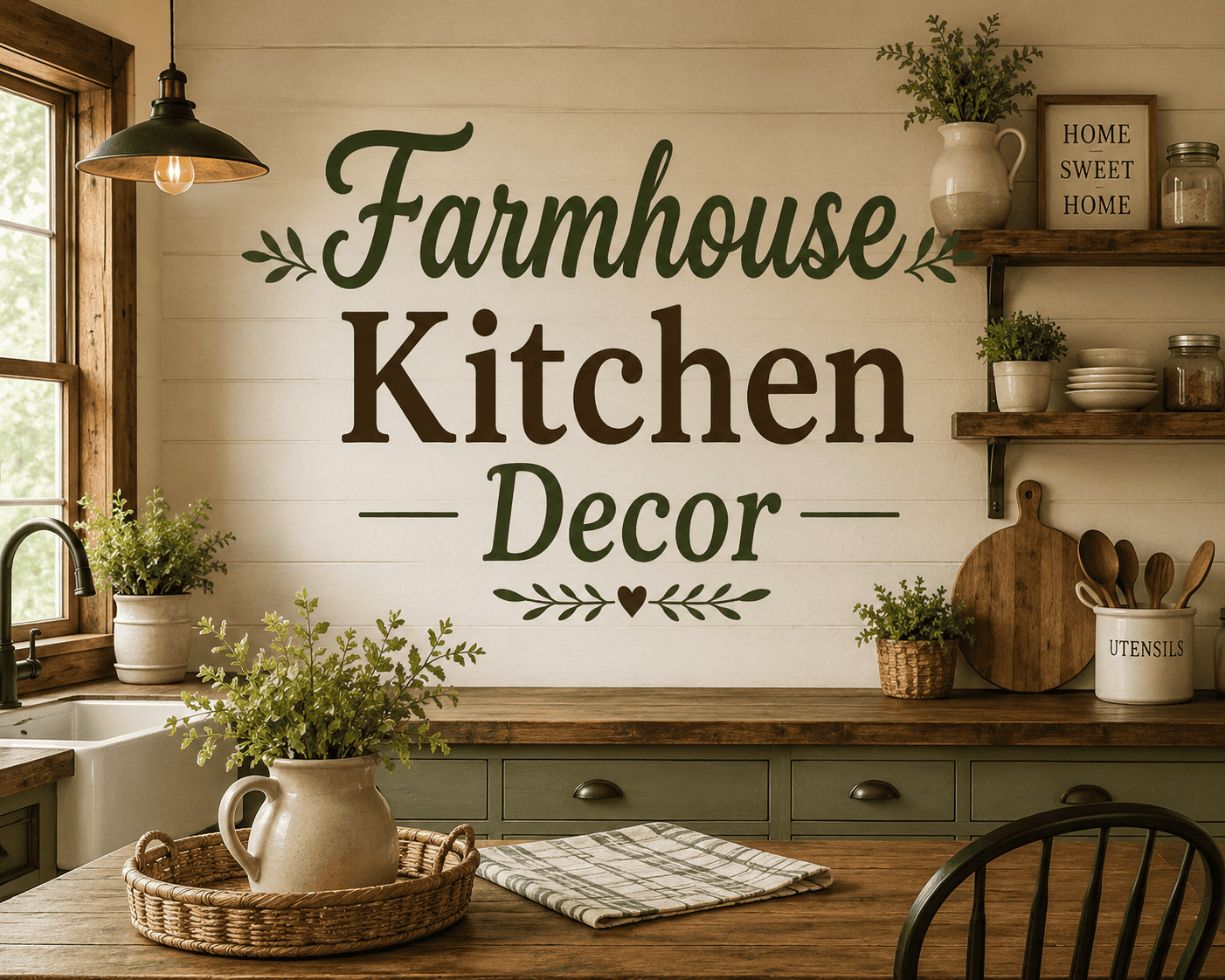
To create a farmhouse-style kitchen, combine warm neutral colors with natural wood, simple cabinetry, aged metal finishes, textured fabrics, vintage accents, and practical decorative pieces. Add character through features such as a furniture-style island, farmhouse sink, open shelving, natural stone, and classic lighting. For a refined look, avoid excessive rustic accessories and focus on balance, repetition, texture, and negative space.
Introduction
Farmhouse kitchen decor has changed dramatically over the years. The modern version is no longer about covering every wall with rustic signs, filling shelves with rooster figurines, or making every surface look deliberately distressed. Instead, today’s farmhouse kitchen combines natural materials, comfortable colors, practical details, and timeless character with the clean lines of modern design.
The beauty of farmhouse style is that it can feel both relaxed and sophisticated. A wooden island can bring warmth to an otherwise simple kitchen, while aged brass hardware can add a subtle sense of history. Soft colors, handmade-looking finishes, vintage accents, and natural textures create a space that feels welcoming without becoming visually overwhelming.
The trick is knowing when to stop. Farmhouse kitchens look best when every element has a purpose and there is enough empty space for the important details to breathe. Whether you’re decorating a brand-new kitchen or refreshing the one you already have, these 23 farmhouse kitchen decor ideas can help you create a space that feels warm, natural, collected, and refined.
1. Start With a Warm, Natural Color Palette
Color creates the foundation for farmhouse kitchen design. Instead of relying on bright white, consider warmer shades such as ivory, cream, beige, taupe, muted sage, soft gray, or earthy green.
These colors work because they create a calm background for natural materials. Warm whites also prevent a kitchen from feeling overly clinical, especially when combined with wood and aged metals.
For a more sophisticated result, choose one main neutral and introduce one or two supporting shades rather than using several unrelated colors. A creamy white kitchen with natural oak and muted green accents, for example, can feel much more cohesive than a room filled with multiple competing colors.
Always test paint samples in the actual kitchen. Natural daylight and artificial lighting can dramatically change how warm or cool a color appears.
2. Let Natural Wood Bring the Warmth
Few materials capture the farmhouse aesthetic better than real wood. Its visible grain, natural imperfections, and changing tones instantly make a kitchen feel more grounded.
Wood can appear through cabinets, ceiling beams, shelves, bar stools, cutting boards, furniture, or even a small wooden tray. You don’t need to cover the entire kitchen in timber. In fact, using it selectively often creates a more refined appearance.
Try repeating a similar wood tone in two or three places. For example, an oak island can visually connect with wooden stools and a cutting board. This repetition creates cohesion without making everything look perfectly matched.
3. Turn the Kitchen Island Into a Focal Point
A farmhouse kitchen island should feel substantial and inviting rather than simply looking like an extension of the countertops.
A furniture-style island with decorative legs, contrasting cabinetry, natural wood, or a slightly different finish can become the visual anchor of the room. It also creates an opportunity to introduce a material that might otherwise be missing.
Keep the styling simple. A wooden bowl, ceramic vase, or small arrangement of greenery is usually enough. Too many decorative objects can make the island feel crowded and reduce its usefulness as a workspace and gathering area.
4. Choose Simple Cabinets With Character
Cabinetry occupies a large percentage of a kitchen, so it has a major influence on the overall style. Shaker-style cabinets are especially effective for farmhouse kitchens because their clean frames feel traditional without looking overly ornate.
Soft white, cream, sage, muted blue, and natural wood are all versatile choices. You can also combine finishes, such as painted perimeter cabinets with a natural wood island.
Small details matter too. Cup pulls, simple knobs, visible hinges, or furniture-inspired cabinet details can introduce farmhouse character without turning the kitchen into a themed space.
5. Use Open Shelving as Functional Decor
Open shelving can make a farmhouse kitchen feel lighter and more personal, but it works best when it has a practical purpose.
Instead of filling shelves with random accessories, display items you genuinely use: ceramic plates, mugs, bowls, glassware, wooden boards, or a few favorite cookbooks.
Leave some empty space between groups of objects. This negative space is important because it prevents the shelves from becoming visually heavy.
If you don’t enjoy maintaining perfectly styled shelves, consider using open shelving only in a small area rather than replacing large sections of cabinetry.
6. Introduce One-of-a-Kind Vintage Pieces
Vintage accessories add something that new decor often cannot: a sense of history.
An antique crock, old wooden tray, vintage scale, stoneware pitcher, or weathered cutting board can give a kitchen personality. The imperfections in these objects make the space feel collected rather than purchased as a matching set.
The secret is restraint. One meaningful vintage piece can become a focal point. Ten similar objects can make the kitchen feel like a themed display.
7. Choose Aged Metal Hardware
Hardware may be small, but it can significantly change the character of a kitchen. Aged brass, antique bronze, matte black, and brushed nickel can all work with farmhouse cabinetry.
Choose finishes according to the overall mood. Warm brass adds softness, black creates contrast, while bronze gives the room an older, more traditional feeling.
You don’t necessarily need every metal to match perfectly, but repeating your main finish across cabinet hardware, faucets, and lighting helps the design feel intentional.
8. Give the Backsplash Subtle Texture
The backsplash is an excellent place to introduce farmhouse character without adding clutter.
Classic subway tile remains a reliable choice, but handmade-look ceramic tile, natural stone, or softly textured surfaces can make the kitchen feel more distinctive.
Rather than choosing an extremely complicated pattern, focus on texture and gentle variation. Slight imperfections can create the handmade quality associated with farmhouse interiors while still maintaining a clean, contemporary appearance.
9. Make Lighting a Design Feature
Farmhouse lighting should provide more than illumination. It can also establish the mood and reinforce the architectural style of the room.
Lantern-style pendants, simple metal fixtures, glass shades, and oversized fixtures can work beautifully above a kitchen island or dining table. Choose a fixture that is appropriately scaled to the space rather than selecting one simply because it looks attractive on its own.
Warm lighting is particularly important in the evening. A soft, warm glow can make wood, stone, and neutral finishes appear richer and more inviting.
10. Layer Natural Textures Throughout the Room
A neutral kitchen can become boring when everything has the same smooth finish. Texture solves that problem.
Introduce linen towels, woven baskets, cotton textiles, rattan, ceramic, wood, stone, and aged finishes. Each material interacts differently with light, creating subtle depth even when the color palette remains simple.
The goal isn’t to use every natural material available. Select a few that complement each other and repeat them naturally throughout the room.
11. Keep Countertops Beautiful but Useful
Farmhouse kitchen decor works particularly well when decoration and function overlap.
A wooden cutting board leaning against the backsplash, a ceramic utensil holder, a stoneware bowl, or fresh herbs can add character while remaining useful.
Avoid decorating every inch of counter space. Leaving intentional areas empty creates visual balance and makes the kitchen easier to work in.
This “less but better” approach is one of the easiest ways to make rustic decor feel more sophisticated.
12. Make the Farmhouse Sink a Functional Statement
An apron-front farmhouse sink can become one of the defining features of the kitchen. Its exposed front creates a strong visual connection to traditional farmhouse architecture while its deep basin remains highly practical.
Pair it with a simple bridge or gooseneck faucet in a finish that complements the cabinet hardware.
If you’re not renovating, you don’t need to install a farmhouse sink to achieve the look. Similar character can come from other elements, such as vintage accessories, wood accents, or traditional hardware.
13. Display Everyday Dishware
One of the most appealing aspects of farmhouse design is its celebration of ordinary objects.
Ceramic bowls, handmade mugs, white plates, glass jars, pitchers, and serving boards can become part of the decor when displayed thoughtfully.
Glass-front cabinets are particularly useful because they provide the visual openness of shelving while offering more protection from dust. Keep the arrangement simple and allow similar materials or colors to visually connect the pieces.
14. Add Fresh Greenery
Plants bring movement and life into a kitchen dominated by hard surfaces.
A few fresh herbs near a window, a small potted plant, or branches in a ceramic vase can soften cabinetry and countertops. Herbs are especially appropriate because they are both decorative and useful.
Avoid spreading greenery across every surface. A handful of natural arrangements will feel more authentic than turning the kitchen into an indoor garden.
15. Bring in Natural Stone
Stone introduces an earthy quality that works beautifully alongside wood and painted cabinetry.
Depending on the kitchen, stone can appear through countertops, flooring, backsplash materials, exposed walls, or smaller decorative pieces.
Because stone can feel visually heavy, balance it with softer elements such as linen, warm paint colors, or light cabinetry. The contrast between rough and smooth surfaces is what creates a sophisticated farmhouse atmosphere.
16. Add Small Dark Accents for Contrast
A soft farmhouse palette benefits from contrast. Black cabinet pulls, window frames, pendant lights, faucets, or dining chairs can give the room definition.
Think of these darker elements as punctuation. You don’t need many of them; you simply need enough repetition to create visual structure.
For example, black pendant lights can connect with black cabinet hardware, creating a subtle design thread throughout the room.
17. Decorate Kitchen Walls With Restraint
Farmhouse wall decor should add personality without overwhelming the architecture.
Botanical prints, vintage food illustrations, simple artwork, antique cutting boards, or a single meaningful sign can work beautifully.
Avoid filling every available wall. A large blank area can actually make the decorative pieces around it feel more important.
The best farmhouse kitchens often use wall decor as an accent rather than as the main attraction.
18. Create a Cozy Farmhouse Dining Area
If your kitchen includes a dining nook, breakfast area, or nearby table, continue the same design language there.
A wooden table, simple bench seating, woven textiles, and a statement pendant can connect the dining area to the kitchen. Mixing seating styles can also make the space feel more relaxed and collected.
The important thing is continuity. The dining area doesn’t have to perfectly match the kitchen, but repeating colors, wood tones, or metal finishes will make the two spaces feel connected.
19. Warm Up Hard Floors With a Vintage Rug
A kitchen contains many hard surfaces, so a rug can instantly make it feel softer and more comfortable.
A vintage-inspired runner works particularly well in front of cabinets or along a kitchen island. Jute and other natural-fiber rugs can also reinforce the farmhouse aesthetic.
Since kitchens are high-traffic spaces, choose something durable and practical. A beautiful rug that constantly needs to be protected isn’t particularly useful in a working kitchen.
20. Highlight Architectural Character
If your kitchen has exposed beams, beadboard, brick, paneling, traditional trim, or old woodwork, let those details become part of the design.
Architectural features create authenticity because they give the kitchen character without requiring additional accessories.
If your kitchen doesn’t have original farmhouse architecture, you can still introduce subtle elements such as beadboard on an island, simple wall paneling, or a wood accent.
21. Mix Vintage Character With Modern Convenience
Modern farmhouse design becomes most successful when old and new are allowed to coexist.
A traditional-looking kitchen can still include modern appliances, contemporary storage solutions, sleek countertops, and efficient lighting. These modern elements keep the space practical while vintage materials and accessories provide personality.
This contrast is what prevents farmhouse style from feeling frozen in the past. The kitchen can look nostalgic without sacrificing comfort or functionality.
22. Give Forgotten Corners a Purpose
Small unused areas often have more decorating potential than homeowners realize.
A narrow corner can become a coffee station. A window ledge can hold herbs. A small section of counter can display a ceramic pitcher and wooden boards. Even an awkward cabinet area can become useful with carefully chosen storage.
The goal isn’t to decorate every empty space. Instead, identify areas that naturally need something and give them a clear function. Purposeful styling almost always looks better than decoration added simply to fill space.
23. Finish With One Memorable Detail
A beautiful farmhouse kitchen doesn’t need dozens of statement pieces. In many cases, one memorable detail is enough.
It could be an oversized pendant, an antique cabinet, a reclaimed wood feature, a handmade ceramic piece, a distinctive range hood, or an unusually beautiful piece of vintage furniture.
This final detail gives the kitchen personality. It also prevents the room from looking like a showroom where every element has been selected from the same collection.
Common Farmhouse Kitchen Decor Mistakes to Avoid
Using Too Much Distressed Decor
Heavy distressing can quickly make a kitchen feel artificial. Instead of making every piece look aged, allow one or two imperfect elements to provide character while keeping the rest relatively clean.
Overloading the Room With Farmhouse Signs
Farm-themed sayings and decorative signs can be nostalgic, but too many make the kitchen feel overly themed. Let natural materials, cabinetry, architecture, and texture communicate the farmhouse style instead.
Using Too Many Competing Wood Tones
Different wood finishes can work together, but too many unrelated tones create visual noise. Choose a dominant wood and use secondary tones sparingly.
Filling Every Surface
Farmhouse style should feel lived-in, not cluttered. Leave breathing room on shelves, countertops, islands, and walls so the room can feel calm.
Making Everything Perfectly Matching
A farmhouse kitchen should look collected rather than coordinated down to the last detail. Slight variations in texture, age, and material give the space authenticity.
How to Make Farmhouse Kitchen Decor Look More Refined
The difference between rustic and refined farmhouse style often comes down to editing. Instead of adding more decor, pay attention to proportion, repetition, and balance.
Repeat a few materials throughout the kitchen so the design feels connected. For example, natural oak can appear on the island and shelves, while aged brass can connect the hardware and lighting.
Balance rough materials with smoother ones. Reclaimed wood becomes more sophisticated next to clean cabinetry, while rustic stone can look elegant when paired with simple fixtures and uncluttered surfaces.
Most importantly, embrace negative space. An empty section of countertop or wall isn’t necessarily unfinished. It gives the eye somewhere to rest and allows your best decorative pieces to stand out.
Final Thoughts
The best farmhouse kitchen decor doesn’t try too hard to look rustic. It creates warmth through natural materials, soft colors, useful objects, subtle vintage character, and thoughtful texture.
Whether you are working with a large country kitchen or a compact modern space, you can capture the farmhouse feeling without completely redesigning the room. Start with the foundation, add a few authentic materials, introduce character gradually, and edit anything that feels excessive.
The result should feel comfortable enough for everyday life but refined enough to remain visually interesting for years. That’s the real strength of modern farmhouse style: it feels timeless because it prioritizes character, comfort, and simplicity over trends.

Leave a Reply