
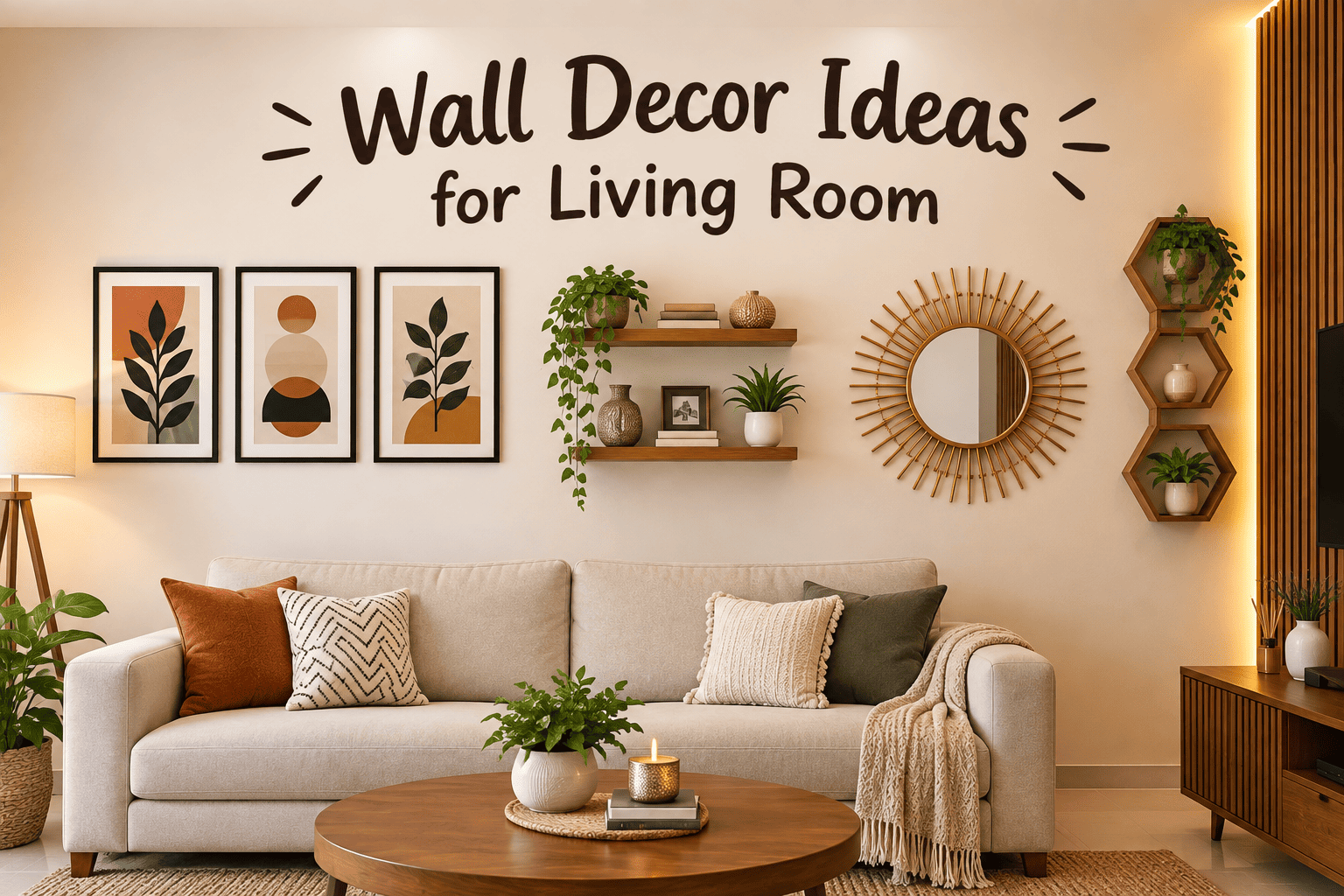
The best living room wall decor combines oversized artwork, textured finishes, mirrors, vintage pieces, sculptural objects, natural materials, statement lighting, murals, shelving, and personal collections. For a large wall, choose something with enough scale to balance the furniture below it. For a small room, use vertical artwork, mirrors, or tonal finishes to create depth without visual clutter. Most importantly, leave some negative space so your strongest pieces can stand out.
Introduction
A living room can have beautiful furniture, a great rug, and perfect lighting, yet still feel unfinished when the walls are ignored. The problem is that decorating walls often gets reduced to hanging a mirror above the sofa or arranging a few matching frames. Those solutions can work, but they barely scratch the surface of what your walls can do.
The most interesting wall decor ideas for living room spaces are often the ones hiding in plain sight. An awkward strip beside a doorway can become a mini art moment. A plain wall can gain character through texture instead of decoration. A television wall can become part of the architecture, while a single oversized artwork can create more impact than an entire collection of small prints.
For 2026, the direction is increasingly toward living rooms that feel warm, collected, tactile, and personal rather than perfectly coordinated. Vintage artwork, natural materials, sculptural lighting, handmade pieces, richer colors, and thoughtful negative space can all make a room feel more individual.
The key is not to decorate every empty surface. It is to understand what each wall needs and choose something that improves the room as a whole.
1. Let One Oversized Artwork Set the Mood
When a wall feels empty, the instinct is often to add several smaller pictures. Instead, try going in the opposite direction with one large artwork.
An oversized painting, abstract canvas, landscape, or photographic print can become the visual anchor of the entire living room. It also gives the space a stronger sense of confidence because the wall does not look as though it has been decorated simply to fill an empty area.
Scale matters here. If the artwork hangs above a sofa, it should generally relate to the width of the furniture rather than appearing like a tiny island in the middle of a huge wall. The goal is for the artwork and sofa to read as one connected composition.
2. Give a Plain Wall Some Texture
Sometimes a wall does not need anything hanging on it. It simply needs a more interesting surface.
Limewash, plaster-effect finishes, textured wallpaper, wood paneling, and subtle wall treatments can add depth without introducing lots of objects. This is especially effective in minimalist living rooms where excessive artwork would compete with the furniture.
Texture is also useful because it changes with natural and artificial light. A softly textured wall may look almost flat in the morning but develop shadows and tonal variation later in the day.
If your furniture is already visually busy, a restrained textured wall can provide interest without creating another focal point.
3. Mix Vintage Artwork With Modern Furniture
One of the easiest ways to make a contemporary living room feel less predictable is to introduce something old.
A vintage landscape, botanical print, antique portrait, or secondhand painting can look surprisingly sophisticated beside a modern sofa and clean-lined coffee table. The contrast gives the room a sense of history without requiring an entirely traditional decorating style.
Instead of buying a matching set, look for a piece that genuinely catches your attention. Its imperfections can actually make the room feel more authentic.
A simple frame can help an older artwork blend naturally with contemporary surroundings.
4. Try Color Drenching for a More Immersive Wall
Traditional accent walls isolate one surface by giving it a different color. Color drenching takes a more immersive approach by allowing one color to flow across the walls and architectural details.
Warm brown, muted olive, earthy red, deep blue, and sophisticated neutral shades can create a cocooning atmosphere. Rather than making the wall scream for attention, the color envelops the room.
This approach works particularly well when you want modern living room wall decor without relying on lots of objects. The wall itself becomes the design feature.
For a calmer effect, choose a color that already appears somewhere in your rug, upholstery, curtains, or accessories.
5. Replace Flat Art With Something Sculptural
Walls do not have to display paintings. Three-dimensional pieces can create a completely different effect.
Consider carved wood, ceramic compositions, plaster reliefs, woven sculptures, or other dimensional artwork. Unlike flat prints, these pieces interact with light and cast changing shadows throughout the day.
A sculptural piece is particularly effective when used alone on a relatively quiet wall. Give it enough breathing room so its shape remains visible from across the room.
This is also a useful option when you want wall decor that feels artistic without looking like traditional artwork.
6. Make the TV Wall Look Designed
The television is often the largest black rectangle in a living room, so pretending it is not there rarely works.
Instead, make the wall around it intentional. Built-in cabinetry, floating shelves, wood panels, textured surfaces, or carefully positioned artwork can integrate the television into the overall design.
The important thing is balance. Avoid placing too many small objects directly around the screen because that can make the wall feel even more cluttered.
A cleaner solution is to create a larger architectural composition in which the television becomes one element rather than the entire focal point.
7. Bring Nature to the Wall Without Going Overboard
Nature-inspired wall decor can make a living room feel calmer and more connected to the outdoors.
Botanical illustrations, muted leaf prints, landscape photography, pressed plant displays, and nature-inspired artwork are easy ways to achieve the effect without turning the room into a themed space.
Choose artwork with colors that complement the room rather than automatically reaching for bright green. Soft olive, beige, brown, charcoal, and muted blue can make botanical decor feel much more sophisticated.
If the room already contains several plants, one strong botanical artwork may be enough.
8. Make a Mural the Room’s Main Character
A mural can completely change the atmosphere of a living room because it treats the wall as one continuous canvas.
You could use a misty landscape, abstract brushwork, architectural scene, subtle botanical pattern, or atmospheric design. The right mural can make a plain rectangular room feel much more distinctive.
However, restraint is important. A detailed mural works best when the surrounding furniture and accessories are relatively calm. Too many competing patterns can make the room feel visually chaotic.
For renters, removable wallpaper can provide a similar effect without permanent renovation.
9. Build a Gallery Wall That Actually Feels Personal
The classic gallery wall is not going away, but it does not need to look perfectly symmetrical.
Mix photography, sketches, paintings, vintage finds, typography, and small decorative objects. The pieces can differ in size and frame style while still sharing a visual connection through color, subject, or material.
Before hanging anything, arrange the pieces on the floor. This allows you to experiment with spacing and proportions without putting unnecessary holes in the wall.
Keep the composition visually connected to the furniture below it. A gallery wall that is too small can look disconnected, while one that spreads too far beyond the furniture can overwhelm the room.
10. Turn Lighting Into Wall Decor
Lighting is one of the most overlooked ways to decorate a living room wall.
A pair of sculptural sconces can frame artwork. A picture light can make a painting feel like a gallery piece. An unusual wall fixture can become the artwork itself.
This becomes particularly important at night, when natural light disappears and the wall needs another source of visual interest.
Instead of thinking about lighting only in terms of brightness, consider its shape, material, shadows, and position. A beautiful fixture can contribute to the room even when it is switched off.
11. Use Natural Materials as the Artwork
Natural materials can give a cozy living room warmth without requiring a large collection of decorative objects.
Woven wall hangings, rattan panels, carved timber, cork, stone details, and handcrafted fiber pieces introduce organic texture. They are particularly effective against plain walls because the material itself becomes the focal point.
Natural wall decor also pairs easily with neutral sofas, linen curtains, wood furniture, and indoor plants.
The best results usually come from choosing one substantial material rather than covering the wall with several unrelated textures.
12. Design the Wall Around the Sofa as One Composition
The wall behind the sofa deserves special attention because it is usually one of the first surfaces people notice.
Instead of choosing the wall decor separately, consider the sofa, rug, cushions, curtains, and artwork as one visual composition. A repeated color or material can create a connection between them.
For example, a warm wood frame might echo the coffee table, while a muted shade in the artwork can repeat a color from the rug.
The pieces do not need to match. They simply need to belong to the same visual conversation.
13. Turn an Awkward Corner Into a Reading Spot
Some of the best living room wall decor ideas begin with spaces that seem too awkward to use.
A narrow wall near a window or unused corner can become a compact reading nook with a comfortable chair, small wall-mounted shelf, artwork, and focused lighting.
The wall then becomes functional rather than purely decorative.
Even if you do not have enough room for a chair, a narrow vertical artwork combined with a small sconce can give the area a deliberate purpose.
14. Highlight Architectural Features
Do not automatically hide unusual architectural details. Make them the star.
An alcove can hold artwork or shelving. An arch can be emphasized with color. A fireplace can become a focal point through lighting and carefully selected decor. Even a structural column can become visually interesting with a contrasting finish.
When decorating around architecture, the goal is to work with the shape rather than fight it.
This can make a home feel more custom-designed without requiring major structural changes.
15. Create a Quiet Tonal Wall
If your style is sophisticated and minimal, your wall does not need dramatic contrast.
A tonal arrangement uses different shades, textures, and materials within the same color family. Imagine a warm beige wall, slightly darker artwork, natural wood framing, and cream upholstery.
The result is subtle but layered.
This approach is particularly effective in small living rooms because it avoids the visual fragmentation that can occur when too many contrasting colors compete for attention.
16. Add Handmade Pieces for Authenticity
Handmade wall decor instantly introduces individuality.
A hand-thrown ceramic piece, woven textile, carved wooden panel, or locally crafted artwork can give a room something that mass-produced decoration cannot: evidence of human touch.
You do not need many handmade objects. One distinctive piece can be enough to soften an otherwise highly polished interior.
Look for imperfections rather than avoiding them. Slight variations in shape, texture, or finish often make handcrafted decor more interesting.
17. Turn Personal Memories Into Wall Art
The most meaningful wall may be the one that tells your story.
Instead of decorating entirely with generic prints, display photographs from memorable trips, inherited artwork, children’s drawings, postcards, or objects connected to important moments.
The secret is presentation. Personal items can still look sophisticated when they are framed consistently or arranged with enough negative space.
A living room should feel lived in. Personal wall decor helps create that feeling far more effectively than buying another generic decorative print.
18. Style the Wall Space Everyone Else Ignores
Look beyond the obvious wall behind the sofa.
There may be a narrow strip beside a doorway, an empty section above a low cabinet, or a small area between two windows. These spaces are easy to ignore because they are not large enough for conventional furniture.
That is precisely why they can become interesting.
A single vertical artwork, slim picture ledge, small sculptural object, or wall light can give these forgotten areas a finished appearance without making the entire room feel decorated to death.
19. Leave One Wall Almost Empty
The final idea is also one of the most important: do less.
An empty wall is not necessarily a design failure. Negative space gives the eye somewhere to rest and prevents statement pieces from competing with each other.
If one wall already has a large artwork, textured finish, or dramatic fireplace, another wall may not need anything at all.
The most sophisticated rooms understand that decoration and restraint have to coexist. Sometimes the best thing you can put on a wall is nothing.
How to Choose the Right Wall Decor for Your Living Room
For a Large Blank Wall
Large surfaces need visual weight. Oversized artwork, murals, architectural paneling, built-in shelving, or a carefully planned gallery wall can fill the scale without creating clutter.
For a Small Living Room
Choose decor that creates depth without adding visual heaviness. Mirrors, vertical artwork, tonal finishes, and slim shelves can make the walls feel taller and more spacious.
For a Modern Living Room
Keep the composition edited. Sculptural artwork, textured plaster, oversized photography, clean-lined sconces, and natural materials work especially well.
For a Cozy Living Room
Focus on warmth. Vintage art, wood, woven textures, handmade pieces, earthy colors, and soft lighting can make the room feel collected rather than overly styled.
For a Budget-Friendly Makeover
You do not need expensive artwork to transform a wall. Rearranging existing frames, creating a simple gallery from personal photographs, adding removable wallpaper, or using one large textile can produce significant impact without a major investment.
Common Wall Decor Mistakes to Avoid
One of the biggest mistakes is choosing artwork that is too small for the wall. Tiny pieces can disappear above a large sofa and make the wall feel even emptier.
Another problem is hanging everything too high. Wall decor should feel connected to the furniture below it rather than floating near the ceiling.
Avoid decorating every wall with equal intensity. A room becomes more interesting when it has a clear focal point balanced by quieter surfaces.
It is also worth avoiding excessive matching. Matching frames, identical prints, and repeated decorative objects can make a room feel more like a showroom than a home.
Finally, do not choose something simply because it is trending. If you would not want to see the piece in your room a year from now, it probably does not deserve prime wall space.
Final Thoughts
The best wall decor ideas for living room spaces are not necessarily the most complicated. They are the ideas that understand proportion, texture, light, architecture, and personality.
An oversized artwork can establish the mood. A textured finish can make a quiet room feel richer. Vintage art can add history, while handmade pieces can make contemporary furniture feel warmer. Even an intentionally empty wall can become part of the design.
For 2026, the strongest approach is not to chase a single decorating trend. Instead, create walls that feel connected to the people, objects, and architecture already inside the home.
Look at the wall differently. The narrow corner, blank space above a cabinet, awkward architectural feature, or forgotten strip beside a doorway may not be a problem waiting to be solved. It may simply be a design opportunity waiting to be noticed.

Leave a Reply