
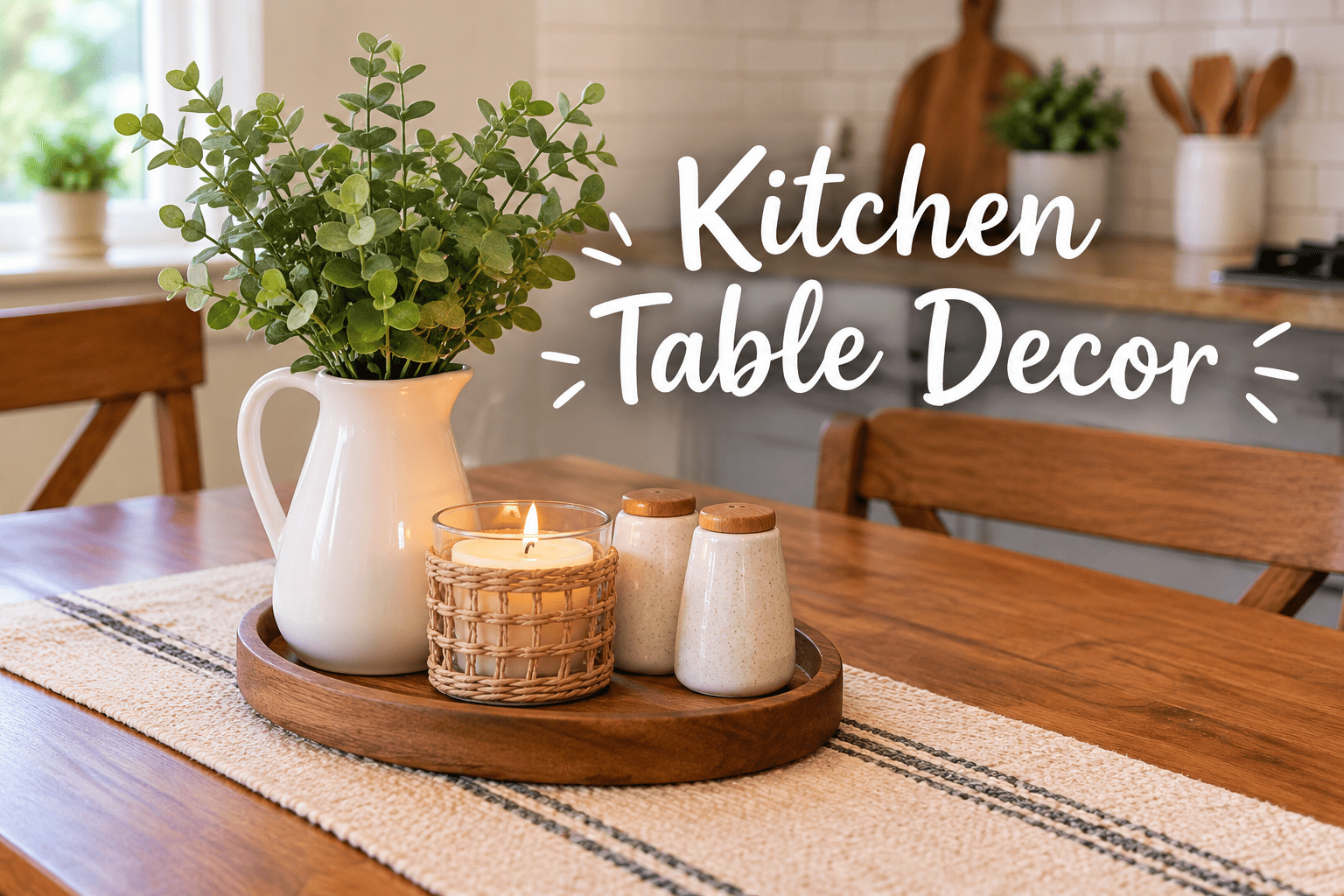
Kitchen table decor works best when it combines personality, proportion, texture, and everyday function. Start by considering your table’s shape and the style of your kitchen, then build around one focal point such as a vase, bowl, centerpiece, or greenery. Add a runner, natural textures, practical tableware, and one meaningful accent while leaving enough open space for meals and conversation.
Introduction
The kitchen table has a special role in the home. It is not simply a surface for eating. It can become the place where morning coffee begins, homework gets finished, groceries are sorted, conversations continue late into the evening, and friends gather around a shared meal.
That makes the table one of the most noticeable decorating opportunities in the kitchen.
Good kitchen table decorating ideas are not about covering every inch with accessories. The most memorable tables usually have a clear visual direction. They combine a few carefully selected elements rather than a collection of unrelated objects.
Think of your table as a small composition. The tabletop, centerpiece, lighting, chairs, surrounding walls, and kitchen finishes all contribute to the overall look. When those elements relate to one another through color, material, shape, or texture, the result feels intentional.
The goal is simple: create a table that looks beautiful when the kitchen is tidy but still works when real life takes over.
1. Let the Shape of Your Table Set the Direction
Before choosing accessories, look at the table itself. Its shape should influence how you arrange everything on top.
A round kitchen table naturally works with a centered arrangement. A low bowl, round tray, compact floral arrangement, or sculptural vase can create a balanced focal point visible from every seat.
A rectangular kitchen table gives you more room to experiment. A runner, elongated centerpiece, or series of coordinated objects can follow the table’s horizontal lines.
For a square kitchen table, restraint usually works best. A compact centerpiece in the middle can create symmetry without making the surface feel crowded.
The important principle is proportion. Decor should complement the table rather than compete with it.
2. Give Your Table a Decorating Identity
A signature table starts with a clear design direction.
You might prefer:
- Modern kitchen table decor
- Farmhouse kitchen table decor
- Rustic styling
- Boho textures
- Minimalist arrangements
- Traditional elegance
- Eclectic, collected pieces
You do not have to follow one style perfectly. Instead, choose a dominant mood and let smaller details support it.
For example, a wooden table can become farmhouse-inspired with linen, pottery, and greenery. The same table could feel modern with a sculptural ceramic vase, neutral textiles, and clean-lined accessories.
A decorating identity prevents the tabletop from becoming a random collection of things you happen to own.
3. Build a Color Palette From the Kitchen
Your kitchen already gives you a color palette.
Look at the cabinets, backsplash, countertops, flooring, wall color, and upholstery. Choose one or two colors from those elements and repeat them subtly on the table.
A cream kitchen might work beautifully with natural wood and soft green. A white kitchen can handle earthy terracotta or warm black accents. A darker kitchen can benefit from lighter ceramics, linen, or pale greenery.
You do not need everything to match.
Instead, aim for visual connection. Repeating a color or material just two or three times can make separate pieces feel like part of the same design.
4. Make One Piece the Star
One of the easiest ways to improve a kitchen table centerpiece is to stop trying to make every object important.
Choose one focal point.
It could be:
- A large ceramic vase
- A sculptural bowl
- A floral arrangement
- A vintage pitcher
- A wooden vessel
- A statement candleholder
- A piece of handmade pottery
Once the focal point is established, supporting objects should remain quieter.
This creates hierarchy. The eye knows where to look first, while the smaller details add interest without competing for attention.
5. Layer Texture Instead of Adding More Color
If your kitchen is mostly neutral, you do not necessarily need brighter colors. Texture can provide the visual richness you are missing.
Try combining:
- Linen
- Natural wood
- Woven fibers
- Ceramic
- Stone
- Rattan
- Terracotta
- Glass
For example, place a linen runner beneath a handmade ceramic vase and add a wooden bowl nearby. The colors can remain neutral while the different surfaces create depth.
This approach works particularly well for modern, farmhouse, rustic, and boho kitchen table decor.
6. Use a Table Runner as Your Foundation
A table runner can instantly give a kitchen table a more finished appearance while allowing the table surface to remain visible.
For a rectangular table, position the runner along the center and build the centerpiece on top. A runner generally looks best when it leaves enough tabletop visible on either side and does not interfere with seating.
For everyday use, a shorter or simpler runner can be easier to manage than one with heavy draping.
Choose the material according to the mood:
- Linen for relaxed elegance
- Cotton for everyday practicality
- Jute for rustic texture
- Woven fabric for boho decor
- Smooth solid fabric for modern kitchens
The runner should support the decor, not become the main event unless you deliberately want a patterned statement.
7. Try the Three-Piece Styling Formula
When a table feels empty but you do not want clutter, use three related objects.
For example:
Tall: vase or candleholder
Medium: ceramic vessel
Low: bowl or small decorative object
The variation in height creates movement.
You can also repeat the same material in different forms. A ceramic vase, ceramic bowl, and ceramic candleholder can feel cohesive even when their shapes differ.
The key is to avoid placing three objects in a perfectly rigid row. Slight variation usually feels more natural.
8. Make Functional Items Part of the Decor
Some of the best kitchen decor is already useful.
A beautiful fruit bowl can serve as a centerpiece. A wooden serving board can add warmth while remaining ready for breakfast. A ceramic salt cellar, linen napkins, or an attractive napkin holder can contribute to the overall tablescape without creating unnecessary decoration.
This is especially important for an everyday kitchen table.
Instead of asking, “What else can I put here?” ask, “What useful object could also look beautiful?”
That simple shift creates a table that feels styled without becoming impractical.
9. Add a Handmade Element
Perfectly coordinated accessories can sometimes make a kitchen feel too polished.
A handmade object introduces character.
Consider hand-thrown pottery, woven placemats, an artisan candleholder, a carved wooden bowl, or an irregular ceramic vase. Small variations in shape and finish make these pieces feel individual.
You do not need an entire collection of handmade objects. One distinctive piece can be enough to give the tabletop a more personal appearance.
This is one of the easiest ways to create a signature style that does not look copied from a catalog.
10. Bring in Something With a Story
Personal objects can make kitchen table decor feel genuinely connected to the people who live there.
A vintage serving dish from a family member, a flea-market vase, an old glass bottle, or a memorable travel find can become part of the arrangement.
The object does not need to be valuable.
What matters is that it has meaning.
Pairing a sentimental item with newer pieces can also create an attractive contrast between old and new. A vintage bowl beside a contemporary vase, for instance, can make a simple arrangement feel collected over time.
11. Use Greenery to Bring the Table to Life
Greenery is one of the most versatile kitchen table decorating elements.
For a practical everyday setup, try a small herb plant such as rosemary, basil, or mint. It adds freshness while also being useful.
For a softer decorative look, use olive branches, eucalyptus, seasonal foliage, or a small potted plant.
Keep the scale appropriate. A plant that spreads across the entire table may look impressive for a photograph but become frustrating during everyday meals.
If your table is used constantly, low greenery is usually easier to live with than tall arrangements.
12. Let Lighting Become Part of the Design
The area above the table deserves as much attention as the tabletop itself.
A pendant light can act as a major visual anchor. Choose a fixture that relates to the table’s shape and the kitchen’s overall design.
For example, a linear pendant works naturally over a long rectangular table, while a single rounded fixture can complement a circular table.
At night, candles can introduce another layer of atmosphere. Small candleholders or votives create warmth without requiring additional decorative objects.
Think of lighting as part of your kitchen table decor rather than something separate from it.
13. Create a Calm Everyday Tablescape
Not every day needs an elaborate centerpiece.
For a simple everyday arrangement, use:
Low greenery + ceramic bowl + subtle textile
This combination provides texture and visual interest while leaving most of the table available for actual use.
Keep the centerpiece low enough that people can see across the table comfortably.
The beauty of this approach is consistency. You can leave the arrangement in place rather than rebuilding your table after every meal.
14. Make the Table Ready for Guests
When company arrives, you can build on the everyday foundation rather than starting from zero.
Add:
- Linen napkins
- Coordinated plates
- Glassware
- Candles
- Seasonal flowers
- Attractive serving dishes
For a rectangular table, keep the central arrangement relatively narrow so that serving dishes can still be placed comfortably.
For a round table, a central centerpiece leaves the surrounding area open for place settings.
The best dining table decor should encourage conversation rather than create a barrier between guests.
15. Give a Modern Table a Strong Silhouette
Modern kitchen table decor often benefits from fewer, more sculptural pieces.
Try a large curved vase, an architectural candleholder, a simple stone bowl, or a single branch arrangement.
Keep the palette controlled and allow empty space around the objects.
The goal is not to make the table look bare. It is to make every selected piece feel deliberate.
A simple arrangement with one strong silhouette can have more presence than ten small accessories.
16. Mix Vintage and Natural Elements for a Collected Look
If you prefer warmth over minimalism, combine different generations and materials.
Imagine a weathered wooden table with:
- An old ceramic pitcher
- A woven runner
- A stone bowl
- Fresh greenery
- Soft linen napkins
The pieces do not have to match.
They simply need a connection through color, material, or mood.
This approach works particularly well for farmhouse, rustic, cottage, and eclectic kitchens because it creates the feeling that the room has developed naturally over time.
17. Match Decor to the Size of the Table
Scale can make or break a centerpiece.
A small kitchen table usually needs one compact focal point. A tiny vase surrounded by several accessories may still create clutter without adding enough visual weight.
A medium table can handle a centerpiece plus two supporting elements.
A large table may need an elongated arrangement or several related objects to prevent the center from feeling lost.
As a practical guideline, keep the tallest centerpiece low enough to preserve eye contact when people are seated. Also leave enough clear tabletop for plates, drinks, serving dishes, and movement.
Beautiful decor is only successful when the table remains usable.
18. Change the Details Instead of Replacing the Whole Look
A signature kitchen table does not need a complete makeover every season.
Keep a few permanent elements and rotate smaller details.
For spring, introduce fresh flowers and lighter textiles. Summer can bring citrus-filled bowls and airy linen. Fall works naturally with earthy colors, pumpkins, branches, or warm ceramics. Winter can shift toward evergreen greenery, candles, and deeper textures.
This approach is more affordable and creates variety without turning the table into a seasonal display every few months.
The foundation stays recognizable while the smaller details evolve.
Kitchen Table Decor Ideas by Style
Different decorating styles can use many of the same basic elements while creating completely different results.
| Style | Signature Elements |
|---|---|
| Modern | Sculptural forms, clean lines, neutral colors, minimal accessories |
| Farmhouse | Wood, linen, pottery, greenery, vintage-inspired accents |
| Boho | Woven textures, earthy colors, handmade ceramics, organic greenery |
| Rustic | Aged wood, stone, natural materials, imperfect finishes |
| Minimalist | One focal point, negative space, restrained palette |
| Eclectic | Vintage finds, contrasting textures, collected objects |
The trick is not buying completely different decor for every style. It is changing the combination, proportions, and supporting materials.
A Simple Kitchen Table Styling Formula
If you are unsure where to begin, use this formula:
Foundation → Focal Point → Texture → Functional Accent → Breathing Room
Start with a runner or the natural surface of the table. Add one focal piece. Introduce a contrasting texture. Include one useful object such as a fruit bowl or napkin holder. Then remove anything that feels unnecessary.
That final step matters.
Sometimes the best styling decision is taking one thing away.
Kitchen Table Decorating Mistakes to Avoid
Overcrowding the Surface
Too many small accessories make everyday use difficult and can visually overwhelm the table.
Choosing the Wrong Scale
A centerpiece should relate to the table’s size. Small pieces disappear on large tables, while oversized arrangements dominate compact ones.
Blocking Conversation
Avoid tall centerpieces that force people to look around objects to see one another.
Matching Everything Too Closely
A perfectly coordinated set can feel predictable. Mixing related materials and shapes often creates more personality.
Ignoring the Surrounding Kitchen
The table should relate visually to nearby cabinets, flooring, lighting, chairs, and walls.
Decorating Only for Photographs
A table that looks beautiful but has no room for plates or drinks is not practical kitchen table decor.
Adding Accessories Without a Purpose
Before placing another object on the table, ask whether it adds function, texture, color, memory, or visual balance.
Frequently Asked Questions
What should I put in the middle of my kitchen table?
A low vase, ceramic bowl, fruit bowl, greenery, or compact floral arrangement can make an effective centerpiece. Choose one main focal point and keep supporting accessories limited.
How do I make my kitchen table look stylish?
Choose a clear decorating style, establish a simple color palette, add texture, and build around one focal point. Leave enough empty space so the arrangement does not feel crowded.
What is the best centerpiece for a kitchen table?
The best centerpiece depends on the table’s size and shape. A low floral arrangement, ceramic bowl, sculptural vase, or natural greenery works well because each can provide visual interest without taking over the table.
Conclusion
The most memorable kitchen table decor is not necessarily the most elaborate. It is the arrangement that feels connected to the kitchen, suits the size of the table, works with everyday life, and contains a few details that reveal the personality of the people who live there.
Start with the table’s shape. Choose a decorating direction and a small color palette. Add one focal point, introduce contrasting textures, and bring in something useful or meaningful. Then step back and leave some breathing room.
Whether your taste leans modern, farmhouse, boho, rustic, minimalist, or eclectic, the same principle applies: your table does not need more decoration; it needs more intention.
That is what turns an ordinary kitchen table into a space with its own signature style.

Leave a Reply