
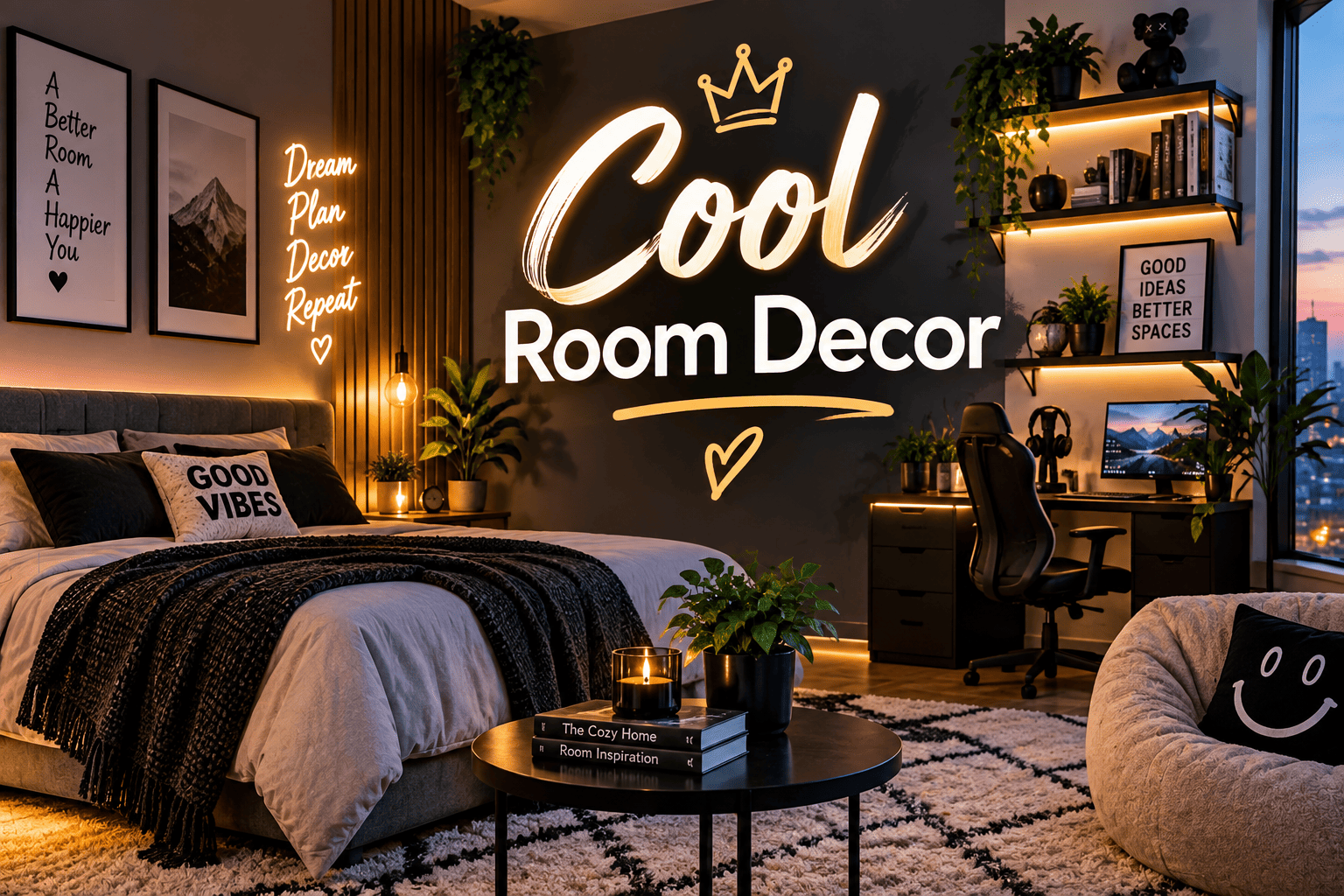
The easiest way to create cool room decor is to stop trying to decorate every corner and start designing the room around a few memorable details. Combine a balanced color palette with layered lighting, interesting furniture shapes, tactile fabrics, statement wall decor, greenery, and personal objects. Add contrast through one unexpected color or material, keep clutter under control, and give your favorite pieces enough space to stand out. The result is a room that feels modern, comfortable, personal, and effortlessly stylish rather than overly decorated.
Introduction
What makes one room instantly interesting while another feels ordinary?
It is rarely the price of the furniture.
A cool room usually has contrast, personality, and a sense of intention. Something catches your attention when you walk in: an oversized artwork, an unusual chair, dramatic lighting, a beautifully styled bed, or even a simple color combination that feels unexpected.
The mistake is thinking that cool room decor means buying more accessories. More stuff can actually make a room feel crowded and less stylish. Instead, focus on how different elements work together.
A soft rug can balance a sleek coffee table. Warm wood can soften metal. A bold artwork can wake up neutral walls. A vintage object can make modern furniture feel less predictable.
Whether you’re refreshing a bedroom, living room, teen room, or compact apartment, these 18 ideas can help you create a space that looks thoughtfully designed without feeling staged.
1. Create a Color Story With One Unexpected Shade
A beautiful room does not need a complicated color scheme.
Choose a dominant neutral such as warm white, beige, taupe, soft gray, or earthy brown. Then introduce one stronger shade that gives the room energy.
Think cream with chocolate brown, beige with olive green, gray with cobalt blue, or warm white with deep burgundy.
Use your accent color more than once so it feels intentional. A blue cushion can connect with blue artwork. An olive planter can echo a green throw. This small repetition creates cohesion without making everything match.
The result is more sophisticated than simply choosing several unrelated colors.
2. Treat the Ceiling as a Design Opportunity
The ceiling is often the forgotten surface in a room, yet it can completely change the visual experience.
A sculptural pendant can become the room’s jewelry. A large globe light can soften a modern space, while an architectural fixture can give a minimalist room more personality.
If you’re making a bigger change, a painted ceiling can create a dramatic cocooning effect. Wood beams, subtle paneling, or textured treatments can also add architectural interest.
You do not need an elaborate ceiling renovation. Sometimes one distinctive light fixture is enough.
3. Give One Wall the Spotlight
Cool room decor works better when there is a visual hierarchy.
Instead of giving every wall equal attention, choose one to become the focal point.
Try an oversized canvas, graphic wallpaper, wood slats, textured plaster, framed photography, or a gallery arrangement. In a bedroom, the wall behind the bed is a natural location. In a living room, the wall behind the sofa or television can become the main feature.
Keep surrounding walls simpler. The contrast between a strong focal wall and quieter surfaces makes the room feel intentional instead of visually noisy.
4. Turn Lighting Into Part of the Decor
Lighting is one of the fastest ways to change the mood of a room.
A single ceiling fixture often leaves a space looking flat. Instead, create layers.
Use ambient lighting for overall brightness, task lighting where you read or work, and accent lighting to highlight artwork, shelves, plants, or architectural details.
A floor lamp beside a sofa can create a cozy evening zone. Bedside lamps add warmth and symmetry. Wall sconces save space while creating attractive pools of light.
For relaxing spaces, warm-toned bulbs can create a softer atmosphere than harsh, cool lighting.
5. Choose Furniture With a Memorable Shape
You do not have to replace your entire furniture collection to make a room look more modern.
Choose one piece with an interesting silhouette.
A curved chair can soften a boxy room. A round coffee table can break up a collection of rectangular furniture. An organically shaped side table can introduce movement, while a sculptural stool can work as both seating and decoration.
This is especially useful in minimalist rooms. When there are fewer objects, the shape of each one becomes more noticeable.
6. Make Your Bed or Sofa Look Layered
Soft furnishings can instantly make a room feel more complete.
For a bedroom, start with simple bedding and build from there. Add pillows in different sizes, a textured throw, and perhaps one contrasting cushion.
For a living room decor, mix fabrics instead of using identical cushions. Linen, cotton, velvet, boucle, wool, and knitted textures can create depth without requiring bold patterns.
The secret is restraint. A few intentional layers look inviting; too many competing cushions and blankets can make the space feel messy.
7. Let the Rug Anchor the Room
A rug should visually connect furniture rather than look like a small island underneath one piece.
In a living room, choose a size that allows the main seating arrangement to relate to the rug. In a bedroom, extend the rug beyond the bed when possible to create a soft, grounded effect.
For a modern look, consider subtle geometric patterns, vintage-inspired designs, checkerboard motifs, or textured neutral rugs.
Besides adding warmth and comfort, a well-sized rug helps define the room’s layout.
8. Choose a Mirror With Personality
A mirror does not have to look purely functional.
An oversized leaning mirror can make a bedroom or dressing area feel more spacious. An arched mirror introduces softness, while an irregular or organic shape can become a decorative focal point.
Antique-inspired finishes are useful when a modern room feels too new or polished.
Position the mirror where it can reflect natural light or an attractive part of the room. That way, it adds both visual depth and practical value.
9. Mix Something Vintage Into the Modern
A room where every item looks brand-new can sometimes feel predictable.
Introduce contrast with one vintage or vintage-inspired element.
It could be an old-looking frame, a thrifted chair, a traditional ceramic vase, a retro lamp, a weathered piece of artwork, or a decorative object with visible character.
The combination of modern and vintage decor creates a collected feeling. It suggests the room developed over time rather than being purchased as one matching set.
10. Style Shelves With Breathing Room
Open shelves can become beautiful features, but only when they have enough negative space.
Instead of filling every inch, create small arrangements. Stack a few books, lean artwork behind them, add a ceramic object, then leave some empty space before the next grouping.
Vary heights and shapes to create rhythm.
A useful rule is to step back regularly while styling. Objects that look attractive individually can become overwhelming when placed too closely together.
11. Display Your Real Interests
The most memorable rooms often contain things that are not technically “decor.”
Books, records, cameras, photographs, collectibles, travel souvenirs, musical instruments, sketches, or hobby-related objects can become part of the design.
This approach makes cool room decor feel authentic because it reflects the person living there.
Instead of hiding everything in drawers, choose a few meaningful objects and display them intentionally.
12. Add Greenery With a Strong Shape
Plants bring life into contemporary interiors and help soften hard surfaces.
Rather than scattering tiny plants everywhere, consider one larger plant that fills an empty corner or creates height beside furniture.
Trailing plants work beautifully on shelves, while sculptural branches can create a dramatic arrangement without requiring daily care.
The planter matters too. Choose ceramic, woven, stone-look, or simple modern designs that complement the rest of the room.
13. Add a Small Dose of Metal or Glass
Modern spaces benefit from a little reflection.
Chrome, brass, stainless steel, black metal, glass, and mirrored surfaces can catch light and add contrast to softer materials.
You might introduce these finishes through a lamp, coffee table, picture frame, tray, or small accessory.
Avoid turning the room into a collection of competing finishes. Repeat one or two materials in different places for a more cohesive effect.
14. Turn an Empty Corner Into a Chill Zone
An awkward corner can become one of the most useful areas in the room.
Add a comfortable chair, a small side table, and a floor lamp to create a reading nook or relaxation spot. A basket with a blanket nearby can add both texture and function.
In smaller rooms, choose compact furniture with a narrow profile.
This does more than fill empty space. It gives the room another purpose and creates a cozy destination within the larger layout.
15. Make Storage Part of the Style
Nothing ruins a carefully decorated room faster than visible clutter.
Use storage pieces that contribute to the design instead of fighting it.
A woven basket can hold blankets. A storage ottoman can hide everyday items. Floating shelves can use vertical space. Closed cabinets can keep electronics and miscellaneous objects out of sight.
Do not overlook cables either. Organizing wires around desks, televisions, lamps, and charging stations can make the room look dramatically cleaner.
16. Use Curtains to Make Windows Look Bigger
Curtains influence the perceived proportions of a room more than many people realize.
When appropriate, mounting the rod higher and wider than the window can create the impression of taller, broader windows. Floor-length fabric adds softness and draws the eye upward.
Linen-look or lightly textured curtains work well in relaxed modern spaces. If the rest of the room is neutral, a subtle pattern can introduce another layer of personality.
The best curtain color usually connects with an existing tone in the room rather than appearing completely isolated.
17. Add One Detail That Could Only Belong to You
Trends can create a beautiful foundation, but personal details create identity.
Choose one object with genuine meaning: a photograph, handmade artwork, travel find, custom print, favorite collectible, musical instrument, or family piece.
It does not need to be expensive or impressive.
In fact, an ordinary object with a personal story can have more emotional impact than a fashionable accessory bought simply because it is trending.
That is often what separates a stylish room from a memorable one.
18. Edit Before You Buy Anything Else
Once the room looks almost finished, stop shopping.
Walk around and identify anything that feels unnecessary. Remove a few accessories from shelves, clear crowded surfaces, and move objects that compete with your focal point.
Then look at the room from the doorway.
Does your eye know where to go first? Is one side visually heavier? Are there enough quiet areas? Do the colors appear throughout the room naturally?
Editing creates sophistication because it gives the best elements room to breathe.
Cool Room Decor on a Budget
You do not need a complete makeover to create a stylish room.
Start with the changes that offer the biggest visual return. Rearrange furniture to improve the layout. Replace harsh bulbs with warmer lighting. Create artwork from personal photographs or affordable prints. Restyle existing shelves instead of buying new accessories.
A secondhand mirror, vintage chair, thrifted frame, or pre-loved side table can also become a standout feature.
The most valuable decorating skill is not spending more. It is knowing where a small change will have the biggest visual effect.
Cool Room Decor for Small Spaces
Small rooms benefit from editing and multifunctionality.
Choose furniture that performs more than one job, such as an ottoman with storage or a bedside table with drawers. Use wall-mounted lighting and vertical shelves to keep the floor open.
A large mirror can create additional visual depth, while a consistent color palette prevents the space from feeling fragmented.
Most importantly, avoid decorating every empty surface. A little negative space makes a compact room feel calmer and more spacious.
Common Mistakes to Avoid
Even great decorating ideas can go wrong when everything is used at once.
Avoid mixing too many trends, colors, patterns, or statement pieces. Do not choose furniture based only on appearance without considering its size. An undersized rug can make a large seating area feel disconnected, while oversized furniture can overwhelm a small bedroom.
Other common mistakes include relying entirely on overhead lighting, overcrowding shelves, matching every furniture piece, and using decorative accessories without a clear purpose.
Cool interiors need balance as much as personality.
Final Thoughts
The best cool room decor does not look like it tried too hard.
It feels natural because every element has a reason to be there. A strong color combination creates mood. Interesting furniture shapes add character. Layered lighting changes the atmosphere. Rugs and textiles provide softness, while artwork, plants, vintage pieces, and personal objects keep the room from feeling generic.
You do not have to redesign everything.
Start with one change that immediately improves the room, then build around it. A better light, oversized mirror, statement chair, beautiful rug, or meaningful piece of artwork can become the starting point for an entirely new atmosphere.
The goal is simple: create a room that looks good, feels comfortable, and feels unmistakably yours.
FAQs
What makes a room look cool?
A cool room usually combines personality with visual balance. Interesting lighting, statement artwork, contrasting textures, distinctive furniture shapes, and personal objects can create a more memorable space.
How can I make my room look cool on a budget?
Rearrange the furniture, improve the lighting, restyle shelves, display personal objects, add greenery, or look for secondhand mirrors and furniture. Small changes can have a surprisingly large visual effect.
What colors work well for cool room decor?
Warm neutrals paired with one deeper accent often create a stylish foundation. Try beige with olive, cream with chocolate brown, gray with cobalt, or warm white with burgundy.
How can I make a small room look stylish?
Use fewer but better-proportioned pieces, maximize vertical storage, add a large mirror, layer your lighting, and keep the color palette visually connected.
How do I make my bedroom look cool and cozy?
Layer comfortable bedding, add warm bedside lighting, introduce textured fabrics, choose one strong piece of wall art, and keep a few personal objects visible.
How can I decorate without making my room cluttered?
Use closed storage for everyday items, group accessories instead of scattering them, leave negative space on shelves, and remove anything that competes with your main focal point.

Leave a Reply