
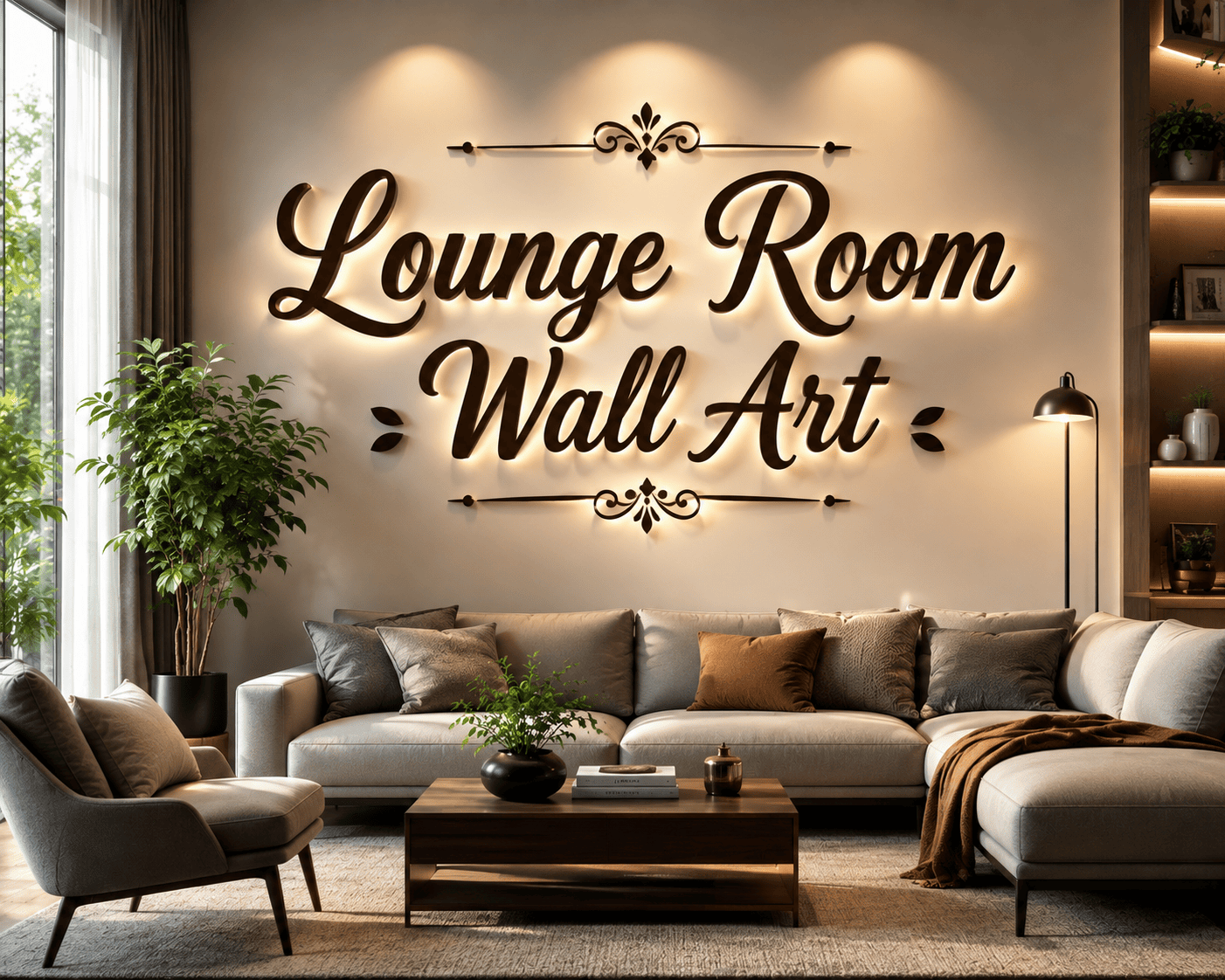
The best lounge room wall art is artwork that suits the size of the wall, scale of the furniture, existing color palette, and mood of the room. Oversized abstract paintings, dramatic photography, sculptural wall pieces, textured artwork, curated gallery walls, and statement mirrors are especially effective because they add visual interest while giving the lounge a stronger personality.
Introduction
Lounge room wall art can do far more than fill an empty patch of wall. The right artwork can make a room feel warmer, moodier, more luxurious, more personal, or instantly more sophisticated. It can pull together a sofa, rug, lighting, and accessories that otherwise feel disconnected and give the entire lounge a clear visual identity.
The secret is not simply finding a beautiful print. Great lounge room wall art works because of scale, contrast, texture, color, and placement. A dramatic oversized canvas can become the room’s main character, while a collection of smaller pieces can create the relaxed feeling of a economy home decor that has evolved over time.
If your lounge currently feels a little flat, predictable, or unfinished, the answer may be hanging on the wall. These 20 ideas show how to turn ordinary walls into memorable focal points without making the room feel overdecorated.
20 Lounge Room Wall Art Ideas With Serious Allure
1. Let One Oversized Artwork Take Over
When a lounge has a large blank wall, several tiny prints can make the space feel more cluttered rather than more finished. One oversized artwork creates a stronger visual anchor and gives the room the confidence of a professionally designed interior.
An abstract painting with sweeping shapes, deep tones, or subtle movement works particularly well because it doesn’t compete with the furniture. Place it above the sofa and choose a piece that occupies a substantial portion of the furniture’s width.
The goal is simple: one powerful artwork should feel intentional, not merely large.
2. Turn Black-and-White Photography Into a Moody Moment
Black-and-white photography has a naturally cinematic quality. A dramatic architectural photograph, expressive portrait, fashion image, or atmospheric landscape can instantly give a lounge more depth.
To keep monochrome wall art from looking cold, surround it with warm materials such as timber, leather, wool, linen, or soft lighting. A substantial black or dark wood frame can make the artwork feel even more polished.
This is particularly effective when the rest of the lounge uses neutral colors, because the artwork becomes a sharp visual statement without introducing another competing color.
3. Create a Gallery Wall That Feels Collected
A gallery wall becomes much more interesting when it doesn’t look like a matching set purchased in one box. Combine different artwork sizes, frame finishes, photography, illustrations, sketches, and perhaps one unusual object.
The trick is to create visual connection without perfect uniformity. Repeat one color throughout several pieces, keep the spacing reasonably consistent, and arrange the largest artwork first before filling the surrounding gaps.
A successful gallery wall should feel as though the homeowner collected pieces they genuinely loved rather than simply trying to fill a wall.
4. Bring in Botanical Art Without Making It Feel Traditional
Botanical wall art can soften a contemporary lounge, but it doesn’t have to look like old-fashioned floral wallpaper. Look for oversized leaves, dramatic tropical studies, abstract botanicals, or minimal botanical line drawings.
Deep green artwork can work beautifully with cream, tan, walnut, charcoal, and warm white interiors. For a more sophisticated effect, choose large-scale imagery instead of several tiny floral prints.
The organic shapes introduce movement and soften the hard edges of sofas, tables, shelves, and architectural features.
5. Use Sculptural Wall Art to Add Dimension
Flat artwork isn’t your only option. Sculptural wall art can turn an ordinary wall into something that catches light and creates shadows throughout the day.
Plaster reliefs, carved wood, ceramic compositions, textured metal, and three-dimensional abstract pieces all bring depth to a lounge. They are especially effective in neutral rooms where there may not be much color contrast.
Keep the surrounding decor relatively restrained. When the wall itself has texture and dimension, it doesn’t need a dozen accessories competing for attention.
6. Give the Lounge a Cinematic Landscape
A beautiful landscape can completely change the emotional temperature of a room. Instead of bright, generic scenery, consider misty mountains, stormy coastlines, dramatic skies, shadowy forests, or atmospheric desert landscapes.
These images create a sense of escape and make the wall feel like a window into another world. Choose artwork that shares at least a few tones with your sofa, rug, or curtains so the piece feels integrated.
A dark landscape above a neutral sofa can be particularly effective when you want the lounge to feel intimate and slightly mysterious.
7. Make a Statement Mirror Feel Like Art
A mirror doesn’t have to be a purely practical object. An oversized arched mirror, sculptural irregular design, antique-style frame, or dramatic circular piece can function as the lounge’s main wall statement.
Its reflective surface also helps distribute natural and artificial light, which can make the room feel more open. This makes decorative mirrors especially useful for smaller lounges or spaces with limited daylight.
Choose the shape according to the furniture around it. Soft curves can balance angular furniture, while a bold geometric mirror can reinforce a contemporary aesthetic.
8. Add Fashion-Inspired Art for an Editorial Feel
Fashion photography, elegant figure sketches, couture-inspired illustrations, and artistic portraits can give a lounge the polished atmosphere of a boutique hotel.
The important distinction is choosing art rather than advertising. Look for expressive compositions, painterly treatments, unusual cropping, or monochromatic imagery instead of obvious commercial photographs.
Pair fashion-inspired art with clean furniture, sculptural lighting, and a restrained color palette for a sophisticated editorial effect.
9. Try Textured Neutral Art for Quiet Luxury
If your lounge is already built around cream, beige, taupe, sand, or warm white, adding another colorful print may not be necessary. Instead, introduce interest through texture.
Linen artwork, plaster canvases, raised abstract patterns, woven wall pieces, and handmade neutral compositions can make a quiet room feel rich without becoming visually loud.
This is where texture replaces color as the source of drama. The artwork may appear subtle from across the room, but closer inspection reveals layers, shadows, and imperfections that make the space feel more considered.
10. Make a Portrait the Room’s Main Character
A compelling portrait can create an immediate emotional connection. It doesn’t need to be a traditional painting; contemporary photography, abstract faces, vintage portraits, and expressive sketches can all work.
Choose a portrait with an atmosphere that matches the room. A mysterious black-and-white face can intensify a dark lounge, while a softer painted portrait can bring warmth to a neutral interior.
Give the artwork enough breathing room. A dramatic portrait becomes less powerful when surrounded by too many competing decorations.
11. Add Metallic Art Without Going Overboard
Gold, brass, bronze, and silver can bring a subtle flash of glamour to a lounge. Metallic wall art is especially effective when the finish appears aged or textured rather than overly shiny.
Instead of covering an entire wall in metallic decoration, use one piece as an accent. Then repeat that finish subtly through a lamp, side table, mirror frame, or hardware.
This repetition creates cohesion while keeping the room elegant rather than flashy.
12. Design the Wall Around the Sofa
The wall behind the sofa is often the most important visual zone in a lounge. Instead of choosing artwork first and hoping it works, start by looking at the sofa’s proportions.
A single artwork generally looks strongest when it has substantial visual width relative to the sofa. For a large sofa, consider one oversized canvas, a wide diptych, or a carefully arranged group of pieces rather than one small print floating above it.
The center of the composition should also sit at a comfortable viewing height. Artwork that is hung excessively high can make the entire seating area feel disconnected from the wall.
13. Split the Drama With a Diptych
A diptych divides one artistic idea across two panels, creating a wider composition without requiring one enormous canvas.
Abstract forms, botanical imagery, landscapes, and minimal artwork all work particularly well in this format. The small gap between the panels becomes part of the composition, so avoid placing them so far apart that they look like unrelated pictures.
Diptych art is an excellent choice when a single rectangular canvas feels too ordinary but a full gallery wall would be too busy.
14. Break the Rules With Vintage Art
One of the easiest ways to make contemporary lounge decor feel less predictable is to introduce something with history.
A vintage painting, old botanical print, antique-style portrait, or ornate frame can create beautiful tension against a modern sofa and clean-lined furniture. The contrast is what makes the combination interesting.
Don’t worry about making the vintage piece match everything. Instead, find one or two colors within the artwork that quietly repeat elsewhere in the room.
15. Use Black Frames as Architectural Details
Sometimes the artwork itself doesn’t need to be dramatic. The frame can provide the definition.
Black frames create a strong outline around artwork and can visually connect with black table legs, lighting fixtures, shelving, or window frames. On pale walls, the contrast is especially crisp.
For a more contemporary appearance, use simple slim frames. For a traditional or eclectic lounge, a heavier black frame can give the artwork greater visual authority.
16. Choose Handmade Pieces for Authenticity
Mass-produced artwork can be attractive, but handmade pieces often give a lounge something harder to reproduce: character.
Hand-painted canvases, woven textiles, ceramics, carved wood, and artisan-made wall sculptures bring small variations and imperfections that make the room feel lived-in.
You don’t need to fill the entire lounge with handmade objects. One distinctive artisan piece can be enough to stop a polished interior from feeling too perfect or generic.
17. Create One Dark-Art Moment
Dark artwork can make a room feel surprisingly intimate. Think charcoal, midnight blue, deep burgundy, forest green, espresso brown, or almost-black compositions.
The key is controlled contrast. A dark artwork against a pale wall creates instant drama, while dark art against a dark wall produces a more cocooning, luxurious effect.
If you choose a very dramatic piece, allow it to dominate one area instead of competing with equally bold artwork throughout the room.
18. Keep It Minimal With Line Art
Minimalist line art proves that wall decor doesn’t need to be complicated to make an impression.
Continuous-line portraits, abstract figures, architectural sketches, and simple black-and-white drawings can introduce personality while preserving plenty of negative space.
This approach is ideal for modern, Scandinavian, contemporary, and minimalist lounges. The secret is giving the artwork room to breathe rather than surrounding it with too many decorative objects.
19. Layer Artwork Instead of Hanging Everything
An art ledge or console can make wall styling feel more relaxed and flexible. Lean a large artwork against the wall, overlap it slightly with a smaller frame, and add a few carefully chosen objects nearby.
This layered approach creates depth because the pieces sit at different distances from the wall. It also allows you to change the arrangement without creating a collection of new holes.
Keep the number of objects controlled. Layering should create depth, not become an excuse for clutter.
20. Finish With Art That Actually Means Something
The most unforgettable wall isn’t necessarily the one with the most expensive artwork. Often, it is the wall containing something that has personal meaning.
A commissioned painting, favorite photograph, travel image, inherited artwork, or piece created by a local artist can give your lounge a personality that no generic print can reproduce.
Your artwork doesn’t have to explain your entire life. It simply needs to feel like your choice. That small sense of authenticity is often what separates a beautiful lounge from a memorable one.
How to Choose Lounge Room Wall Art Without Getting It Wrong
Start With Scale, Not Color
One of the most common wall art mistakes is choosing a piece because you love its colors without considering its size. A beautiful small print can disappear above a large sectional.
Look at the wall and furniture together. Large furniture generally benefits from substantial artwork, while smaller seating arrangements can handle compact pieces or grouped artwork.
Decide the Mood Before You Shop
Think about how you want the lounge to feel. Warm earthy artwork can create intimacy, dark abstract pieces can introduce drama, while pale textured art supports a calmer luxury aesthetic.
Once the mood is clear, shopping becomes much easier because you’re selecting artwork for a purpose rather than choosing whatever catches your eye.
Use Color as a Thread, Not a Rule
Your artwork does not need to match your sofa perfectly. In fact, overly literal matching can make a room feel staged.
Instead, allow one or two colors from the artwork to appear elsewhere through cushions, rugs, curtains, books, or accessories. This creates visual connection without sacrificing personality.
Don’t Forget Texture
A lounge can look flat when every surface is smooth. Textured wall art introduces shadows and tactile variation, particularly when the color palette is neutral.
Mixing canvas with wood, metal, plaster, woven materials, or ceramics creates a richer visual experience than relying on printed artwork alone.
Wall Art Mistakes That Can Ruin an Otherwise Beautiful Lounge
Even expensive artwork can look wrong when the proportions are off. Art that is too small, hung too high, or squeezed between unrelated furniture can make the entire wall feel awkward.
Another common mistake is trying to decorate every available surface. A memorable lounge needs breathing room. Leaving some walls quiet allows your statement artwork to become more powerful.
It’s also worth avoiding artwork that matches every accessory too literally. A room should feel coordinated, not manufactured.
Finally, consider lighting before deciding that a piece isn’t impressive enough. A carefully positioned lamp, picture light, or wall sconce can completely change how texture, color, and shadow appear on artwork.
How to Make Lounge Room Wall Art Look More Expensive
You don’t necessarily need a designer budget to create a high-end effect. Start with proportion. Properly scaled artwork immediately looks more intentional.
Next, pay attention to framing. A simple print can become much more sophisticated when placed in a substantial frame with an appropriate mat or border.
Lighting is another underrated detail. Warm ambient lighting can make artwork feel softer and richer, while directional lighting can emphasize texture and sculptural details.
Most importantly, resist the urge to overdecorate. Luxury often comes from editing rather than adding. One exceptional piece surrounded by thoughtful negative space can have more impact than an entire wall of competing decorations.
FAQs
What type of art looks best in a lounge room?
Oversized abstract art, dramatic photography, textured pieces, sculptural wall decor, landscapes, and curated gallery walls are all strong options. The best choice depends on your furniture scale, wall size, existing colors, and desired atmosphere.
How big should wall art be above a sofa?
A useful starting point is to choose artwork that occupies a substantial portion of the sofa’s width rather than leaving a tiny image floating above it. For grouped pieces, consider the total arrangement as one visual unit.
Should lounge room wall art match the furniture?
No. It should complement the furniture rather than perfectly match it. Repeating one or two colors is usually enough to create cohesion while allowing the artwork to have its own personality.
Final Thoughts
The best lounge room wall art doesn’t simply decorate a wall—it changes the feeling of the entire room. A dark abstract canvas can make a space feel mysterious, textured neutrals can create quiet luxury, vintage artwork can add history, and a personal piece can give the lounge a character that no trend can copy.
The most effective approach is to stop asking, “What can I put on this empty wall?” and start asking, “What do I want this room to make people feel?”
Once you know the answer, the right artwork becomes much easier to find.
Choose one piece with confidence. Give it enough space to breathe. Pay attention to scale and lighting. Then let the rest of the lounge support it rather than compete with it.
That is how a blank wall becomes more than decorated—it becomes the part of your lounge people remember.

Leave a Reply