
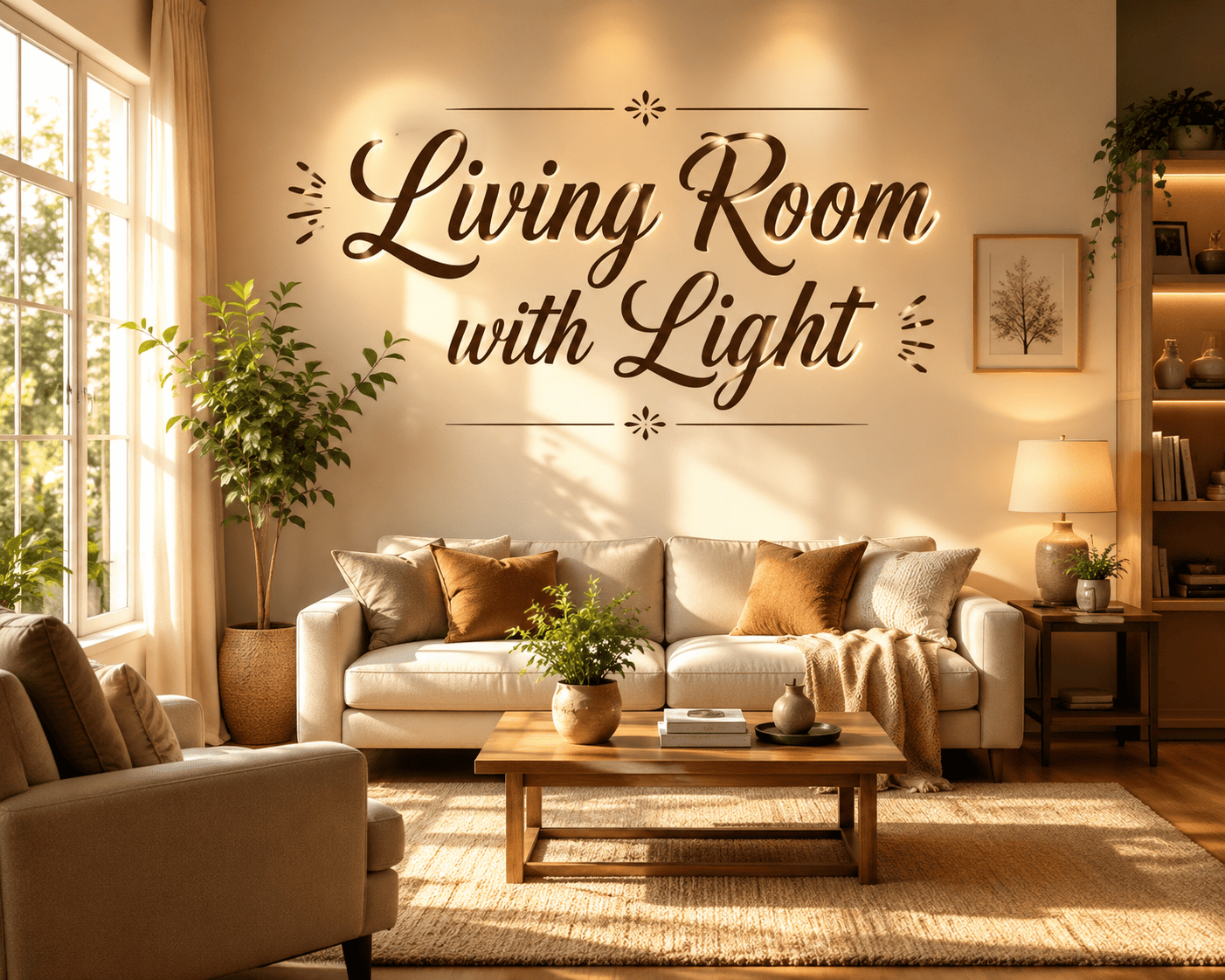
To create a moody living room, use several warm light sources instead of depending on one bright ceiling fixture. Combine ambient lighting for general warmth, accent lighting for artwork and architectural details, and task lighting for reading or specific activities. Choose warm bulbs around 2700K–3000K, use dimmers where possible, and allow some areas of the room to remain softly shadowed.
The biggest secret is contrast. A room becomes atmospheric when bright and dim areas work together rather than competing to illuminate everything.
Introduction
A cozy living room is not always the brightest room in the house. Sometimes, the spaces that feel the most luxurious are the ones where light is used selectively—softly glowing beside a sofa, washing across a textured wall, reflecting from a brass detail, or disappearing behind furniture to create an almost floating effect.
That is the secret of a truly atmospheric living room with light. Instead of treating lighting as something you switch on when the sun goes down, treat it as part of the room’s decor. The right combination of warm illumination, gentle shadows, reflective surfaces, and focused highlights can completely change how furniture, colors, and textures look after dark.
The goal is not to make every corner equally bright. It is to create layers that give the room warmth, depth, intimacy, and personality. Here are 18 stylish ways to make lighting one of the most memorable features in your living room.
18 Moody Living Room Lighting Ideas
1. Let One Oversized Pendant Own the Room
A dramatic pendant can instantly give a living room a stronger identity. Instead of scattering attention among several small fixtures, choose one oversized design with an interesting silhouette, textured material, or sculptural shape.
The key is proportion. A large fixture works best when it feels intentional rather than simply oversized. Hang it where it can visually anchor the seating area, then keep surrounding lighting quieter so the pendant remains the star.
For a more seductive evening atmosphere, connect it to a dimmer. Lowering the brightness after dark can make the same fixture feel completely different.
2. Create a Golden-Hour Corner
You do not need to warm up the entire room equally. Choose one corner and make it feel like permanent golden hour.
A comfortable armchair beside a warm floor lamp, a small side table, and a soft throw can create a naturally inviting retreat. A fabric shade is particularly effective because it diffuses the bulb instead of producing sharp glare.
This works because concentrated warmth gives the eye somewhere comfortable to settle. Rather than flooding the entire room with light, you create one intimate destination.
3. Put Light Behind the Furniture
Hidden lighting can make ordinary furniture appear surprisingly architectural.
Install subtle LED lighting behind a media console, shelving unit, or sofa to create a soft halo around the furniture. The light should remain mostly concealed so that you notice the glow rather than the light source itself.
This technique is especially effective in contemporary and minimalist living rooms because it adds depth without introducing another visible decorative object.
4. Make a Dark Wall Glow
Dark walls and moody lighting are natural partners. Charcoal, deep olive, chocolate brown, navy, and rich terracotta can look flat under harsh overhead lighting, but warm directional light can bring their texture and undertones to life.
Instead of trying to brighten a dark wall, illuminate it strategically. A picture light, wall sconce, or floor lamp positioned nearby can create a gentle pool of illumination.
The result is more sophisticated than simply increasing brightness because the wall decor becomes part of the atmosphere.
5. Turn the Fireplace Into a Light Feature
A fireplace naturally attracts attention, so it makes sense to build lighting around it.
If the fireplace is functional, warm firelight can become one layer while sconces, candles, or small lamps provide another. If it is decorative or unused, style the surrounding area with carefully controlled lighting instead.
Avoid placing too many competing lights around the fireplace. The goal is to reinforce its focal-point status, not turn the entire wall into a brightly lit display.
6. Use Matching Lamps for Effortless Balance
Symmetry is one of the easiest ways to make a living room feel polished.
Place matching table lamps on a console, sideboard, or on both sides of a sofa. The repeated shapes create visual rhythm while the warm pools of light establish balance.
For a modern look, choose simple ceramic, glass, metal, or fabric designs. For a more luxurious atmosphere, look for sculptural silhouettes or metallic finishes that catch the glow.
7. Let Shadows Become Part of the Decor
One of the biggest mistakes in living room lighting is treating shadows as something that needs to be eliminated.
Instead, use them intentionally.
A woven lampshade can cast patterned shadows. A leafy plant can create delicate shapes on a wall. A sculptural object can interrupt a beam of light and turn an ordinary surface into something more dynamic.
The secret is controlled shadow. You do not want the room to feel dark and uncomfortable; you want enough variation that the space has depth.
8. Add a Low-Glow Floor Lamp Beside the Sofa
A floor lamp beside the sofa should serve the person sitting there rather than trying to illuminate the entire room.
Choose a design that directs light downward or sideways. This creates a small, useful pool of illumination for reading, relaxing, or having a conversation.
Look for adjustable designs if flexibility matters. You can redirect the light depending on whether you are reading or simply creating evening ambiance.
9. Make Artwork Look Expensive With Picture Lighting
Artwork can completely change when it receives dedicated lighting.
A slim picture light above a painting or framed print creates a visual destination and makes the wall feel curated. Instead of lighting the entire room equally, you are deliberately telling the eye where to look.
Warm illumination usually works particularly well with artwork because it enhances depth and creates a gallery-like atmosphere without making the room feel clinical.
10. Mix Glass and Light for a Luxe Effect
Reflective materials can multiply the impact of existing lighting.
A glass coffee table, mirrored tray, crystal accessory, or glossy decorative object can catch small amounts of illumination and scatter them around the room. You get visual sparkle without adding another fixture.
The trick is restraint. Too many reflective surfaces can make the space feel busy. Choose a few carefully placed pieces and let the lighting do the rest.
11. Use Metallic Accents to Catch the Glow
Warm lighting and metallic finishes are an especially effective combination.
Brass, bronze, brushed gold, and even carefully selected chrome details can catch light and create tiny highlights throughout the room. A brass lamp base, metallic frame, or gold-edged accessory can therefore become more noticeable after sunset than during the day.
This is an easy way to introduce a luxurious feeling without replacing major furniture.
12. Create a Candlelit Layer Without Making It Old-Fashioned
Candlelight brings something ordinary electric lighting cannot completely reproduce: movement.
Use modern candle holders, sculptural lanterns, or realistic flameless candles to introduce a flickering layer near the coffee table, fireplace, or shelving.
Keep candles at different heights to create visual variation, but avoid placing too many together. A few intentional points of glow usually feel more sophisticated than an overcrowded arrangement.
13. Put the Ceiling Light on the Back Burner
The ceiling light does not have to be the star of every evening.
In fact, one of the easiest ways to create a more intimate living room is to switch off the main overhead fixture and activate several smaller sources instead.
Floor lamps, table lamps, sconces, accent lights, and hidden LEDs create multiple points of illumination. This breaks up the room visually and produces a much richer atmosphere than one central beam.
Keep the ceiling fixture available for cleaning, entertaining, or situations that require stronger general illumination.
14. Light the Curtains, Not Just the Windows
Windows often become visually empty after sunset. You can change that by introducing subtle light around the curtains or window recess.
Concealed lighting behind fabric can create a soft glow along the edges of curtains, making the window wall feel warmer and more dimensional.
This is particularly beautiful with sheer or lightly textured fabrics because the material gently diffuses the illumination rather than reflecting it harshly.
15. Try Wall Sconces for a Hotel-Lounge Feel
Wall sconces provide both function and personality without taking up floor space.
Place them beside artwork, around a fireplace, near a sofa, or on either side of a feature wall. Sculptural sconces can work almost like wall jewelry, especially when their silhouettes remain visible after the lights are turned off.
For a boutique-hotel feeling, combine warm sconces with dark walls, plush upholstery, and a few reflective accents.
16. Create a Dark-and-Light Contrast Zone
Do not try to make every section of the room equally bright.
Instead, deliberately create brighter focal areas surrounded by softer shadows. For example, the seating area might receive warm illumination while a distant corner remains relatively dark.
This technique creates depth because the eye experiences different visual levels across the room. It also makes the space feel more intimate.
Think of lighting as composition: some elements should attract attention while others should quietly support the scene.
17. Make Your Coffee Table Glow
The coffee table is an underrated opportunity for atmospheric lighting because it sits directly within the main seating zone.
A small cordless lamp, a group of candles, a softly reflective tray, or a decorative illuminated object can create a low central glow.
Keep the arrangement functional. People should still have room for books, drinks, and everyday items. The best styling looks beautiful but does not make the furniture difficult to use.
18. Finish With One Signature Light
Every memorable living room benefits from one lighting detail people remember.
It could be an unusual floor lamp, a sculptural chandelier, an oversized pendant, or a striking pair of sconces. The fixture does not need to be extravagant; it simply needs enough personality to become part of the room’s identity.
Once you choose your signature piece, allow the rest of the lighting to support it. A room becomes more sophisticated when every fixture has a purpose instead of competing for attention.
How to Layer Living Room Lighting Without Making It Too Bright
A well-designed living room lighting scheme usually combines three basic layers.
Ambient Lighting
Ambient lighting provides the general glow of the room. Instead of making it extremely bright, aim for comfortable background illumination.
Floor lamps, table lamps, indirect lighting, and dimmable fixtures can all contribute to this layer.
Accent Lighting
Accent lighting creates visual focus. Use it to highlight artwork, plants, shelving, textured walls, architectural details, or decorative objects.
Because accent lighting is selective, it adds depth without increasing the brightness of the entire room.
Task Lighting
Task lighting handles activities such as reading, working, or playing games. A floor lamp beside a chair or an adjustable lamp near a desk can provide enough illumination exactly where it is needed.
The best lighting plans allow these three layers to work independently. That gives you control over the mood instead of forcing one setting to serve every situation.
The Secret to Sexy Living Room Lighting: Warmth and Contrast
If you want your living room to feel seductive rather than simply well-lit, focus on two things: warmth and contrast.
Warm bulbs around 2700K–3000K generally create a softer, more inviting atmosphere than very cool white lighting. Pair that warmth with areas of shadow and the room immediately gains more dimension.
This is why a uniformly bright living room can sometimes feel less luxurious than a darker room with carefully placed pools of light. Luxury is not always about adding more. Often, it is about controlling what you reveal.
Common Lighting Mistakes That Kill the Mood
Relying on one ceiling fixture is one of the fastest ways to flatten the atmosphere of a living room. It produces general brightness but rarely creates depth.
Another problem is choosing bulbs that are too cool or harsh. Even beautiful furniture can look less inviting under overly white light.
Poor scale can also weaken the design. A tiny lamp may disappear beside a large sofa, while an oversized fixture in a small room can dominate everything around it.
Finally, avoid adding lighting simply because there is an empty corner. Every fixture should have a purpose. If it does not illuminate, highlight, balance, or enhance something, it may simply be adding visual clutter.
How to Choose the Right Light for Your Living Room Style
Modern: Choose clean silhouettes, smoked glass, matte finishes, sculptural pendants, and streamlined floor lamps.
Contemporary: Mix different shapes and materials while keeping the overall palette coordinated. A statement lamp can become the main visual accent.
Luxury: Combine warm lighting with brass, glass, crystal, polished finishes, and dimmers. The ability to control brightness is just as important as the fixture itself.
Minimalist: Use fewer fixtures but make every one count. One sculptural pendant or beautifully positioned floor lamp can have more impact than several decorative pieces.
Dark and Moody: Pair deep wall colors with warm low-level lighting, picture lights, sconces, and concealed illumination to create depth without losing coziness.
Soft and Cozy: Choose fabric shades, warm bulbs, gentle floor lamps, and candlelight. Layering soft sources keeps the room welcoming without making it visually busy.
Final Thoughts
A living room with light should not simply be bright. It should feel intentional.
The most captivating spaces use illumination to reveal texture, emphasize architecture, create intimate corners, and give furniture a different personality after sunset. Sometimes the most beautiful detail is a lamp beside the sofa; sometimes it is the faint glow behind a console or the shadow cast by a plant across a dark wall.
Start with warm ambient lighting, add a few focused accents, and then allow some areas to remain beautifully imperfect and dim. When warmth, reflection, contrast, and shadow work together, your living room becomes more than a place that happens to be illuminated—it becomes a space with mood, character, and an unmistakably stylish glow.

Leave a Reply