
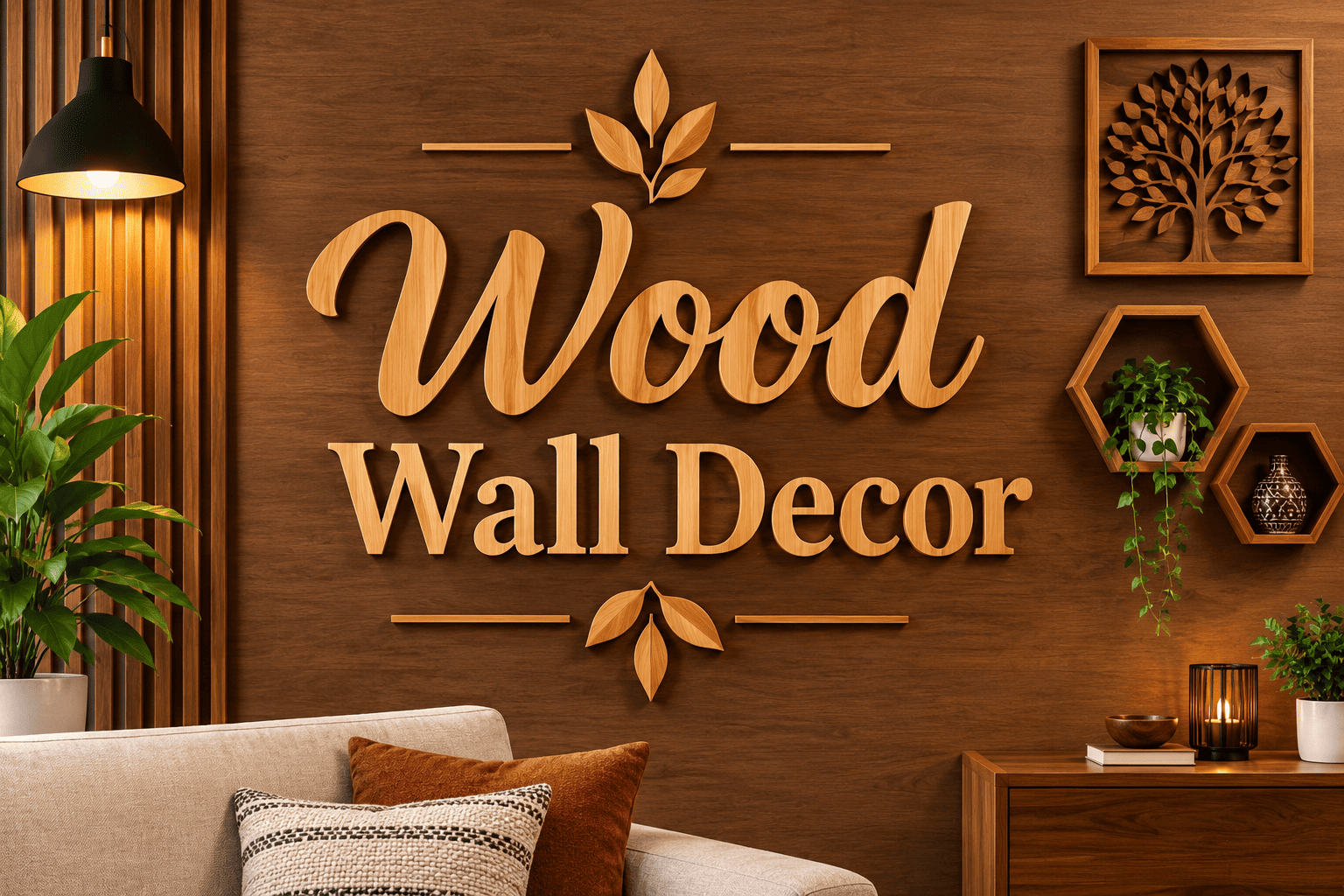
The easiest way to make a blank wall feel intentional is to add warmth, texture, and dimension with wood wall decor. Try vertical wood slats, decorative wood panels, floating shelves, reclaimed timber, geometric wooden wall art, a wood-framed mirror, or one oversized statement piece. The best choice depends on your room size, interior style, lighting, and existing wood tones. Instead of filling every inch, choose one strong focal point and leave enough negative space for the design to breathe.
Introduction
A blank wall can make even a beautifully furnished room feel unfinished. The furniture may be right, the lighting may be warm, and the accessories may be carefully chosen, yet one empty surface can still make the entire space feel flat.
That is where wood wall decor becomes especially useful. Unlike ordinary prints or a simple coat of paint, wood introduces natural grain, texture, warmth, and dimension. It can make a modern room feel softer, give a rustic interior more character, or add architectural detail to a minimalist space without relying on excessive decoration.
The best part is that wood wall decor is remarkably versatile. You can cover an entire accent wall with panels, create a subtle arrangement with floating shelves, add a sculptural wooden artwork, or use a few reclaimed pieces to bring personality to an otherwise ordinary room.
Below are 20 ways to use wood creatively so your blank wall looks designed rather than simply decorated.
1. Create a Vertical Wood Slat Wall
Vertical wood slats are an excellent choice when you want a modern wood accent wall with architectural character. The repeated lines naturally draw the eye upward, which can make a room feel taller.
Use evenly spaced oak, walnut, ash, or stained wood slats behind a sofa, bed, TV, or console. Keep the spacing consistent for a clean contemporary appearance.
For a softer look, choose a light wood tone. Dark walnut or espresso creates a more dramatic feature wall.
2. Hang Geometric Wooden Wall Art
You do not need to cover the entire wall to make an impact. Geometric wooden wall art can turn a plain surface into a sculptural focal point.
Look for circles, arches, rectangles, overlapping blocks, or abstract compositions. Mixing different depths can create subtle shadows that change throughout the day.
This approach works particularly well above a console table, fireplace, dining bench, or bedroom dresser.
3. Install Decorative Wood Panels
Decorative wood panels offer a polished alternative to traditional artwork. Choose smooth panels for a minimalist interior or fluted and textured panels when you want more visual depth.
A single paneled wall behind a sofa or bed can establish a strong focal point without requiring dozens of accessories.
For a cohesive appearance, repeat the panel’s wood tone somewhere else in the room through furniture, shelving, flooring, or small accessories.
4. Bring in Reclaimed Wood
Reclaimed wood adds something manufactured materials often lack: visible character. Weathered grain, knots, subtle color variation, and imperfect edges can make a wall feel collected rather than overly polished.
Use reclaimed timber as a small accent, a horizontal feature, or a complete rustic wood wall.
It also works surprisingly well in modern spaces. Pair weathered wood with simple furniture, neutral fabrics, and contemporary lighting to create contrast without making the room look old-fashioned.
5. Add Floating Wooden Shelves
Floating shelves are one of the easiest forms of functional wood wall decor. They give you a place to display books, plants, ceramics, candles, framed photographs, and small sculptures while filling empty wall space.
Instead of arranging every shelf identically, vary the height and length. Leave some sections empty so the arrangement feels curated rather than crowded.
For a modern look, use simple thick shelves with hidden brackets. For rustic or farmhouse interiors, choose naturally finished wood with visible grain.
6. Hang One Oversized Wooden Statement Piece
Sometimes one large piece works better than an entire collection.
An oversized wooden wall sculpture or large piece of wooden wall art can give a large blank wall an immediate focal point. The key is proportion. A tiny piece can disappear on a large wall, while an excessively large piece can overpower a small room.
A useful approach is to visually connect the artwork with the furniture underneath it. For example, a wide wooden piece above a sofa should generally feel substantial enough to relate to the sofa’s width.
7. Turn the TV Wall Into a Wood Feature
TV walls often look unfinished because a black screen becomes the only focal point. Adding wood behind it can make the television feel integrated into the room.
Vertical slats, smooth wood panels, or a combination of wood and painted surfaces can create a balanced media wall.
If possible, hide cables behind the treatment and keep surrounding accessories minimal. The goal is to make the TV wall look intentional rather than covered with unnecessary decor.
8. Add Wood Trim for Architectural Detail
You do not always need expensive wall panels. Simple wooden trim can create architectural interest while keeping the wall relatively light.
Try rectangular frames, vertical battens, narrow strips, or symmetrical wall molding. Paint the surrounding wall in a complementary shade and let the wood detail provide subtle dimension.
This is particularly effective in dining rooms, hallways, bedrooms, and entryways where a full wood wall may feel excessive.
9. Combine Wood With Black Metal
Wood and black metal create an attractive balance between natural warmth and modern structure.
Try a wooden shelf with black brackets, a wood-and-metal wall grid, geometric artwork, or an industrial-style display unit.
The contrast is especially effective in modern, industrial, and contemporary interiors. Keep the metal finish consistent throughout the arrangement so the combination looks intentional.
10. Build a Warm Wooden Gallery Wall
A gallery wall does not have to rely on identical black or white frames. Wooden frames can give photographs and artwork a warmer, more organic appearance.
Combine different frame sizes while maintaining a visual connection through similar wood tones. You can include family photographs, botanical prints, abstract artwork, or small decorative pieces.
Leave consistent gaps between frames to keep the composition organized.
11. Choose a Carved Wood Wall Panel
For a more artistic approach, consider carved or three-dimensional wooden wall art.
Intricate patterns, wave-like surfaces, botanical carvings, and handcrafted textures can create a dramatic focal point without adding multiple decorative objects.
Because carved wood already contains plenty of visual detail, it usually looks best when the surrounding wall and furniture remain relatively simple.
12. Create a Wooden Bedroom Accent Wall
The wall behind the bed is one of the best places for wood wall decor because it naturally acts as the room’s focal point.
A wood slat wall, fluted panel, horizontal boards, or large wooden headboard can visually anchor the bed and make the bedroom feel warmer.
For a cozy bedroom, combine wood with linen bedding, soft lighting, woven textures, and neutral colors. This prevents the wood from feeling too hard or industrial.
13. Use Organic-Shaped Wood Art
If straight lines and symmetrical arrangements feel too predictable, choose organic wood wall decor.
Natural-edge pieces, irregular wooden forms, branch-inspired sculptures, and free-form wall art can soften interiors dominated by straight furniture and clean architecture.
This style works especially well with earthy colors, natural fabrics, indoor plants, and other elements inspired by nature.
14. Pair a Wood Frame With a Mirror
A wood-framed mirror can solve both decorative and functional problems.
The wood provides warmth and texture, while the reflective surface helps bounce light around the room and can make a small space feel more open.
Use a round wooden mirror above a console in an entryway, a large framed mirror in a bedroom, or a sculptural wood-framed design in a living room.
Choose a frame that relates to the existing wood tones instead of introducing a completely unrelated finish.
15. Combine Wood With Greenery
Wood and greenery naturally complement each other. A few floating wooden shelves filled with trailing plants can turn an empty wall into a fresh vertical display.
You can also place small planters against a slatted wood accent wall or combine wooden wall panels with hanging greenery.
This approach is especially useful in apartments and small rooms because it adds visual interest without taking much floor space.
16. Go Dark With Walnut or Espresso Wood
Dark wood wall decor can create a rich and sophisticated atmosphere. Walnut, espresso, and deep brown finishes work to moody living room decor, offices, and bedrooms.
Because dark wood absorbs visual light, balance it with lighter upholstery, warm lamps, pale walls, or reflective accessories.
Rather than using dark wood on every surface, consider making one wall the dramatic feature and keeping the surrounding elements lighter.
17. Choose Light Wood for a Minimalist Interior
Light oak, ash, maple, and similar finishes are excellent for Scandinavian, Japandi, and minimalist interiors.
Their pale tones keep a room feeling bright while still adding natural texture.
Pair light wood with cream, beige, soft gray, white, or muted earthy colors. Keep accessories limited so the grain and simplicity of the wood remain part of the design.
18. Give the Dining Wall a Wood Feature
Dining rooms are often furnished beautifully but left with completely empty walls. A wood accent can make the dining area feel much more intentional.
Try a narrow wood panel installation behind the dining table, a collection of wooden artwork, or floating shelves displaying ceramics and glassware.
Add warm pendant lighting above the table to emphasize the natural grain and create a more intimate atmosphere during the evening.
19. Make a DIY Wood Wall Display
Small wooden pieces can become surprisingly effective wall decor when arranged thoughtfully.
Try wooden discs, blocks, thin boards, or leftover timber pieces. Sand rough edges, arrange the pieces on the floor first, and experiment with spacing before mounting anything.
You can keep the natural finish or use a stain to create a more consistent color. Repeating the same shape in different sizes can create an artistic pattern without requiring expensive artwork.
This is one of the most flexible options for DIY wood wall decor because you can adjust the design to the exact size of your wall.
20. Layer Wood Decor Instead of Covering the Entire Wall
One of the biggest decorating mistakes is assuming every empty wall needs to be completely filled.
Sometimes a more sophisticated solution is to layer several smaller elements. Place a wooden artwork above a console, add a narrow floating shelf, introduce a mirror or plant, and leave deliberate empty space between each piece.
This creates depth without visual clutter.
The goal is not to eliminate every empty area. Good interior design uses negative space to make important elements stand out.
How to Choose the Right Wood Wall Decor
Consider the Size of the Wall
Large walls can handle oversized artwork, full wood paneling, or wide slat installations. Smaller walls usually benefit from lighter treatments such as a compact wooden sculpture, floating shelf, or framed mirror.
Always consider the furniture underneath the wall decor. The wall treatment should feel connected to the room rather than floating independently.
Match the Wood Tone
Try to identify the dominant wood tones already present in your space.
If your flooring is warm oak, a similar warm-toned wall treatment will usually feel cohesive. If your furniture features dark walnut, introducing another deep brown element can strengthen the palette.
You do not need every wood finish to match perfectly, but too many unrelated tones can make the room feel disconnected.
Think About Texture
Wood can be smooth, rough, carved, fluted, reclaimed, slatted, or naturally edged.
Smooth wood tends to feel modern and refined. Reclaimed timber feels more rustic and characterful. Carved surfaces add artistry, while slatted designs provide architectural rhythm.
Choose the texture based on the atmosphere you want rather than selecting wood simply because it is attractive.
Match Your Interior Style
Wood wall decor can work with almost any decorating style.
Modern: clean panels, slats, geometric shapes
Japandi: light wood, simple forms, minimal styling
Boho: reclaimed wood, organic shapes, woven textures
Farmhouse: weathered boards, rustic shelves, natural finishes
Industrial: wood combined with black metal
Contemporary: oversized art and refined wood panels
The secret is choosing the right finish and shape for the style instead of forcing one wood treatment into every room.
Common Wood Wall Decor Mistakes to Avoid
- Using too many unrelated wood tones
- Choosing decor that is too small for a large wall
- Covering every wall with heavy wood
- Ignoring the scale of nearby furniture
- Combining too many textures in one small area
- Using dark wood without enough lighting or contrast
- Overloading shelves with accessories
- Matching every wood element so closely that the room feels staged
A Simple Styling Formula
For an easy starting point, use this formula:
Wood + Texture + Statement Piece + Negative Space + Warm Lighting
Start with one wood element, introduce another texture such as metal, linen, ceramics, or greenery, add one clear focal point, and leave enough empty space around it.
Warm lighting can then emphasize the wood grain and make the entire arrangement feel more inviting.
FAQ
What is the best wood wall decor for a blank wall?
The best choice depends on the room, but wood slats, floating shelves, oversized wooden artwork, decorative panels, and wood-framed mirrors are versatile options for many interiors.
Is wood wall decor still popular?
Yes. Wood remains a versatile interior material because it adds natural texture and warmth while working with modern, rustic, minimalist, boho decor, farmhouse, and Japandi-inspired spaces.
How do you decorate a large blank wall with wood?
Use a treatment that matches the scale of the wall. A full wood accent wall, wide slat installation, large sculptural artwork, or several carefully spaced wooden pieces can work better than many tiny decorations.
What wood looks best on walls?
Light oak and ash create an airy appearance, walnut offers a richer look, while reclaimed wood adds texture and character. The best choice depends on your existing furniture, flooring, lighting, and interior style.
How do you make wood wall decor look modern?
Choose clean lines, simple shapes, consistent spacing, and restrained styling. Wood slats, smooth panels, geometric wall art, and wood combined with black metal can all create a contemporary appearance.
Is wood wall decor good for a small room?
Yes. Choose lightweight-looking options such as a narrow shelf, small wooden artwork, light-toned panels, or a wood-framed mirror. Avoid overly dark or heavily textured treatments that can make the room feel visually crowded.
Final Thoughts
Wood wall decor is more than a way to cover an empty surface. Used thoughtfully, it can add warmth, texture, architectural interest, and personality to almost any room.
You do not need to transform an entire wall to make an impact. A few floating shelves, a sculptural wooden piece, a carefully placed mirror, or a small accent of reclaimed timber can completely change how the space feels.
Start by looking at your room’s size, lighting, existing wood tones, and decorating style. Then choose one treatment that supports those elements instead of competing with them.
The most successful wood wall designs are rarely the busiest ones. Give your favorite piece enough room to stand out, balance natural texture with simpler materials, and let the character of the wood become the feature.

Leave a Reply