
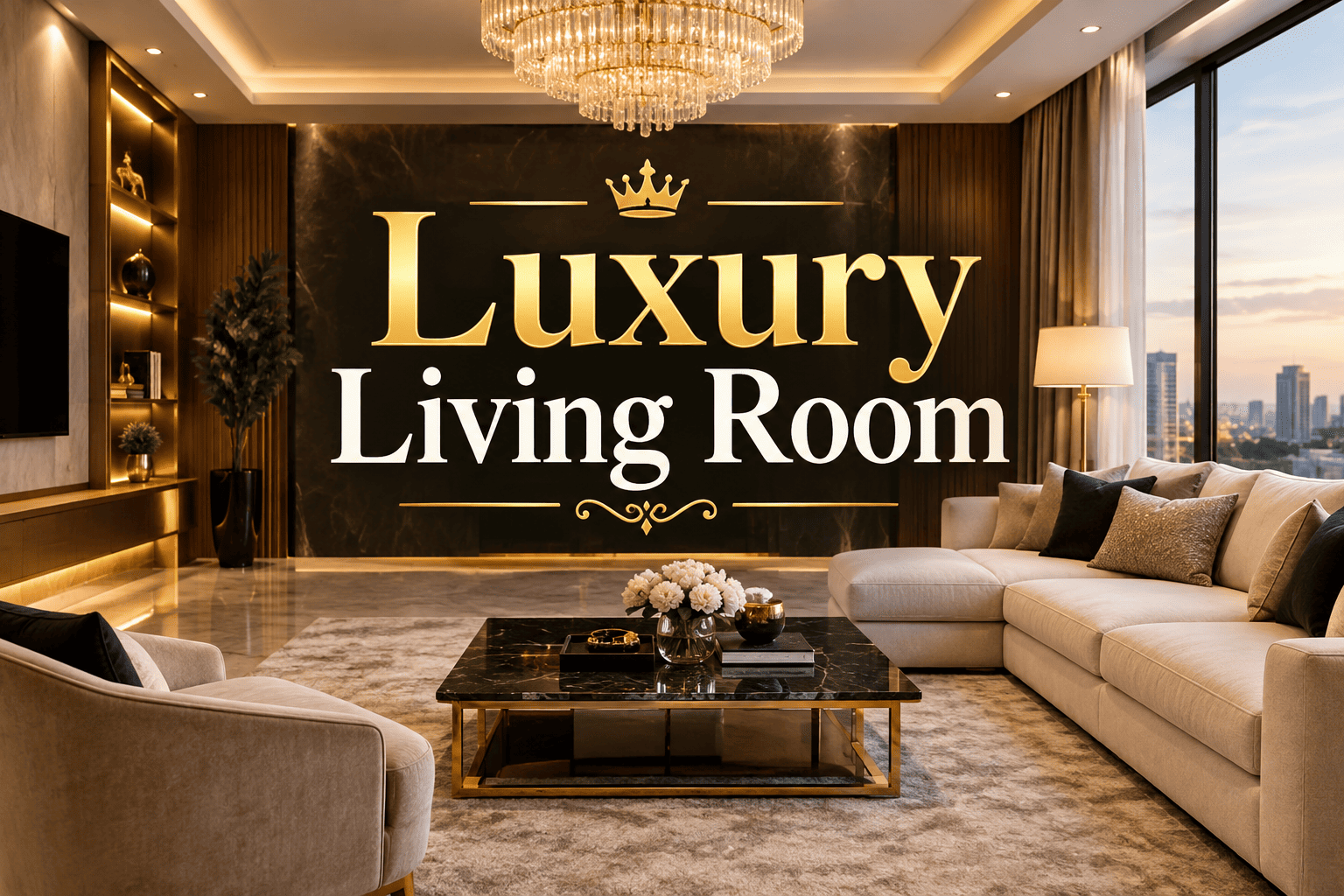
A luxury living room is not simply about expensive furniture or flashy decoration. The most convincing high-end spaces combine comfortable seating, sophisticated colors, layered lighting, rich textures, natural materials, statement pieces, and a well-planned layout. Choose fewer but better-looking elements, give each piece enough breathing room, and balance elegance with everyday comfort for a modern living room that feels refined without becoming cold or impractical.
Introduction
A beautiful living room should do more than look impressive. It should make you want to sit down, relax, entertain guests, and stay awhile. That is where modern luxury differs from traditional ideas of opulence.
Instead of filling a room with gold, oversized furniture, or expensive-looking accessories, today’s luxury living room design is more thoughtful. It relies on proportion, texture, lighting, quality materials, and carefully selected details.
The secret is not making everything luxurious. It is knowing where luxury matters most.
A comfortable sofa can become the centerpiece. A large rug can make the entire layout feel more intentional. Warm lighting can completely change the atmosphere after sunset. Even inexpensive decor can look elevated when it is styled with restraint.
Here are 19 modern ideas for creating a luxury living room that feels sophisticated, comfortable, and genuinely livable.
1. Make the Sofa the Star
A sofa is usually the largest piece of furniture in a living room, so it has an enormous influence on the overall design.
For an upscale look, choose a deep sofa or generously proportioned sectional with clean lines and comfortable cushions. Cream, oatmeal, taupe, warm gray, and soft brown are versatile choices that work beautifully in modern interiors.
Instead of choosing a sofa simply because it looks luxurious, pay attention to its depth, fabric, support, and proportions. A beautiful sofa that is uncomfortable will quickly lose its appeal.
For a particularly polished look, surround a neutral sofa with textured cushions and one soft throw rather than covering it with too many accessories.
2. Build a Warm, Sophisticated Color Palette
Color creates the foundation for an cozy living room.
Warm neutrals such as ivory, beige, cream, taupe, greige, and mushroom create a calm backdrop for luxury furniture and accessories. Add depth with chocolate brown, charcoal, muted olive, or black.
The goal is not to use only neutral colors. Instead, create a controlled palette where every shade feels connected.
For example, cream walls, a taupe sofa, dark wood furniture, and olive accents can create a rich modern combination without making the space feel overly decorated.
This approach works especially well for modern luxury living room decor because it creates visual continuity from one element to the next.
3. Introduce One Oversized Statement Piece
Luxury interiors often feel memorable because they contain something that immediately captures attention.
Choose one dominant feature such as oversized abstract artwork, a sculptural mirror, a dramatic chandelier, a distinctive coffee table, or an architectural fireplace.
The important word is one.
When every object tries to become the focal point, nothing feels special. Let one piece command attention while the surrounding decor supports it.
This creates a designer-inspired atmosphere without requiring an entire room full of expensive furnishings.
4. Layer the Lighting
Lighting is one of the fastest ways to make a living room feel more expensive.
Instead of relying entirely on one ceiling fixture, combine several sources. Use a statement pendant or chandelier for overall illumination, floor lamps for height, table lamps for warmth, and wall sconces where appropriate.
Choose warm-toned bulbs for evening use to create a softer atmosphere.
A luxury living room should look different throughout the day. Natural daylight can highlight textures and colors, while layered lamps can make the same space feel intimate and sophisticated at night.
5. Layer Rich Textures
A room can have beautiful furniture and still feel flat if everything has the same texture.
Introduce contrast through velvet cushions, linen curtains, bouclé seating, wool rugs, leather accents, woven baskets, and smooth stone or glass surfaces.
Texture is particularly important when working with a neutral palette. Without it, beige and cream can appear dull. With it, those same colors can feel warm, dimensional, and luxurious.
Think about creating a conversation between materials rather than simply adding more objects.
6. Choose a Coffee Table With Character
The coffee table sits at the center of many living rooms, making it an ideal place to introduce personality.
Marble, travertine, dark wood, glass, and sculptural stone designs can all work beautifully in a high-end living room.
Look beyond the material and consider shape. A rounded or organically shaped table can soften a room filled with straight lines, while a rectangular table can reinforce a more architectural design.
Keep the styling simple. A small stack of books, a ceramic object, and a low arrangement are often enough.
7. Use an Oversized Rug to Anchor the Layout
One of the easiest ways to make a living room feel more cohesive is choosing a rug that is large enough for the furniture.
A tiny rug floating in the center can make an otherwise beautiful room feel disconnected. Ideally, the main seating should sit partly or fully on the rug.
Choose subtle patterns or textured solids if the room already contains several statement pieces. A generous wool, wool-look, or textured rug can instantly make the space feel softer and more complete.
The right rug is not just decoration. It visually connects the furniture and defines the conversation area.
8. Take Curtains From Floor to Ceiling
Window treatments can dramatically change the perceived proportions of a room.
Instead of hanging curtains directly above the window frame, position the rod closer to the ceiling and allow the fabric to fall all the way toward the floor. Extending the curtain width beyond the window can also make the windows appear larger.
Linen creates a relaxed luxury effect, while velvet offers a richer, more dramatic appearance.
For an elegant living room, soft cream, warm white, taupe, or muted gray curtains are easy to integrate with the rest of the palette.
9. Mix Natural Materials
Modern luxury becomes more inviting when polished surfaces are balanced with natural materials.
Combine dark or light wood with stone, marble, travertine, linen, leather, or woven materials. These surfaces add warmth and prevent a contemporary room from feeling sterile.
Natural wood furniture can soften a room dominated by glass and metal. Similarly, stone can give a neutral interior a sense of permanence and visual weight.
The best luxury interiors rarely depend on a single material. They create richness through contrast.
10. Bring in Curved and Sculptural Furniture
Straight lines can make a room feel formal, while curved shapes introduce softness.
Consider a curved sofa, rounded lounge chair, circular side table, arched mirror, or organic coffee table.
These shapes are especially effective in modern interiors because they break up rigid geometry without making the room feel traditional.
You do not need every piece to be curved. In fact, mixing angular furniture with one or two rounded elements usually creates a more sophisticated result.
11. Create a Striking Feature Wall
A feature wall decor can give your luxury living room decor a strong architectural identity.
Depending on your style, consider large-scale artwork, textured plaster, decorative wood panels, stone, marble-effect finishes, or a sophisticated wallpaper.
Keep the rest of the room relatively restrained so the feature wall has space to make an impact.
For example, a dark textured wall behind a cream sofa can create dramatic contrast, while warm wood panels behind a neutral seating area can produce a softer, contemporary effect.
12. Use Metallic Accents With Restraint
Metallic details can add polish, but too much shine can quickly make a room feel dated.
Brushed brass, aged bronze, chrome, and blackened metal can all work in modern luxury interiors. Use them through lamp bases, table legs, picture frames, hardware, or small decorative objects.
Rather than mixing several competing finishes, select one dominant metal and perhaps a secondary finish.
A few carefully positioned metallic details can create sophistication without turning the room into a showroom.
13. Style Shelves Like a Curated Collection
Open shelving should feel collected rather than crowded.
Combine art books, ceramics, small sculptures, framed artwork, natural objects, and a little greenery. Vary the height of objects and leave some empty space between groups.
Negative space is part of the design.
If every shelf is completely full, individual pieces lose their importance. A luxury interior usually gives the eye somewhere to rest.
14. Add Greenery for a Softer Finish
Plants can make a sophisticated living room feel more welcoming.
A large indoor tree can fill an empty corner, while sculptural branches can create a dramatic arrangement without adding visual clutter. Use planters in stone, ceramic, wood, or other finishes that complement the room.
Greenery is particularly effective alongside marble, glass, metal, and other hard surfaces because it introduces an organic element.
The result is a space that feels polished but still alive.
15. Let Artwork Give the Room Personality
Luxury does not mean creating a room that looks like everyone else’s.
Artwork gives a living room an opportunity to feel personal. Choose a large abstract canvas, expressive photography, a sculptural artwork, or something meaningful to you.
Instead of buying several small pieces simply to fill empty walls, consider one larger work with enough visual presence to anchor the room.
The best artwork does not merely decorate a wall. It influences the mood of the entire space.
16. Design the Layout Around Real Comfort
A luxury living room should work in real life.
Arrange seating so people can comfortably talk to one another rather than pointing every chair toward a television. Leave enough space for movement between furniture, and make sure side tables are accessible from seating positions.
If the room is large, create separate zones rather than pushing every piece against the walls. A main conversation area can sit around the coffee table, while a reading chair or small side table creates a secondary corner.
Good proportions often create a more luxurious impression than expensive furniture.
17. Add Moody Contrast
A neutral room can become much more sophisticated with carefully placed dark accents.
Try chocolate brown, charcoal, deep green, black, or muted navy through cushions, artwork, side tables, lamps, or an accent chair.
The contrast gives pale interiors more depth and prevents them from feeling washed out.
For a particularly modern effect, combine warm cream with dark brown and aged metal. The result feels rich without relying on excessive decoration.
18. Edit the Room Relentlessly
One of the most powerful luxury design principles is knowing what not to add.
Remove accessories that do not serve a purpose. Avoid filling every surface simply because there is empty space. Keep decorative objects grouped rather than scattered throughout the room.
This is where the difference between expensive-looking and genuinely sophisticated becomes obvious.
A carefully edited room allows quality pieces to stand out. Decluttering also makes the living room easier to clean and more comfortable to use.
19. Add One Personal Detail
Finally, give the room something that could belong nowhere else.
It might be a vintage chair, a family photograph, a handmade ceramic piece, a travel find, a favorite artwork, or a custom cushion.
Personal details keep luxury interiors from becoming impersonal.
Your living room should not look like a furniture showroom. It should look like a beautiful version of your life.
Luxury Living Room Mistakes to Avoid
Even expensive furniture can look underwhelming when the fundamentals are wrong. Avoid using a rug that is too small, overcrowding the seating area, choosing harsh lighting, matching every furniture piece, or adding too many metallic accessories.
Also avoid sacrificing comfort for appearance. A luxury sofa should invite you to sit down, and a beautiful layout should still allow people to move naturally around the room.
Most importantly, do not copy every current trend. Choose elements that complement your home’s architecture and your personal taste.
How to Make a Luxury Living Room Look Expensive on a Budget
You do not need to upgrade everything at once.
Spend more on: the sofa, rug, lighting, and one major statement piece. These elements have a significant impact on how the entire room feels.
Save on: small decorative accessories, cushions, simple side tables, and seasonal accents. These can be replaced or upgraded over time.
You can also create a more upscale appearance by improving curtain height, reducing clutter, upgrading light bulbs, adding larger artwork, and introducing better textures.
The goal is not to make every item expensive. It is to make the overall composition feel intentional.
Frequently Asked Questions
What makes a living room look luxurious?
A living room looks luxurious when its furniture, lighting, colors, textures, and proportions work together. Comfortable seating, layered lighting, quality-looking materials, large artwork, and an uncluttered layout can create a high-end appearance without excessive decoration.
What colors are best for a luxury living room?
Warm neutrals such as cream, beige, taupe, greige, and warm white are excellent foundations. Add contrast with chocolate brown, charcoal, olive, deep green, or black for a richer modern look.
How can I make my living room look expensive?
Start with the elements that have the biggest visual impact: a well-proportioned rug, attractive lighting, floor-to-ceiling curtains, comfortable seating, and one statement piece. Then remove unnecessary clutter and repeat a small number of complementary materials throughout the room.
What furniture works best in a modern luxury living room?
Deep comfortable sofas, sculptural lounge chairs, elegant coffee tables, natural wood pieces, and furniture with clean or softly curved silhouettes work particularly well. Choose pieces according to the room’s scale rather than simply following trends.
How do you make a luxury living room cozy?
Combine sophisticated design with tactile materials and warm lighting. Add soft cushions, throws, textured rugs, comfortable seating, natural wood, and warm ambient lamps so the room feels inviting as well as refined.
Conclusion
A truly luxurious living room is not defined by how much money was spent on it. It is defined by how thoughtfully everything comes together.
Start with comfortable furniture, establish a sophisticated color palette, layer lighting, introduce contrasting textures, and choose a few statement elements rather than filling the room with decoration. Then add natural materials, personal artwork, greenery, and subtle contrast to create depth.
When comfort and elegance receive equal attention, the result feels effortless. Your living room becomes more than an attractive space—it becomes a warm, polished, and personal environment that feels luxurious every time you walk into it.

Leave a Reply