

The best bedroom wall art is artwork that complements your room’s colors, furniture, lighting, and overall mood without making the space feel crowded. Oversized statement pieces, textured artwork, handcrafted ceramics, soft abstracts, meaningful photography, and personalized designs can all work beautifully. Choose artwork based on the feeling you want to create, then consider its size, placement, texture, and relationship with the rest of your bedroom decor ideas.
Introduction
Bedroom wall art is often treated as the final detail—a print above the bed or a few frames added when the room still feels unfinished. But the most inviting bedrooms use artwork differently. Instead of simply filling an empty wall, they use art to establish mood, add visual depth, introduce texture, and make the space feel personal.
Your bedroom decor should feel different from a living room or hallway. Because the bedroom is designed for rest and personal comfort, wall art should support that atmosphere rather than compete with it. Soft landscapes can create a calmer feeling, textured pieces can add warmth, while dramatic artwork can give a simple bedroom a stronger identity. Consider the colors, materials, natural light, and furniture already in the room before choosing a piece.
The goal is not to cover every empty wall. It is to choose pieces that feel connected to the room and meaningful to you.
This guide explores 16 sophisticated bedroom wall art ideas that move beyond predictable gallery walls, along with practical advice for choosing the right size, color, placement, and style.
Start With the Feeling You Want to Create
Before choosing bedroom wall decor, decide how you want the room to feel.
For a calm and restful bedroom, look for muted colors, soft landscapes, delicate line drawings, and artwork with plenty of visual breathing room. These choices create interest without making the wall feel busy.
For a warm and intimate bedroom, consider earthy colors, handmade pieces, natural materials, and artwork with visible texture. These details can make a room feel layered and comfortable.
For a dramatic bedroom, deeper tones, high-contrast photography, expressive artwork, and sculptural pieces can create a richer atmosphere.
If your bedroom is bright and uplifting, lighter colors, simple geometric designs, and energetic but controlled artwork can complement the natural light without overwhelming the space.
Once you decide on the mood, choosing artwork becomes much easier because every piece has a clear purpose.
16 Sophisticated Bedroom Wall Art Ideas
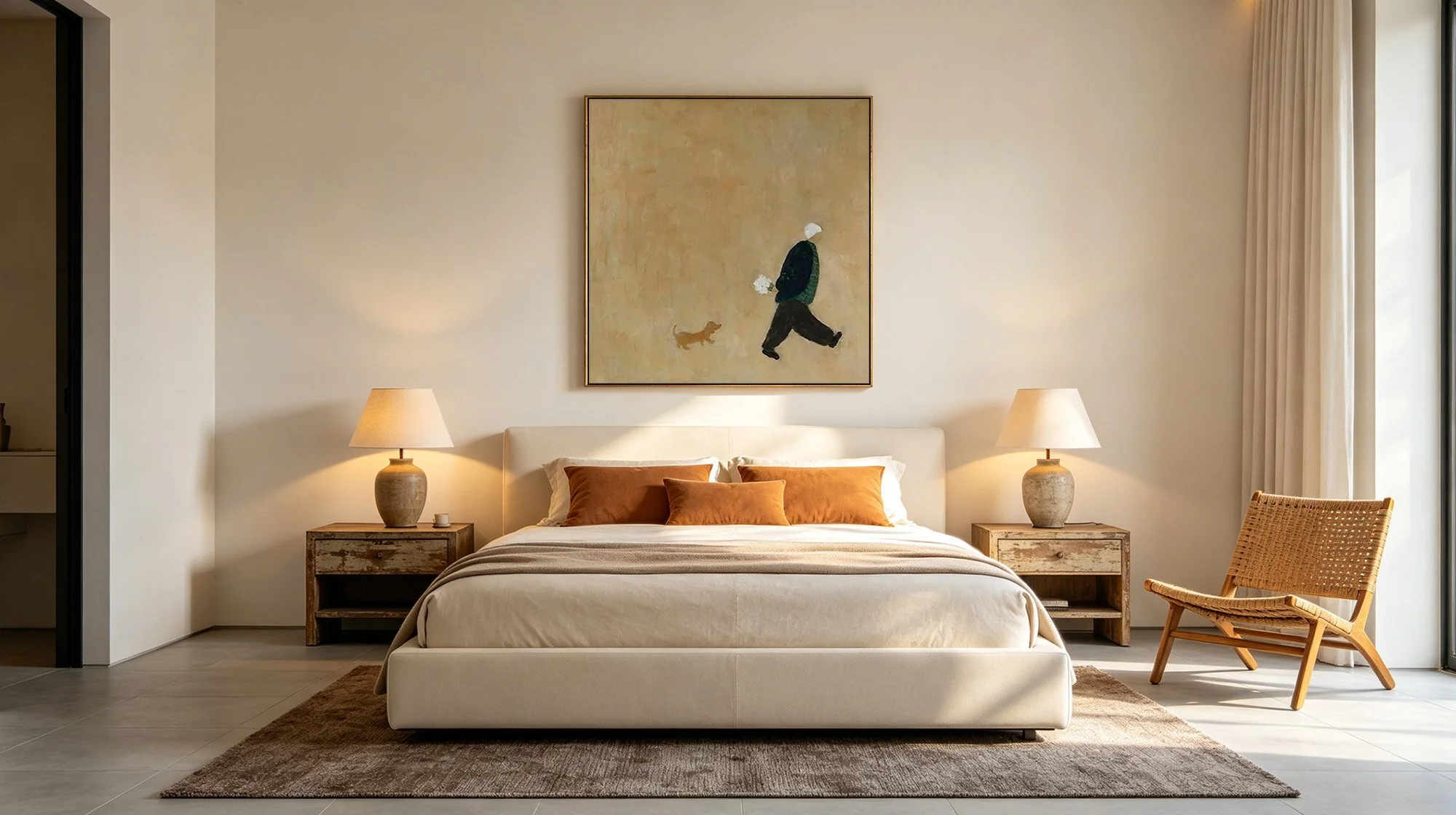
1. Let Your Artwork Echo the Bedding
Instead of matching your wall art perfectly to your bedding, borrow one subtle detail from it. A dusty blue from the duvet, a warm beige from the throw, or a repeated organic pattern can create a visual connection between the bed and the wall.
The key is repetition without duplication. When the colors relate but the artwork remains different, the bedroom feels coordinated rather than overly matched.
2. Create a Full Headboard-Wall Composition
The wall behind the bed does not always need one centered picture. Think of the entire wall as a composition.
You might combine artwork with a narrow shelf, a decorative object, or a sculptural element. The arrangement should still have a clear visual center, but it can feel more collected and architectural than a standard framed print.
This approach works especially well when the headboard is simple and the wall needs more visual interest.
3. Choose Soft Gradient Artwork for a Dreamy Bedroom
Gradient artwork uses a gradual transition between colors instead of obvious shapes or detailed imagery. Soft transitions between cream, beige, blue, green, or blush can create a subtle sense of movement.
This style is particularly effective above a bed because it adds color without introducing a complicated focal point. It can also work beautifully with bedrooms that already contain layered neutral textiles.
4. Add Subtle Metallic Details
A small amount of brass, bronze, gold, or other metallic detail can bring dimension to bedroom artwork.
Rather than choosing an entire metallic print, look for artwork where the reflective element appears in small areas. When warm bedroom lighting hits those details, the artwork can change subtly throughout the evening.
For the most sophisticated result, repeat the metallic finish somewhere else in the room, such as a lamp, mirror frame, or hardware.
5. Bring in Handcrafted Ceramic Wall Art
Ceramic plates, sculptural tiles, and handmade clay pieces offer something a standard print cannot: physical texture.
Small variations, imperfect edges, and natural surfaces make handcrafted pieces feel collected rather than mass-produced. They work particularly well with wood furniture, linen bedding, woven textures, and other natural bedroom materials.
For a small bedroom, one larger ceramic statement can be more effective than several tiny pieces competing for attention.
6. Pair Two Different Art Styles
Your bedroom wall art does not have to come as a matching set.
Try pairing an abstract artwork with a botanical drawing, a vintage photograph with a contemporary piece, or a soft landscape with a simple geometric design. The two pieces can be different while still sharing one connection—such as color, framing, subject, or visual weight.
This approach creates personality without the randomness of completely unrelated artwork.
7. Layer Artwork With Decorative Objects
Artwork becomes more interesting when it interacts with the objects around it.
A framed piece can sit behind a vase on a dresser, lean against a wall on a shelf, or be combined with a small sculptural object. This creates depth and makes the room feel lived-in.
The important point is restraint. Layering should create dimension, not hide the artwork or turn the surface into clutter.
8. Use Minimalist Relief Art for a Three-Dimensional Effect
Relief artwork has raised, carved, or layered surfaces that create subtle shadows. Unlike a flat print, its appearance changes as natural and artificial light move across the room.
This makes it a strong choice for neutral bedrooms where color is intentionally limited. Texture becomes the main source of visual interest.
A large neutral relief piece can look especially sophisticated above a simple upholstered headboard.
9. Turn a Favorite Place Into Bedroom Artwork
Personal artwork does not have to mean a wall covered with family photographs.
A photograph of a meaningful landscape, a map detail, an architectural drawing, or artwork inspired by a favorite destination can tell a personal story while maintaining an elegant appearance.
Choose imagery that carries an emotional connection rather than simply displaying a place because it looks attractive.
10. Introduce Muted Color-Block Artwork
For a modern bedroom, soft geometric color blocks can provide structure without creating visual noise.
Instead of bright primary colors, consider muted combinations such as clay and cream, olive and beige, dusty blue and warm white, or charcoal and taupe.
This type of bedroom wall art works particularly well when the furniture has clean lines and the rest of the room uses restrained patterns.
11. Frame a Textile or Heirloom
A beautiful embroidered fabric, vintage scarf, woven textile, or meaningful piece of material can become artwork when properly framed.
Textiles introduce softness and texture while giving the wall a story that a mass-produced print cannot provide. They are especially effective in bedrooms because their tactile quality naturally complements bedding and other soft furnishings.
For valuable or delicate textiles, professional framing can help protect the material while keeping the presentation clean.
12. Choose Art That Changes With the Light
Some artwork becomes more interesting when its surface interacts with changing light.
Textured paper, raised designs, woven materials, carved surfaces, and dimensional pieces can look different in morning sunlight, afternoon brightness, and warm evening lamp light.
Instead of thinking only about how artwork looks in a product photograph, consider how it will behave in your actual bedroom throughout the day.
13. Create a Small Artwork Nook Beside the Bed
The wall above the bed is not the only place that deserves attention.
A small artwork arrangement beside the bed can turn an overlooked corner into a secondary focal point. It can work above a nightstand, behind a reading chair, or beside a floor lamp.
Vertical artwork is particularly useful in narrow spaces because it draws the eye upward without requiring a large horizontal wall.
14. Commission Artwork Inspired by a Meaningful Place
Custom artwork can transform bedroom wall decor into something genuinely personal.
You could commission an illustration inspired by a childhood home, a favorite coastline, a memorable city, or another place with emotional significance. The result does not need to look like a literal portrait. A simplified or artistic interpretation can feel much more sophisticated.
Because the artwork is designed around your story, it is also less likely to resemble the generic prints found in countless bedrooms.
15. Build a Layered Neutral Art Arrangement
Neutral artwork does not have to mean boring artwork.
Combine cream, sand, taupe, warm gray, soft brown, or charcoal with different textures and subtle variations in tone. The visual interest comes from depth rather than strong color contrast.
This approach is particularly effective in bedrooms inspired by quiet-luxury or organic-modern interiors. The secret is to vary texture and scale so the pieces do not visually disappear into one another.
16. Add One Unexpected Piece
A sophisticated bedroom does not need every element to match.
One unexpected artwork choice can give the room personality: an unusual shape, a stronger color, an expressive painting, or a vintage piece that contrasts with otherwise modern furniture.
This works because contrast creates emphasis. If everything is equally quiet, the room can feel flat. One carefully chosen surprise can make the entire design feel more intentional.
How to Choose the Right Size for Bedroom Wall Art
One of the easiest ways to make bedroom artwork look less polished is choosing a piece that is too small for the wall.
Above a bed, artwork generally looks more balanced when its overall width relates to the width of the bed or headboard. A tiny frame can appear disconnected, while an oversized piece can overwhelm a narrow headboard.
As a practical starting point, artwork above a bed often looks balanced when the overall arrangement is roughly two-thirds to three-quarters of the bed or headboard width. This is a guideline rather than a strict rule, so also consider the ceiling height, surrounding furniture, and amount of empty wall space.
For a single statement piece, think about the visual relationship between the artwork, headboard, nightstands, and surrounding negative space. The goal is not to follow one rigid measurement but to create proportion.
If you are working with several pieces, consider the combined width of the entire arrangement rather than judging each frame separately.
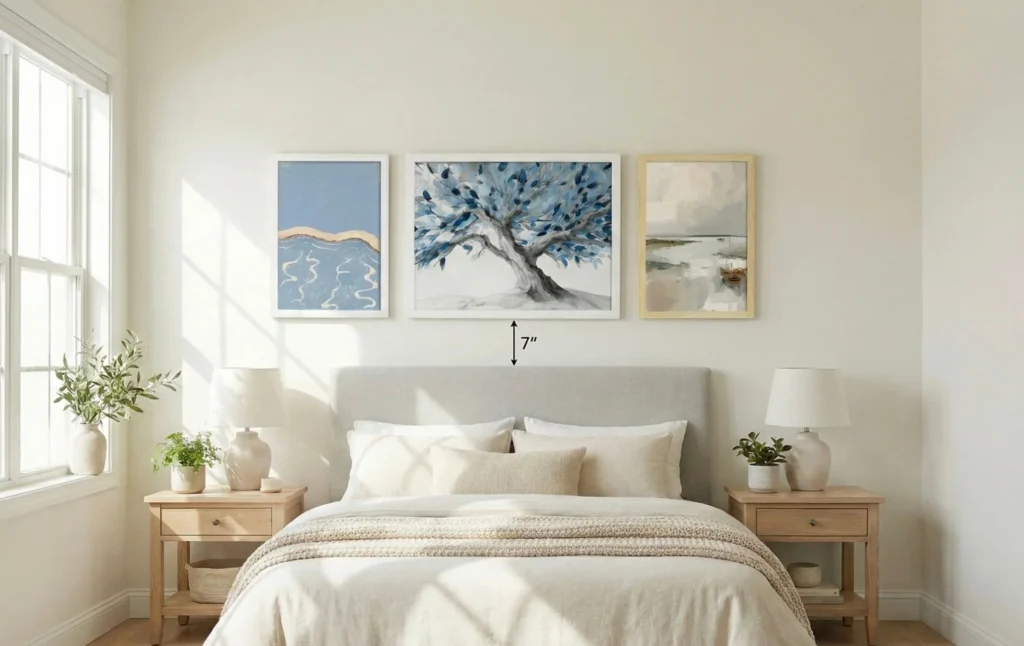
How High Should You Hang Bedroom Wall Art?
Artwork should usually feel connected to the furniture beneath it rather than floating high on the wall.
When hanging art above a headboard, leave enough space for the artwork to breathe without creating a large visual gap between the bed and the piece. For artwork above a dresser or nightstand, the furniture should visually anchor the artwork.
The best height depends on ceiling height, furniture dimensions, artwork size, and viewing position, so avoid relying on a single universal number.
Before making permanent holes, use paper templates or removable tape to test the artwork’s position. Step back from different parts of the room and check whether the arrangement feels connected to the furniture below it. This simple test can help you adjust the height and spacing before committing to the final placement.
How to Match Wall Art With the Rest of Your Bedroom
Bedroom artwork should communicate with the rest of the room.
Look at your bedding first. Is it warm, cool, patterned, textured, or completely neutral? Then consider the curtains, rug, furniture finishes, and lighting.
If the bedding already has a strong pattern, simpler artwork can provide balance. If the room is mostly neutral, textured or more expressive artwork can become the visual focal point.
You do not need every element to match. Instead, repeat selected colors, materials, or shapes so the room feels connected.
How to Make Multiple Art Pieces Feel Cohesive
Different artworks can work together when they share at least one visual relationship.
They might repeat a color, use similar framing, have comparable visual weight, or share a common texture. Consistent spacing also makes a major difference.
Rather than choosing several pieces simply because you like them individually, step back and ask whether they create one overall composition.
That small shift—from collecting individual pieces to designing a composition—is what makes a wall feel intentional.
Where to Place Bedroom Wall Art
The wall above the bed remains a natural focal point, but it is not the only option.
A vertical piece beside the headboard can make a narrow wall feel taller. Artwork behind a reading chair can define a quiet corner. A small piece above a nightstand can create an intimate detail, while a larger artwork above a dresser can balance the furniture below it.
Architectural features can also guide placement. Alcoves, niches, sloped ceilings, and unused corners can become opportunities for artwork rather than spaces that need to be filled randomly.
How to Make Affordable Bedroom Wall Art Look Expensive
You do not need an expensive original painting to create an elevated bedroom.
Presentation often matters as much as the artwork itself. A well-proportioned frame, thoughtful matting, appropriate scale, and generous negative space can make an affordable print feel far more considered.
Texture is another useful tool. A simple textured piece can create more visual sophistication than an inexpensive print overloaded with details.
The biggest mistake is trying to make a room look luxurious by adding more decoration. In many cases, editing the wall and allowing one strong piece to breathe produces a better result.
Bedroom Wall Art Mistakes to Avoid
Avoid choosing artwork simply because it fills an empty wall. Every piece should have a relationship with the room.
Be careful with artwork that is too small, particularly above a large bed or dresser. Avoid using too many unrelated colors, because they can make the room feel visually fragmented.
Hanging everything too high is another common problem. Artwork should feel connected to the furniture and the scale of the room.
Finally, do not feel obligated to decorate every wall. Negative space is part of good bedroom design. An intentionally empty wall can make your chosen artwork feel more important.
A Simple Way to Choose Your Final Piece
If you are unsure which artwork to choose, narrow your options down to two or three pieces and compare them against the room rather than viewing them individually. Look at how each one works with the bedding, headboard, wall color, lighting, and available space. The piece that creates the strongest connection without making the room feel crowded will usually be the most natural fit.
Frequently Asked Questions About Bedroom Wall Art
What art looks best above a bed?
Large-scale artwork, soft abstract pieces, textured art, landscape photography, and carefully arranged pairs can look beautiful above a bed. The best choice depends on the size and style of your bedroom. For a sophisticated look, choose artwork that complements the bedding and headboard without matching them too closely.
How big should bedroom wall art be?
Bedroom wall art should be proportional to the wall and furniture beneath it. Above a bed, artwork that visually relates to the width of the headboard usually feels more balanced than a very small frame. If using several pieces, consider the combined width of the entire arrangement rather than judging each frame separately.
How do you choose wall art for a bedroom?
Start by deciding how you want the bedroom to feel. Choose calming artwork for a restful atmosphere, warmer textures for a cozy space, or deeper colors and stronger compositions for a dramatic look. Then coordinate the artwork with existing elements such as bedding, rugs, curtains, furniture finishes, and lighting.
Should bedroom wall art match the bedding?
It does not need to match exactly. Instead, repeat one or two subtle colors, textures, or patterns from the bedding in the artwork. This creates a connection between the pieces while keeping the bedroom from looking overly coordinated.
Where should bedroom wall art be placed?
Above the bed is the most common location, but artwork can also work above a dresser, beside the headboard, behind a reading chair, above a nightstand, or around architectural features such as alcoves and niches. Choose placement according to the room’s furniture and available wall space.
How can I make bedroom wall art look expensive?
Focus on presentation rather than price. A well-chosen frame, appropriate artwork size, clean spacing, subtle texture, and generous negative space can make affordable artwork look much more sophisticated. Avoid overcrowding the wall with too many decorative pieces.
Can I use personal photos as bedroom wall art?
Yes, but they do not have to be displayed as a traditional photo collage. A meaningful travel photograph, architectural image, favorite landscape, or professionally framed personal image can add character while maintaining a polished appearance.
Is one large artwork better than several small pieces?
Not always. One large artwork can create a strong focal point and keep a bedroom visually calm, while several smaller pieces can add variety and personality. The right choice depends on the wall size, furniture scale, and overall style of the room.
Final Thoughts: Choose Art That Feels Like You
The best bedroom wall art is not necessarily the most expensive, fashionable, or dramatic. It is the artwork that makes sense for the room and for the person living in it.
Think beyond the basic gallery wall. Consider texture, scale, lighting, personal memories, unexpected materials, and the mood you want to experience every day.
Whether you choose a handcrafted ceramic piece, a meaningful travel-inspired image, a textured neutral composition, or one unexpected statement artwork, the goal is the same: create a bedroom that feels finished without feeling overdecorated.
Your walls do not need more things. They need the right things.

Leave a Reply