
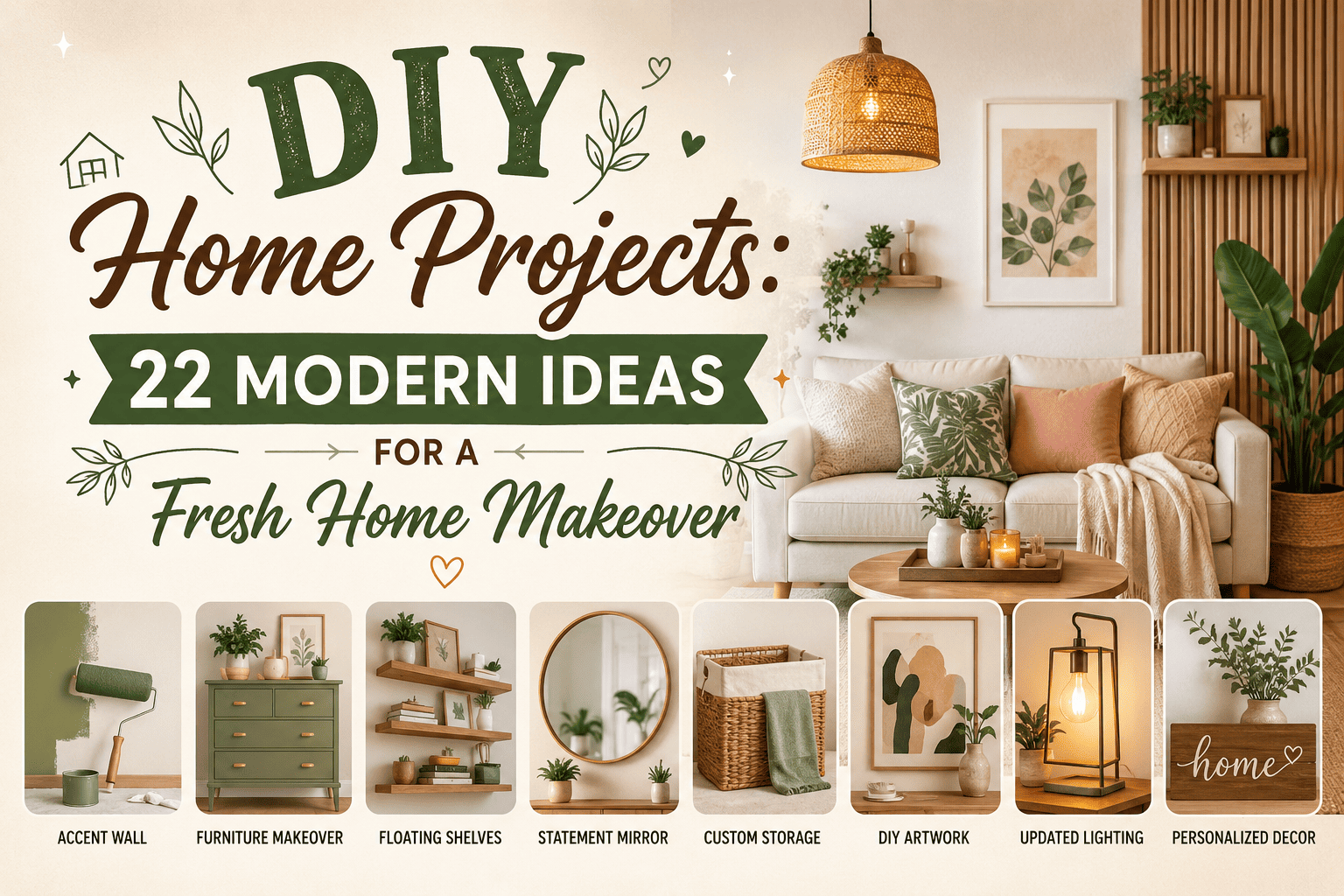
The best DIY home projects are simple upgrades that make your space look better while adding practical value. Try accent walls, furniture makeovers, floating shelves, statement mirrors, custom storage, DIY artwork, updated lighting, and personalized decor to create a modern home makeover on a budget without a full renovation.
Introduction
You do not need a full renovation to give your home a fresh, modern look. The right DIY home projects can update tired furniture, improve storage, add personality, and transform empty spaces without requiring a large budget.
The key is to choose projects that create a noticeable change while still being practical for everyday life. A freshly painted accent wall, upgraded cabinet hardware, custom shelving, or a handmade piece of artwork can often make a room feel completely different. Modern DIY decorating is less about filling a home with decorations and more about creating clean, useful, and intentional spaces.
Whether you are refreshing one room or planning a complete home makeover, these 22 modern DIY projects offer a mix of beginner-friendly upgrades and more ambitious weekend projects. Each idea focuses on style, function, and achievable results
1. Create a Modern Color-Block Wall
A color-block wall is an easy way to add personality without covering an entire room in bold paint. Choose two complementary shades and use painter’s tape to create a clean horizontal, vertical, or geometric design.
For a modern interior, consider combinations such as warm white with beige, muted green with cream, or terracotta with soft neutral tones. Before painting, test the colors in natural and artificial light because the same shade can look very different throughout the day.
Best for: Living rooms, bedrooms, home offices
Difficulty: Easy
Time: A few hours, depending on the wall size
2. Create a Built-In Look With Basic Shelves
Custom built-ins can be expensive, but basic shelves combined with trim and paint can create a similar effect. Install sturdy shelves, frame the sides with simple molding, and paint everything in one color.
The secret is consistency. When the shelves, trim, and wall share a similar finish, the entire unit looks more intentional and expensive. Use baskets for hidden storage and leave open areas for books, artwork, and plants.
This project is especially useful when you need additional storage but do not want bulky furniture.
3. Upgrade Furniture With Modern Hardware
One of the fastest DIY home improvement ideas is replacing outdated knobs and handles. This simple change can dramatically improve kitchen cabinets, dressers, nightstands, bathroom vanities, and storage units.
Measure the existing hardware carefully before buying replacements. Matte black creates a contemporary appearance, brushed brass adds warmth, while chrome works well in clean minimalist spaces.
For a designer-like result, repeat the same hardware finish in several areas of the room.
4. Make a DIY Fluted Wall Feature
Fluted walls add vertical texture and architectural interest to an otherwise plain surface. You can recreate this look with narrow wood strips or decorative wall panels.
A fluted feature looks particularly effective behind a bed, television, console table, or dining area. Paint the feature wall for a sophisticated monochromatic look, or keep the wood natural to introduce warmth.
The most important part is accurate spacing. Measure and mark the wall before attaching anything so the vertical pattern remains consistent.
5. Create Oversized DIY Artwork
Large artwork can instantly make a room feel more finished, but oversized pieces can be costly. Creating your own is an affordable alternative.
Start with a large canvas and choose three or four colors already present in the room. Abstract shapes, broad brush strokes, subtle lines, and textured finishes are easy ways to create modern artwork without needing advanced painting skills.
Hang the finished piece above a sofa, bed, console, or dining table where it can act as the room’s visual anchor.
6. Turn a Basic Mirror Into a Statement Piece
Instead of replacing a plain mirror, give it a custom frame. Wood strips can create a warm organic look, while painted trim can produce a cleaner contemporary finish.
Rounded, arched, and irregular shapes can make the mirror feel more distinctive. A well-positioned mirror also reflects light and can make a small room appear brighter and more open.
For the best effect, place it where it reflects a window, attractive light fixture, or another visually appealing feature.
7. Build a Floating Nightstand
A floating nightstand is perfect for a small bedroom because it provides useful surface space without taking up floor area.
A simple wooden board can be mounted with concealed or minimal brackets. Keep the dimensions compact enough for a lamp, phone, book, and a small decorative object.
Because the design leaves the floor visible, the room can also feel more spacious. This makes it a practical example of small-space DIY home decor.
8. Give an Old Dresser a Designer Makeover
Before throwing away an old dresser, consider whether a makeover could give it another decade of use. Clean it thoroughly, repair damaged areas, sand the surface, and apply an appropriate primer and paint.
New hardware, tapered legs, or a natural wood top can further change its appearance. Neutral colors generally create a timeless result, while deeper shades can make the piece feel more dramatic.
Take your time with preparation because smooth surfaces and clean edges are what make a DIY furniture makeover look professional.
9. Create a DIY Entryway Drop Zone
An organized entryway can make the entire home feel less cluttered. Create a simple drop zone with wall hooks, a narrow shelf, baskets, and a small tray for keys.
Use vertical space if your entryway is narrow. Assign specific locations for commonly used items so bags, keys, shoes, and mail do not accumulate randomly.
Add a mirror above the arrangement for both function and visual depth. The result is a practical DIY home organization project that also improves your home’s first impression.
10. Build a Compact Coffee Station
If you enjoy coffee or tea, turn an unused kitchen corner into a dedicated beverage station. A small cabinet, shelf, or rolling cart can hold mugs, supplies, and appliances.
Keep the countertop relatively clear and use containers to organize smaller items. Add one decorative element, such as a framed print or plant, to make the area feel intentional rather than purely functional.
This project works particularly well in apartments and compact kitchens.
11. Turn an Empty Corner Into a Reading Nook
An awkward corner does not have to remain unused. A comfortable chair, small side table, floor lamp, and soft throw can turn it into a cozy reading space.
If the corner receives natural light, position the chair near the window. Add a small shelf or basket for books and keep the rest of the area uncluttered.
The goal is not to fill the corner but to create a dedicated space that encourages relaxation.
12. Create a Custom-Looking Headboard
A headboard can become the main focal point of a bedroom. If a large upholstered model is outside your budget, create your own with wood panels, fabric-covered boards, or painted shapes.
Vertical wood slats work particularly well in modern bedrooms, while upholstered panels introduce softness. Make sure the size of the headboard is proportional to the bed and surrounding furniture.
A well-designed headboard can make even inexpensive bedroom furniture look more cohesive.
13. Turn Basic Shelves Into a Curated Display
Open shelving becomes more attractive when it combines useful items with decorative objects. Arrange books, plants, framed artwork, ceramics, and baskets rather than filling every shelf with similar objects.
Vary heights and textures to create visual movement, but leave some empty space. Negative space prevents the display from feeling crowded.
You can also refresh the look seasonally simply by rearranging pieces you already own, making this one of the easiest low-cost home makeover ideas.
14. Give Your Ceiling a Modern Makeover
The ceiling is often called the fifth wall because it can influence the entire character of a room. A painted ceiling is one of the simplest ways to make an unexpected design statement.
For a subtle effect, use a color slightly darker than the walls. For something more dramatic, try a contrasting shade or simple wood detailing.
Always consider ceiling height and natural lighting before choosing a dark color or heavy architectural treatment.
15. Refresh Kitchen Cabinets Without Replacing Them
Replacing kitchen cabinets can consume a large portion of a renovation budget. Painting existing cabinets can provide a much more affordable alternative.
Start by removing the doors and hardware, then clean, sand, prime, and paint the surfaces using products appropriate for cabinetry. Replace old handles with modern hardware to complete the transformation.
You can also add open shelving to one section if it makes sense for your storage needs. The goal should be to improve the kitchen without sacrificing practical organization.
16. Give Existing Lighting a New Look
Lighting has a major effect on how a room feels. Before buying new fixtures, see whether an existing lamp or lampshade can be refreshed.
A new shade, updated finish, or simple decorative treatment can change the appearance of a light without replacing the entire fixture. Combine ceiling lighting with table lamps, floor lamps, or accent lighting to create layers.
Avoid DIY electrical modifications unless you have the necessary knowledge. For electrical work that requires wiring changes, use a qualified professional.
17. Add Architectural Character With Trim
Simple trim can make a plain wall look custom-built. Picture-frame molding, half-wall paneling, and geometric trim are popular options for modern interiors.
Start by sketching your design and marking the wall with painter’s tape. This allows you to adjust proportions before cutting materials.
Once installed, fill visible gaps, sand the joints, prime where needed, and paint the entire area for a seamless finish. The preparation takes time, but the final effect can be dramatic.
18. Build a DIY Storage Bench
A storage bench combines two useful functions: seating and organization. Place one near an entryway for shoes, in a bedroom for blankets, or beneath a window as a cozy seating area.
You can build a simple wooden frame and add baskets underneath, or create a hinged compartment for hidden storage. Add a properly sized cushion for comfort.
Choose materials that can handle everyday use, especially if the bench will be placed in a busy entryway.
19. Give Your Bathroom a Mini Makeover
A bathroom can feel outdated even when the main fixtures are still perfectly functional. Focus on smaller visual elements first.
Update the mirror, cabinet hardware, shelves, towels, and accessories. Choose a limited color palette and repeat it throughout the room. Natural wood tones, soft neutrals, and simple textures can create a calm, spa-inspired atmosphere.
For safety, use moisture-resistant materials and avoid DIY electrical or plumbing work unless you have the appropriate expertise.
20. Create a Modern Indoor Plant Display
Plants add life and texture to modern interiors, but random placement can make a room feel messy. Instead, create a dedicated plant display.
Use floating shelves, a tiered plant stand, or a narrow ladder-style rack. Combine plants with different heights and leaf shapes while keeping their light requirements in mind.
Choose planters that coordinate with your room rather than using too many unrelated colors and patterns.
21. Refresh a Balcony or Small Outdoor Corner
A balcony does not need to be large to become a useful extension of your home. Start with compact seating, a few planters, and suitable outdoor lighting.
Use vertical space for plants if the floor is limited. Add weather-resistant cushions or a small outdoor rug to introduce comfort and texture.
Keep the design simple enough that the space remains easy to clean and use. A few carefully selected pieces usually work better than filling a small balcony with furniture.
22. Make One Personalized Statement Piece
The final project is about creating something that cannot be purchased as a generic decoration. This could be a handmade artwork, personalized shelf, refinished family furniture piece, or custom decorative object.
A statement piece does not need to be complicated. Its value comes from the story, personality, or craftsmanship behind it.
Rather than copying a trend exactly, use popular ideas as inspiration and adapt them to your own home. This is what makes DIY decor feel personal instead of mass-produced.
How to Make DIY Projects Look More Expensive
A professional-looking DIY project begins with preparation. Measure carefully, prepare surfaces properly, and do not rush paint or finishing work.
Keep your color palette controlled and repeat finishes throughout the room. For example, if you choose matte black cabinet hardware, consider using the same finish on lighting or other small details.
Scale also matters. One large piece of artwork can often create more impact than several tiny decorations. Finally, avoid overcrowding. Modern interiors usually look better when every item has a clear purpose.
How to Choose the Right DIY Home Project
Start by asking what your room actually needs. If the biggest problem is clutter, choose custom storage or a storage bench. If the room feels boring, consider an accent wall, artwork, mirror, or architectural trim.
Your budget, available time, tools, and skill level should also influence your choice. Beginners can start with painting, hardware upgrades, shelf styling, and simple decor projects. More experienced DIYers can move toward furniture building, wall decor, and custom storage.
Choose one project at a time rather than trying to transform the entire house in one weekend. A focused makeover is easier to complete and usually produces better results.
Common DIY Home Makeover Mistakes to Avoid
One of the biggest mistakes is starting without a clear plan. Measure the space, calculate materials, and understand the basic steps before buying supplies.
Another mistake is choosing a project purely because it is trending. A beautiful idea can still be wrong for your room if it does not suit the layout, lighting, or way you use the space.
Avoid using too many colors, finishes, or decorative elements at once. Finally, never rush safety-related work. Electrical, structural, gas, and complicated plumbing projects may require professional help.
Frequently Asked Questions About DIY Home Projects
What are the easiest DIY home projects for beginners?
Painting an accent wall, replacing furniture hardware, creating simple artwork, styling shelves, and making small organization upgrades are among the easiest projects for beginners.
What DIY projects make a home look more expensive?
Architectural trim, oversized artwork, updated lighting, modern hardware, custom-looking shelving, and carefully refinished furniture can make a home appear more polished without a major renovation.
How can I makeover my home on a small budget?
Start with high-impact, low-cost changes such as paint, hardware, furniture rearrangement, DIY artwork, improved organization, and updated accessories. You can often create a noticeable transformation without buying large furniture pieces.
Conclusion
A modern home makeover does not have to involve a major renovation. With thoughtful DIY home projects, you can refresh outdated furniture, improve storage, introduce texture, and create spaces that feel more personal and functional.
The best approach is to start with one area that needs the most attention. Choose a project that matches your budget and skill level, prepare carefully, and focus on a clean finish. Whether you paint a statement wall, transform an old dresser, build useful storage, or create your own artwork, small improvements can gradually turn your home into a space that feels modern, comfortable, and truly yours.

Leave a Reply