
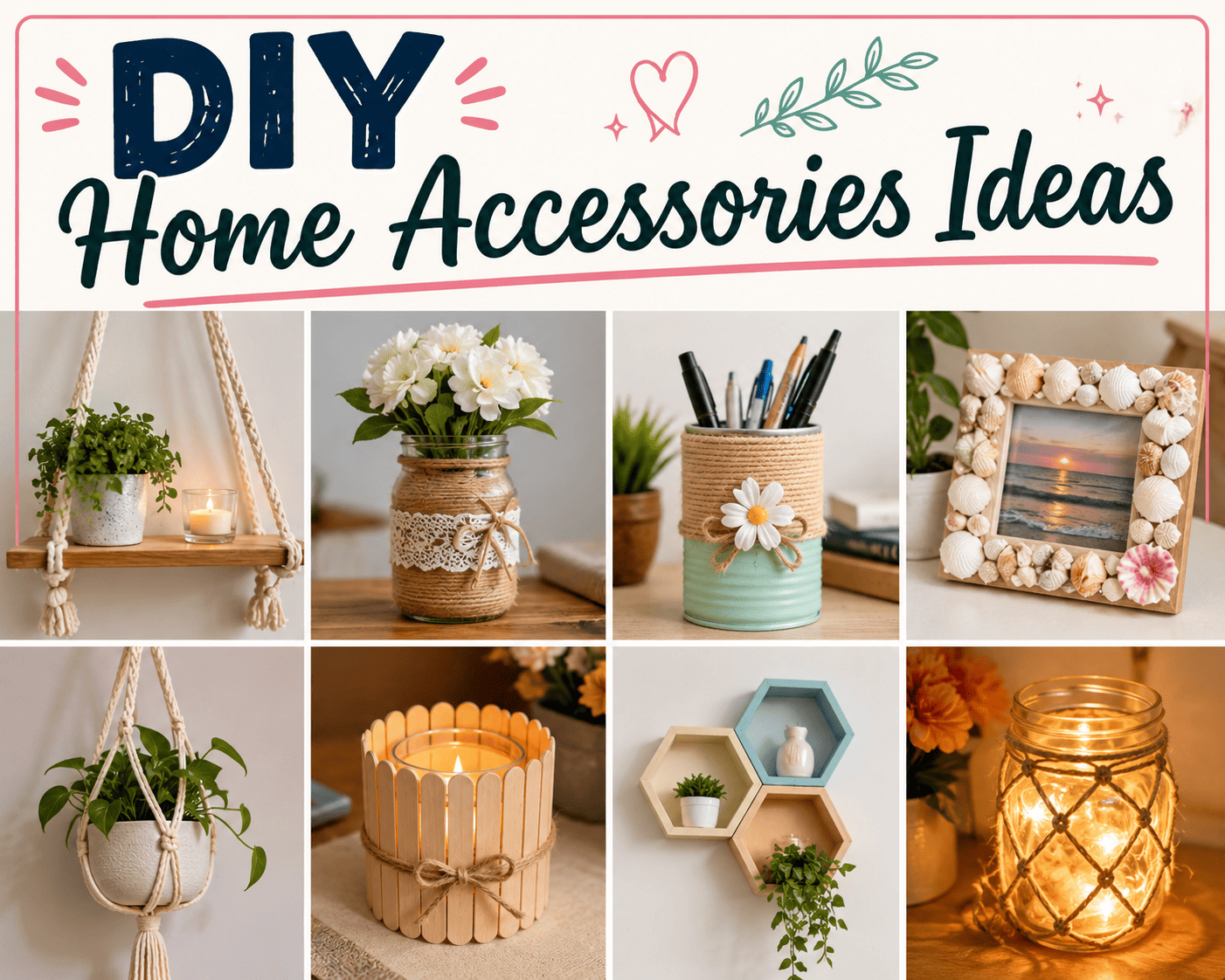
DIY Home Accessories Ideas
Quick Answer
DIY home accessories are one of the easiest ways to give your home a fresh, designer-inspired look without a big budget. With simple materials, creative shapes, rich textures, and the right styling, you can turn ordinary items into beautiful statement pieces for your living room , bedroom, kitchen decor. From sculptural accents to handmade trays and personalized decor, these ideas make your space feel stylish, unique, and unmistakably yours.
Introduction: Small DIY Details That Can Completely Change a Room
You do not need a complete renovation to make your home feel fresh and stylish. Sometimes, a single handmade accessory can completely change the personality of a room. A sculptural object on a console, a textured tray on a coffee table, or a customized accent piece can add the kind of character that mass-produced decor often lacks.
That is what makes DIY home accessories ideas so appealing. They allow you to create beautiful pieces that reflect your taste while keeping costs under control. More importantly, modern DIY decor no longer has to look overly crafty or predictable. With simple shapes, natural textures, neutral colors, and thoughtful finishes, handmade accessories can look surprisingly sophisticated.
The key is to approach each project like an interior designer would. Instead of adding decoration simply to fill empty space, think about shape, scale, texture, color, and placement. The result is a home that feels personal, curated, and effortlessly stylish.
The New Look of Modern DIY Home Decor
Modern DIY home accessories have moved far beyond traditional crafts. Instead of relying on complicated patterns or excessive decoration, today’s projects often focus on sculptural forms, earthy materials, soft textures, and minimalist finishes.
Organic shapes are particularly effective because they soften rooms filled with straight furniture lines. Matte finishes can make inexpensive materials appear more refined, while a limited color palette helps handmade pieces blend naturally with existing decor.
You also do not need expensive supplies. Air-dry clay, cardboard, leftover fabric, plaster, wood, paint, and objects you already own can become attractive handmade home accessories with the right treatment.
18 Fresh DIY Home Accessories Ideas
1. Create a Sculptural Accent Piece
Turn a small amount of air-dry clay, plaster, or papier-mâché into an abstract decorative sculpture. Start with a simple shape such as an arch, loop, wave, or curved column rather than trying to create a complicated figure.
Once the piece dries, smooth any rough edges and apply one matte color. Cream, warm white, taupe, charcoal, or muted brown can give the sculpture a sophisticated appearance.
Place it on a console table, bookshelf, or open shelf where its silhouette can stand out without competing with too many other objects.
2. Paint an Architectural Wall Arch
A painted arch is one of the easiest ways to create a strong visual feature without buying new furniture. It works particularly well behind a console, reading chair, bed, or small dining area.
Use painter’s tape to outline the sides and create the curved top with a string-and-pencil method. Choose a color that already appears somewhere in your room, such as a cushion, rug, artwork, or curtain.
The finished arch creates a backdrop that makes ordinary furniture feel more intentional and can visually define a small zone within an open room.
3. Make a Stone-Look Decorative Object
Give inexpensive materials the appearance of natural stone by creating a simple form from cardboard, foam, or another lightweight base. Cover it with a thin layer of joint compound or textured paint, then allow it to dry completely.
After sanding the surface lightly, apply a chalky or matte finish. Do not try to make the object perfectly smooth. Slight imperfections can actually make it feel more like a handmade stone piece.
This DIY works beautifully as a tabletop sculpture, bookend, or decorative accent on a shelf.
4. Add an Oversized Fabric Bow
For a softer and more unexpected accessory, create an oversized bow using linen, cotton, velvet, or another structured fabric.
Cut two long fabric sections, shape them into loops, and secure the center with a smaller strip. If the fabric is too soft, insert lightweight wire into the edges so the loops maintain their shape.
Use the bow on a decorative basket, mirror, shelf, curtain tie, or even a chair back. A neutral fabric keeps the look elegant rather than overly playful.
5. Create a Rippled Glass-Effect Accent
Wavy glass accessories can add light-catching texture to a room. You can recreate the look using a suitable textured mold and craft resin, or create a simpler version by using textured materials over an acrylic or glass base.
The goal is not to copy real glass perfectly but to introduce an irregular, reflective surface.
Because resin and similar materials require proper ventilation and careful handling, always follow the product’s safety instructions. Once finished, use the piece as a decorative tray or accent rather than for food unless the material is specifically rated for that purpose.
6. Make an Organic-Shaped Wall Panel
Forget traditional rectangular wall art and experiment with irregular shapes. Cut an organic silhouette from sturdy foam board, MDF, or another suitable material and cover it with paint, plaster, or textured finish.
You can create one oversized panel or several smaller shapes arranged together. Keep the color close to the wall for a subtle dimensional effect, or use a slightly darker shade to make the shapes more visible.
This is an excellent DIY room decor idea for blank walls that need texture without a large gallery wall.
7. Give Old Books a Designer Makeover
Old hardcover books can become surprisingly attractive decorative accessories. Remove damaged covers if necessary and wrap the books in linen-style paper, neutral craft paper, or leftover wallpaper.
Stack two or three books with slightly different heights and place a small sculpture, candle, or decorative object on top.
The trick is to avoid making every book identical. A little variation creates a more natural, curated appearance.
8. Design a Sculptural Candle Display
Plain pillar candles can become part of a beautiful decorative arrangement when combined thoughtfully. Choose candles in different heights but keep their colors within the same palette.
Place them on a handmade tray or a shallow ceramic-style plate. You can also carefully carve simple curves or grooves into suitable candles to create additional texture.
Never leave burning candles unattended, and keep them away from curtains, fabrics, paper, and other flammable materials.
9. Make a Curved Decorative Tray
A curved tray can add both function and style to a coffee table, vanity, or bedside table. Create one using lightweight wood, a suitable craft material, or air-dry clay depending on the size and intended use.
Instead of making a perfect rectangle, experiment with rounded corners or an asymmetrical silhouette.
Finish it in a muted shade such as sand, ivory, clay, or olive. Use it to group candles, books, small plants, or other accessories so the surface looks organized rather than cluttered.
10. Turn a Plain Box Into Stylish Storage
Decorative storage is one of the smartest forms of DIY home decor because it solves a practical problem while improving the room’s appearance.
Take a plain cardboard or wooden box and cover it with linen, canvas, boucle, or another attractive fabric. Secure the material neatly and finish the edges carefully.
Use the box to hide remote controls, chargers, stationery, beauty products, or other small items. On an open shelf, it will look like a decorative accessory rather than ordinary storage.
11. Create Faux Ceramic Art
You can create ceramic-inspired decorative forms without working with a pottery wheel. Air-dry clay is suitable for many small decorative shapes and can be molded into bowls, abstract forms, arches, or small vessels.
After drying, smooth the surface and apply a matte or lightly speckled finish. Neutral colors tend to create the strongest contemporary look.
For safety, keep decorative clay pieces separate from anything intended for food or drinking unless the material and finishing products are specifically food-safe.
12. Add Ceiling-Hanging Decor
Look beyond walls and shelves by using the ceiling as a design opportunity. A lightweight hanging mobile, dried botanical arrangement, or sculptural form can draw attention upward and make a room feel more visually interesting.
This works particularly well above a dining table, reading nook, or entryway.
Make sure anything suspended is lightweight, securely attached, and positioned away from fans, lights, walkways, and areas where it could fall or become a hazard.
13. Make a Textured Tabletop Sculpture
Create a small abstract sculpture using plaster, fabric, rope, or another lightweight material. One simple technique is to form an interesting shape with rope and secure it before applying a suitable hardening material.
Once completely dry, paint the entire piece one color so the texture becomes the main feature.
Place it beside books, a vase, or a small plant. Because the sculpture is visually interesting on its own, you do not need many additional accessories around it.
14. Upgrade Your Switch Plates
Small details can have a surprisingly big effect on a room. Instead of leaving plain switch plates untouched, consider painting or replacing them with a design that coordinates with the surrounding wall.
A subtle neutral finish can make the plate almost disappear, while a carefully chosen pattern can turn it into a tiny decorative feature.
Always switch off the appropriate electrical circuit before removing plates and make sure the replacement is properly fitted.
15. Build a Mini Gallery of Objects
A gallery does not have to consist entirely of framed pictures. Create a small collection of decorative objects such as textured discs, miniature sculptures, handmade clay forms, or carved pieces.
Arrange them on a narrow floating ledge or shelf, leaving enough space between each object.
This approach works especially well in modern, minimalist, and contemporary interiors because it introduces personality without making the wall feel busy.
16. Turn Old Furniture Hardware Into Art
Old knobs, handles, and decorative hardware can become unexpected DIY accessories. Paint mismatched pieces in a unified finish and mount them onto a small wooden board to create an abstract wall display.
Alternatively, use attractive knobs to refresh a dresser, bedside table, or cabinet.
This is a great budget-friendly home decor idea because you can transform items that might otherwise end up in a drawer or trash box.
17. Create Seasonal Decor That Works All Year
Instead of making highly themed decorations that only work for a few weeks, create accessories based on texture and natural materials.
A simple dried botanical arrangement, neutral wreath, textured centerpiece, or handmade sculptural object can transition between seasons by changing only a small surrounding detail.
This approach saves storage space and gives your home a more timeless appearance.
18. Make a Personalized Signature Piece
The most meaningful DIY accessory may be something that cannot be purchased in a store. Combine an old ceramic fragment, meaningful fabric, unused jewelry, handwritten elements, or another sentimental object into a small decorative piece.
The goal is not perfection. It is to create something that tells part of your story.
Display your signature piece somewhere visible but not overcrowded. Personal details like this are often what make a home feel genuinely lived-in rather than styled from a catalog.
How to Make DIY Decor Look Expensive
A beautiful DIY project is not only about what you make; it is also about how you finish and display it.
First, keep the color palette controlled. Soft neutrals, earthy tones, muted greens, warm browns, and off-whites are easy to combine and often create a sophisticated appearance.
Second, pay attention to finishing. Sand rough edges, remove visible glue, paint evenly, and allow every layer to dry properly. Small imperfections can look intentional, but unfinished edges usually make a project appear rushed.
Finally, remember that less is often more. One strong handmade object can have more impact than a shelf packed with ten unrelated accessories.
How to Style DIY Home Accessories
Think about your accessories as a composition rather than individual objects. On a coffee table, for example, combine one statement object with something lower, such as a tray or book stack. On a console, balance a taller sculpture with smaller accessories.
Varying height creates movement, while repeating one color or material helps different DIY pieces feel connected.
Most importantly, leave some empty space. Negative space gives decorative objects room to breathe and prevents your home from looking cluttered.
Best Materials for Budget-Friendly DIY Decor
You can create impressive DIY home accessories on a budget with surprisingly simple materials. Air-dry clay is useful for sculptural forms, while plaster and joint compound create attractive textured finishes.
Leftover fabric can transform boxes, boards, and basic accessories. Cardboard and foam board are useful for creating lightweight shapes, while leftover paint can give mismatched pieces a unified appearance.
Before buying new supplies, look around your home. Old frames, books, jars, fabric scraps, hardware, boxes, and unused furniture pieces can often become the foundation of a new project.
DIY Decor Mistakes to Avoid
The biggest mistake is creating too many accessories at once. A room can quickly become visually crowded when every surface contains a handmade object.
Another common problem is choosing projects simply because they are trendy. A piece should still work with your existing furniture, colors, and overall interior style.
Finally, do not skip preparation and finishing. Poorly sanded surfaces, uneven paint, visible glue, and rushed construction can make even a great idea look unfinished.
Quick Answer: What Are the Trendiest DIY Home Accessories?
The trendiest DIY home accessories focus on organic shapes, sculptural forms, natural textures, neutral colors, and designer-inspired finishes. Popular ideas include abstract clay sculptures, stone-look decor, curved trays, textured wall panels, fabric-wrapped storage, oversized bows, and personalized decorative objects. The secret to making them look stylish is to keep the design simple, finish each piece carefully, and style it with plenty of negative space.
Frequently Asked Questions About DIY Home Accessories
What are the easiest DIY home accessories for beginners?
Painted wall arches, wrapped book stacks, fabric-covered storage boxes, simple trays, and small clay sculptures are good starting points because they require relatively few materials and allow room for experimentation.
How can I make DIY decor look expensive?
Focus on simple shapes, limited colors, clean finishes, and quality-looking textures. Matte neutral finishes often make inexpensive materials appear more sophisticated.
What DIY home accessories can I make on a small budget?
You can make decorative book stacks, textured wall panels, upcycled hardware art, fabric-wrapped boxes, candle displays, and simple sculptures using inexpensive or leftover materials.
How do I choose DIY decor for my living room?
Start by identifying what the room lacks. If the space feels flat, add texture. If it feels cluttered, choose one functional accessory such as a decorative storage box. If it lacks a focal point, create a larger sculptural piece or wall feature.
Can DIY decor work in a modern home?
Absolutely. Modern DIY decor works best when it uses clean silhouettes, organic shapes, restrained colors, and minimal decoration. The goal is to make the piece feel intentional rather than overly handmade.
Final Thoughts: Make Your Home Feel Personal, Not Predictable
The best DIY home accessories ideas are not necessarily the most complicated ones. A simple sculptural form, an upgraded old object, or a carefully finished handmade tray can have more impact than an expensive collection of generic decorations.
The real advantage of DIY is that you can control the shape, color, texture, and size of every piece. That gives you the freedom to create accessories that fit your home instead of forcing your home to fit a trend.
Start with one project, keep the design simple, and pay attention to the finishing details. With a little creativity and thoughtful styling, ordinary materials can become beautiful accessories that make your space feel more personal, polished, and completely your own.

Leave a Reply