
Introduction
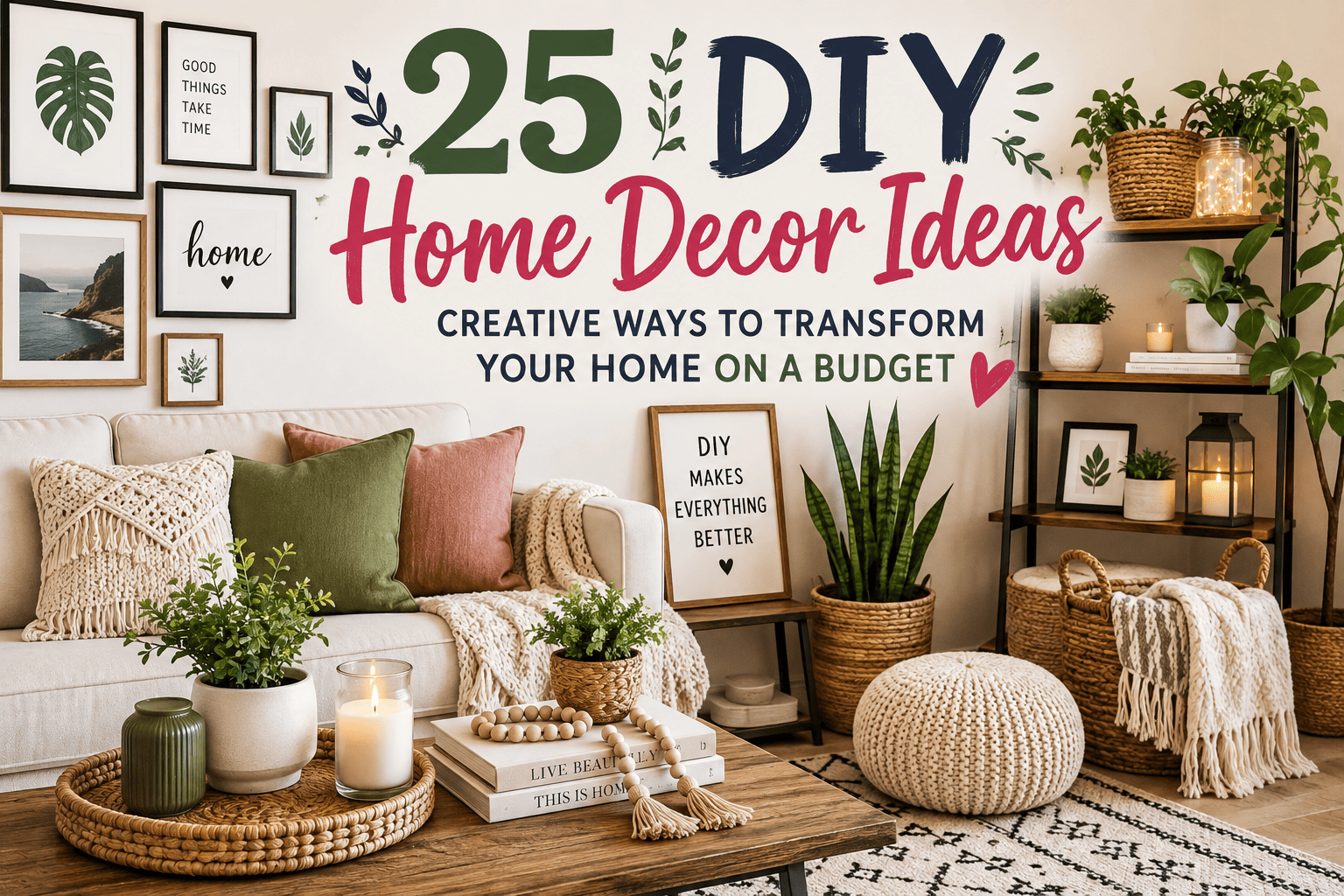
A beautiful home does not have to come with a big decorating budget. With a little creativity, everyday materials, and a willingness to try something new, you can create DIY home decor that feels stylish, personal, and surprisingly expensive.
The best DIY projects are not simply about making something by hand. They should also solve a decorating problem, make better use of what you already own, or give an outdated space a fresh purpose. From turning old jars into decorative vases to creating a custom gallery wall, small changes can completely alter how a room looks and feels.
In this guide, you’ll find 25 affordable DIY home decor ideas for living rooms, bedrooms, kitchens, entryways, and other spaces. Most can be customized to match your home’s colors and style, whether you prefer modern, rustic, cozy, minimalist, or boho decor.
1. Create a DIY Gallery Wall
A gallery wall is one of the easiest ways to make a blank wall feel finished. Collect family photos, printable artwork, postcards, or even children’s drawings and arrange them in different-sized frames.
For a budget-friendly result, reuse frames you already have and paint them in one or two coordinating shades. Before putting holes in the wall, arrange the frames on the floor first. This helps you find a balanced layout without unnecessary mistakes.
2. Make a Decorative Mirror Frame
A plain mirror can become a statement piece with a simple handmade frame. Wood strips can create a warm farmhouse appearance, while rope works well for coastal or boho interiors.
Measure the mirror carefully before building or attaching the frame. A clean finish around the edges is what makes this inexpensive project look professionally made.
3. Build Simple DIY Floating Shelves
Floating shelves add both storage and decoration without taking up floor space. Basic wooden boards can be sanded, painted, or stained to match your existing furniture.
Use the shelves to display books, small plants, candles, ceramics, or framed photographs. Avoid filling every inch; leaving some empty space makes the arrangement look more intentional.
4. Refresh Old Furniture With Paint
Before buying new furniture, look at what you already have. An old side table, chair, dresser, or cabinet may only need sanding and a fresh coat of paint.
Clean the surface first and repair obvious damage before painting. For a polished appearance, apply thin, even coats rather than one heavy layer. Changing the hardware can also make an old piece feel completely different.
5. Create a DIY Accent Wall
An accent wall can dramatically change a room without requiring a complete makeover. Paint one wall in a deeper shade, create simple geometric shapes, or use a removable wallpaper design.
Choose a wall that naturally attracts attention, such as the wall behind a sofa or bed. Keeping the remaining walls relatively simple allows the accent wall to become the focal point rather than making the room feel busy.
6. Make Your Own Wall Art
Store-bought artwork can be expensive, but creating your own gives you complete control over the colors and size. Try abstract shapes, simple line drawings, textured canvas, or fabric art.
You do not need advanced artistic skills. A limited color palette and a clean composition can often look more sophisticated than an overly complicated design.
7. Turn Old Bottles Into Decorative Vases
Empty glass bottles and jars can become attractive vases with almost no expense. Clean them thoroughly, remove labels, and decorate them with paint, twine, fabric, or simple textured finishes.
Group several bottles of different heights together instead of using only one. Add dried flowers, branches, or seasonal greenery for an easy centerpiece that can be changed throughout the year.
8. Upgrade Plain Throw Pillows
Changing cushion covers is a simple way to refresh a sofa or bed without replacing the furniture. If you have basic sewing skills, make covers from affordable fabric or repurpose an old curtain or textile.
Choose colors that already appear elsewhere in the room. Repeating one or two shades across cushions, curtains, artwork, or rugs creates a more cohesive interior.
9. Make a DIY Rope Basket
Rope baskets are useful for storing blankets, magazines, toys, towels, or other everyday items. You can create one by wrapping natural rope around an inexpensive container or an old basket.
The key is to keep the rope layers neat and secure. A simple neutral rope finish works especially well with rustic, coastal, farmhouse, and boho home decor.
10. Create a Cozy Candle Display
Candles instantly add warmth, but the display matters as much as the candles themselves. Place candles of different heights on a decorative tray, wooden board, or shallow dish.
Add a small vase or natural element such as dried leaves to complete the arrangement. Keep candles away from curtains, paper, and other flammable materials, and never leave burning candles unattended.
11. Repurpose Mason Jars
Mason jars are inexpensive and surprisingly versatile. Use them as bathroom organizers, kitchen containers, mini planters, pen holders, or decorative storage.
For a coordinated appearance, use several jars in the same area rather than scattering them throughout the house. Labels or simple paint details can also make them look more intentional.
12. Create DIY Indoor Planters
Plants bring color and texture into a room, and you do not always need expensive planters. Old cans, containers, baskets, or plain ceramic pots can be transformed with paint or fabric.
Make sure any container used for a plant has appropriate drainage or a suitable inner pot. Grouping plants at different heights can create a more natural and visually interesting display.
13. Make a DIY Macramé Wall Hanging
Macramé is a great choice if you want to add texture and a relaxed handmade feel. Basic knotting techniques can turn cotton cord into a decorative wall hanging.
A large piece works well above a sofa or bed, while a smaller design can fill an awkward corner. Natural colors tend to blend easily with neutral interiors and boho-inspired spaces.
14. Decorate a Simple Tray
A tray can turn scattered objects into an organized display. Start with a basic wooden tray and customize it with paint, stain, patterned paper, or decorative handles.
Use it on a coffee table, dresser, kitchen counter, or entryway. Keep the arrangement simple by combining objects with different heights, such as a candle, small plant, and decorative book.
15. Create a Personalized Photo Display
Instead of keeping favorite photos hidden on your phone, turn them into home decor. Attach printed photographs to string with small clips, arrange them on a wooden board, or place them in a collection of matching frames.
Choose a specific theme, such as travel memories or family moments, so the display feels curated rather than random.
16. Transform an Old Picture Frame
An unused frame can become much more than a place for photographs. Turn it into a small chalkboard, jewelry organizer, message board, or decorative window-style wall piece.
Painting the frame is often enough to give it a completely new identity. This is also an excellent way to reuse items that might otherwise end up in the trash.
17. Use String Lights as Decor
String lights are an inexpensive way to create a softer atmosphere, especially in bedrooms, reading corners, and cozy living spaces.
Instead of simply hanging them randomly, use them to outline a mirror, frame artwork, or create a subtle display around a headboard. Choose a setup that keeps cords organized and does not interfere with normal movement around the room.
18. Make a DIY Table Centerpiece
A centerpiece does not need to be complicated. Combine a few candles, a small plant, a vase, or a decorative bowl on a tray or directly on the table.
The most important factor is proportion. A centerpiece that is too large can make a table feel crowded, while one that is too small may disappear visually.
19. Give Plain Curtains a Makeover
If your curtains still work but look boring, give them a simple update. Add fabric trim, tassels, subtle patterns, or a new tie-back to change their appearance.
Hang curtains high and wide where possible to make windows appear larger. Even a small styling adjustment can make the entire room feel more finished.
20. Create a DIY Entryway Organizer
The entryway is one of the first places guests see, yet it can quickly become cluttered. A simple wall organizer with hooks and a small shelf can give keys, bags, mail, and everyday accessories a designated home.
Paint or stain the organizer to coordinate with the rest of your entryway. Keeping frequently used items organized makes the space look cleaner and makes your daily routine easier.
21. Turn an Old Ladder Into Decor
An old wooden ladder can become an attractive vertical display. Lean it securely against a suitable wall and use it to hang lightweight blankets, towels, plants, or decorative textiles.
This idea works especially well in rooms where floor space is limited. Make sure the ladder is stable and suitable for the items you plan to display.
22. Style Your Coffee Table With DIY Decor
Your coffee table does not need expensive accessories to look stylish. Combine items you already own, such as books, a small plant, a handmade vase, and a decorative tray.
Create different heights and leave some empty space around the objects. This simple styling principle prevents the table from looking cluttered while still giving it personality.
23. Create a DIY Bedroom Headboard
A custom headboard can become the centerpiece of a bedroom without the cost of a large furniture purchase. Wood panels, fabric-covered boards, or painted geometric shapes can all work.
Choose a design that complements the size of your bed and the room’s overall style. A simple upholstered or wooden design can make a bedroom feel more complete without overwhelming it.
24. Repurpose Everyday Household Items
One of the smartest ways to save money on home decorating is to look at ordinary objects differently. Wooden crates can become shelves, old containers can become organizers, and unused baskets can become storage.
Before throwing something away, ask whether it could serve another purpose. Upcycling not only saves money but can also give your home more character than mass-produced accessories.
25. Create Seasonal DIY Decor
You do not need to completely redecorate your home for every season. A few handmade pieces can create a fresh look throughout the year.
Try a simple wreath, seasonal centerpiece, dried botanical arrangement, or small decorative display. Store reusable pieces carefully so you can bring them back each year instead of buying new decorations every season.
How to Make DIY Home Decor Look Expensive
The secret to expensive-looking DIY decor is not the price of the materials. It is the finishing and styling.
Choose a consistent color palette rather than using every color you like. Pay attention to clean edges, smooth paint, balanced proportions, and quality-looking materials. Repeating similar textures or colors throughout a room also creates a more cohesive appearance.
Most importantly, avoid filling every empty surface. A few well-chosen handmade pieces usually look more sophisticated than dozens of unrelated decorations.
How to Save More Money on DIY Home Decor
Start with the materials you already own. Old furniture, unused frames, glass jars, leftover paint, fabric scraps, baskets, and wooden pieces can often become the foundation of a new project.
Thrift stores and secondhand markets can also be useful sources for furniture and accessories that need a little creativity. Instead of asking, “Is this beautiful right now?” ask, “Could I make this beautiful with a small change?”
Another smart approach is to complete one room at a time. This prevents impulse purchases and helps you create a consistent look without spending too much at once.
Common DIY Home Decor Mistakes to Avoid
DIY projects can save money, but poor planning can produce the opposite result. Avoid choosing projects that are far beyond your current skill level, especially when structural installation or electrical work is involved.
Do not ignore measurements. A shelf, mirror, artwork, or headboard that is the wrong size can make an otherwise attractive room feel unbalanced.
It is also easy to overdecorate when you are excited about making new pieces. Give each project enough space to stand out, and remove anything that does not contribute to the room’s overall style.
Final Thoughts
DIY home decor is less about spending as little money as possible and more about using creativity to get more from what you already have. A painted piece of furniture, handmade wall art, repurposed jar, or simple photo display can make a room feel more personal without requiring an expensive makeover.
Start with one small project that solves a real decorating problem. As your confidence grows, you can experiment with larger transformations and different styles. With thoughtful planning, simple materials, and attention to detail, you can create a home that feels stylish, comfortable, and uniquely yours—all while staying within your budget.

Leave a Reply