
Introduction: Where Beauty Meets Everyday Function
A beautiful kitchen should do more than look good in photos. It should feel comfortable when you are cooking, easy to organize when life gets busy, and inviting enough for morning coffee or evening conversations. The best kitchen design decorating ideas combine style, comfort, storage, lighting, and functionality instead of treating decoration as a collection of accessories.
Whether you are refreshing a modern kitchen, working with a small space, or simply looking for an easy update, the right kitchen design decorating ideas can improve both the appearance and everyday functionality of your home. The key is to choose practical changes that complement your space instead of adding decoration simply for the sake of it.
Here are 15 elegant kitchen decorating ideas that can help you create a kitchen that feels beautiful, practical, and genuinely connected to the way you live.
1. Design Around How You Actually Use the Kitchen
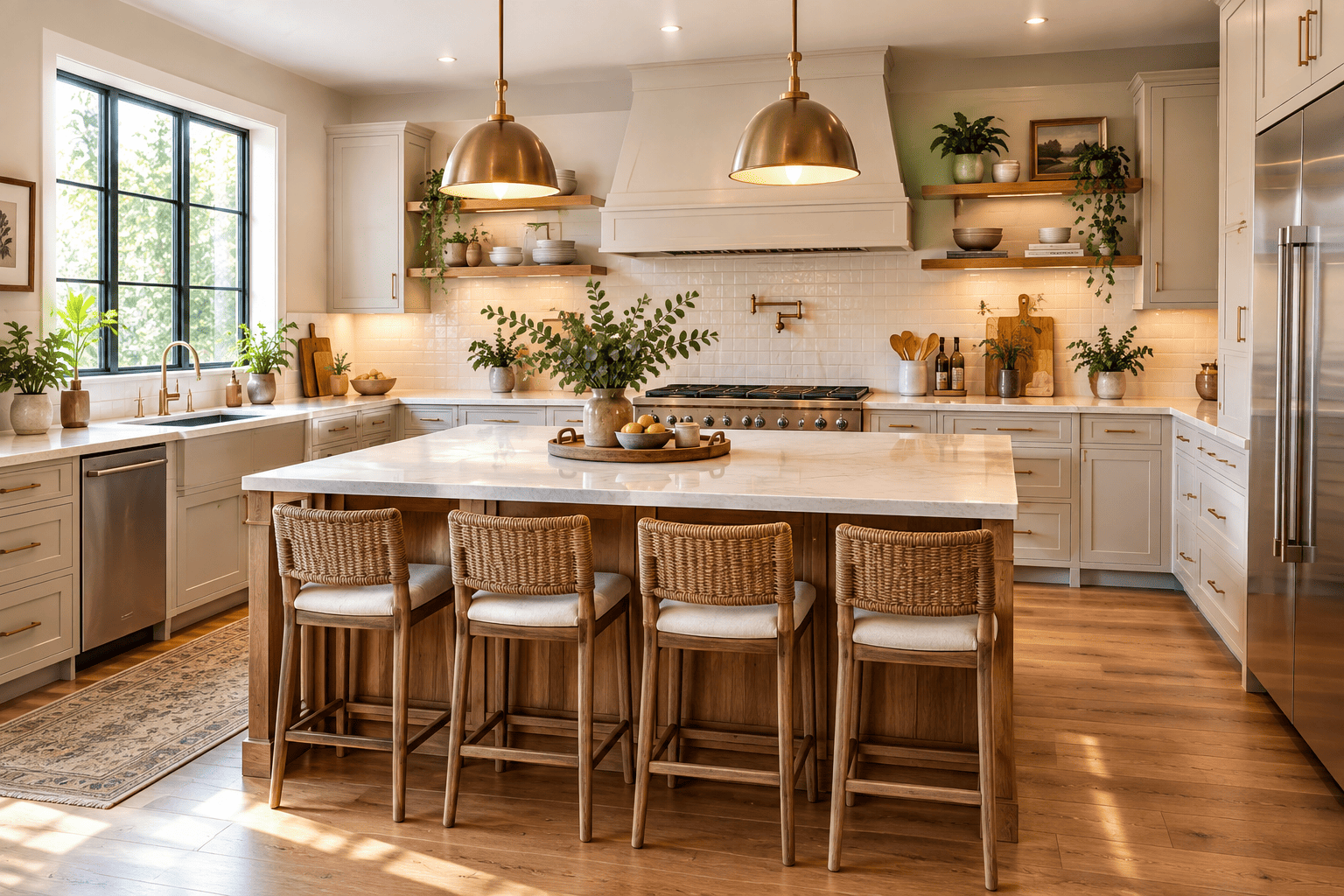
Before choosing colors or decorative accessories, think about your daily routine. Where do you prepare food? Which appliances do you use most? Do you make coffee every morning? Do family members gather around the island?
Your answers should influence the design.
Keep frequently used items within easy reach and place less-used appliances in cabinets or deeper storage. For example, everyday spices can stay near the cooking area, while serving dishes used only occasionally can be stored farther away.
This approach creates a functional kitchen design where beauty supports everyday life rather than getting in the way.
2. Create One Strong Visual Focal Point
A kitchen feels more sophisticated when the eye naturally has somewhere to land. Instead of decorating every surface, choose one main focal point.
An oversized pendant light above an island, a dramatic backsplash, a statement range hood, or a beautifully styled open shelf can all become focal points.
The key is restraint. If the backsplash, lighting, cabinets, artwork, and accessories are all competing for attention, the kitchen can quickly feel chaotic. Choose one dominant feature and allow the surrounding elements to support it.
3. Use a Three-Layer Decorating Approach
One useful way to kitchen decor
is to think in three visual layers.
The base layer includes permanent elements such as cabinets, countertops, flooring, backsplash, and major appliances. These establish the overall style.
The middle layer includes lighting, bar stools, window treatments, rugs, and other functional design elements.
The final layer adds personality through plants, artwork, ceramics, cutting boards, trays, and carefully selected accessories.
This layered approach prevents the kitchen from looking either unfinished or overcrowded. Each layer should contribute something different while still working with the overall color palette.
4. Make Simple Cabinets Look More Custom
You do not always need expensive cabinetry to achieve an elegant look. Small details can make standard cabinets feel much more intentional.
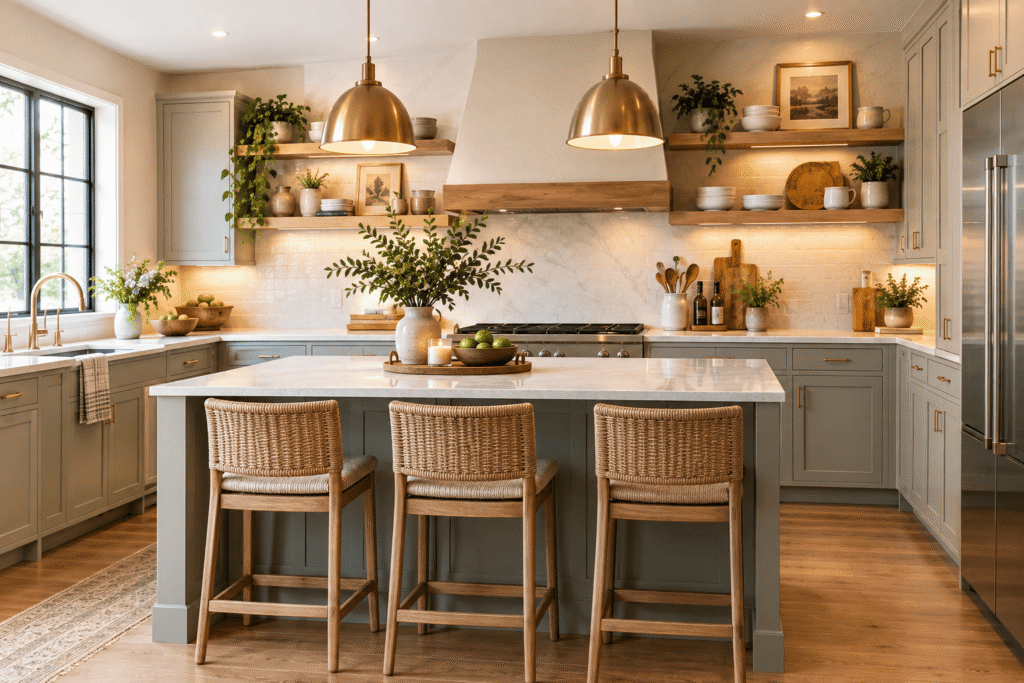
Start with cabinet hardware. Sleek pulls can create a modern appearance, while aged brass or brushed metal can introduce warmth. Consistent hardware placement also makes cabinets appear more professionally designed.
If your kitchen allows it, consider adding simple trim, glass-front doors, decorative panels, or carefully styled space above upper cabinets.
The goal is not to add decoration everywhere. Instead, focus on details that make the existing cabinetry feel deliberate and cohesive.
5. Create a Quiet-Luxury Look Without Overspending
An expensive-looking kitchen is not necessarily one filled with expensive materials. Quiet luxury kitchen design is more about simplicity, quality, texture, and visual balance.
Instead of using too many finishes, choose a restrained palette and introduce texture through natural wood, stone, linen, ceramic, or metal.
For example, simple neutral cabinets can feel much richer when combined with warm wood accessories, textured stools, subtle lighting, and one elegant countertop display.
The secret is to choose fewer elements and make each one count.
6. Turn Awkward Corners Into Useful Features
Unused corners are common in kitchens, especially in older layouts. Rather than allowing these areas to become dead space, give them a purpose.
A small corner can become a coffee station, breakfast shelf, herb-growing area, cookbook display, or additional storage zone.
In a small kitchen, even a narrow wall decor can hold a slim shelf for frequently used items. The important thing is to make the solution look integrated rather than like an afterthought.
Smart use of awkward spaces can improve both kitchen organization and visual appeal.
7. Style Countertops With Intention
Countertops often become cluttered because they hold everything from appliances to mail. Yet they also provide one of the easiest opportunities for kitchen styling.
Instead of covering every available surface, create small intentional groupings.
A wooden cutting board can lean against the backsplash beside a ceramic utensil holder. A simple tray can organize oil bottles or coffee essentials. A small plant can add freshness without taking up too much space.
Most importantly, leave some countertop area completely clear. Negative space gives the kitchen room to breathe and makes the items you display look more intentional.
8. Layer Your Kitchen Lighting
Good lighting is one of the most important elements of both kitchen design and comfort.
Rather than depending on a single ceiling fixture, combine different types of lighting.
Task lighting is useful beneath cabinets and around food-preparation areas. Ambient lighting provides general illumination throughout the room. Accent lighting can highlight shelves, architectural details, artwork, or a beautiful backsplash.
Pendant lights above an island can also become decorative features while providing useful illumination.
For a cozy atmosphere, warmer light is often more inviting during evenings, while brighter task lighting can help with cooking and food preparation.
9. Add One Unexpected Material
A kitchen becomes more interesting when everything does not look perfectly predictable.
Try introducing one contrasting material. Warm wood can soften a kitchen filled with stone and metal. Woven baskets can add texture to sleek cabinetry. A brass fixture can create warmth against neutral finishes.
The trick is to use contrast strategically. One unexpected material can create character, while too many contrasting finishes may make the kitchen feel visually disconnected.
Think of the unusual element as a small surprise rather than the main theme.
10. Make the Backsplash a Design Feature
The backsplash has both a practical and decorative role. It protects walls from cooking splashes while also covering a large visual area.
A simple backsplash can create a calm backdrop for statement lighting and accessories. On the other hand, patterned tile, natural stone, handmade-look ceramic, or interesting texture can turn the backsplash into a focal point.
When selecting one, consider the scale of the kitchen. A busy pattern may work beautifully in a restrained kitchen but feel overwhelming if the cabinets, countertops, and accessories are already visually strong.
The best backsplash design balances personality with the rest of the room.
11. Choose Decor That Is Actually Useful
Some of the best kitchen decorations are objects you already use.
Beautiful wooden boards, ceramic bowls, linen towels, attractive cookware, stoneware containers, and elegant serving pieces can all function as decor without becoming unnecessary clutter.
This is particularly useful in smaller kitchens because every visible item can serve a purpose.
Instead of hiding everything away, allow a few beautiful everyday objects to remain visible. The result feels authentic because the kitchen looks lived-in without looking messy.
12. Create a Small Living Moment
Modern kitchens often function as more than cooking spaces. They can become places for breakfast, conversation, homework, reading, or relaxing with coffee.
If you have an island, add comfortable stools that encourage people to sit and stay. If you have a window, consider creating a small plant or breakfast area nearby.
Even a tiny kitchen can benefit from a simple “living moment.” A comfortable stool, a small lamp, or a few plants can make the room feel warmer and more personal.
These details transform a purely functional kitchen into a welcoming part of the home.
13. Use Vertical Space in a Small Kitchen
When floor and countertop space are limited, look upward.
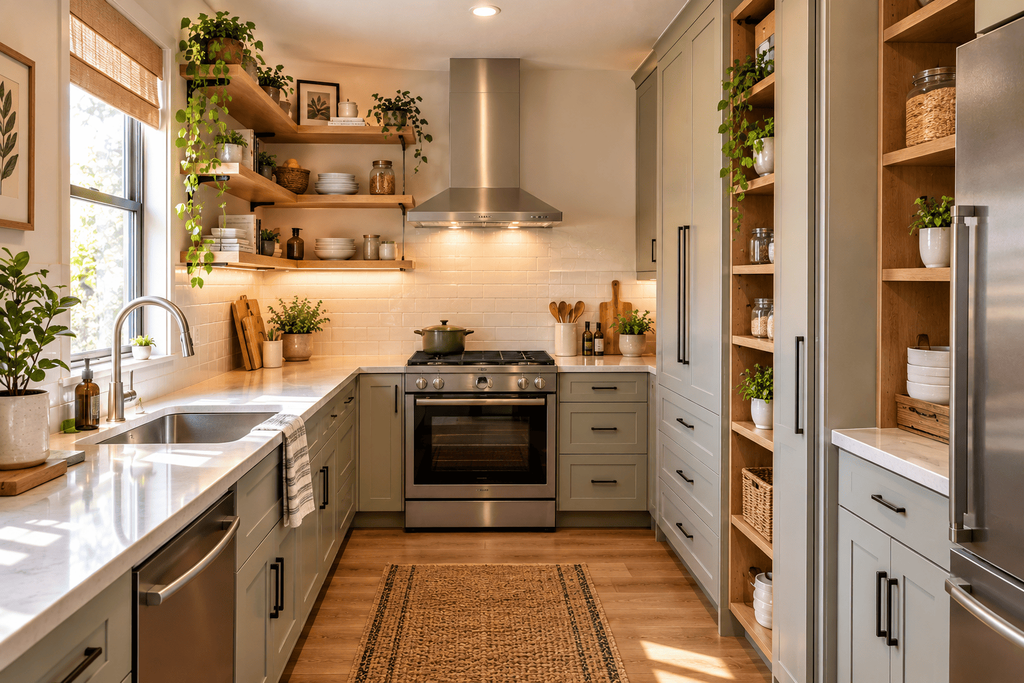
Tall cabinets, wall-mounted shelves, hanging rails, and vertical organizers can provide additional storage without consuming valuable floor area.
Open shelves can also make frequently used dishes accessible while giving you an opportunity to display attractive ceramics or glassware.
However, avoid filling every inch of wall space. A combination of storage and empty wall area will feel much calmer than a completely packed arrangement.
For a small kitchen, good decorating starts with making the available space work efficiently. Vertical storage, open shelving, organized countertops, and carefully chosen decor can add personality without making the room feel crowded. This balance helps the kitchen remain practical while still looking polished.
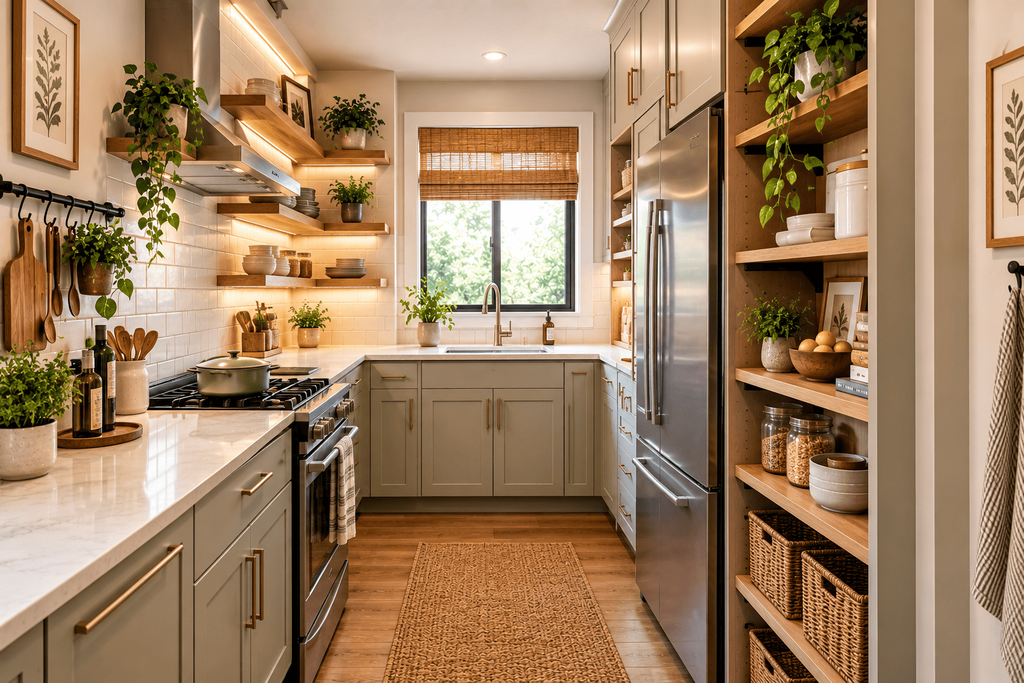
This is one of the most effective small kitchen design decorating ideas because it combines storage with visual height.
14. Coordinate Instead of Matching Everything
A well-designed kitchen does not need every element to match perfectly. In fact, excessive matching can make a room feel flat.
Instead, create cohesion by repeating a few colors, materials, shapes, or finishes.
For example, brass cabinet hardware can subtly connect with a brass pendant light. Warm wood on stools can echo a wooden cutting board or nearby flooring.
This approach creates a connected look without making the kitchen feel like everything came from the same collection.
15. Finish With Small Details That Add Personality
Once the major design decisions are complete, focus on the details.
A simple piece of artwork, fresh greenery, textured kitchen towels, a handmade ceramic bowl, or a carefully chosen runner can add warmth without requiring a major investment.
Consider the atmosphere you want as well as the appearance. A kitchen should feel clean and organized, but it should not feel sterile.
The final styling should reflect your personality while maintaining enough empty space for the room to remain functional.
The “Less but Better” Rule for Kitchen Decorating
One of the easiest ways to make a kitchen look more elegant is to stop adding things.
Every surface does not need decoration. Every shelf does not need to be full. Every corner does not need a plant, basket, or accessory.
Instead, choose a few pieces that genuinely improve the space and leave breathing room around them.
This principle is especially valuable in small kitchens, where too many decorative objects can make the room feel smaller and less organized.
Common Kitchen Design Mistakes to Avoid
Even attractive decorating ideas can fail when the basics are ignored. One common mistake is choosing style before considering workflow. A beautiful kitchen becomes frustrating if essential items are difficult to access.
Another problem is using too many finishes. Combining several cabinet colors, metals, tile patterns, woods, and countertop materials can quickly create visual noise.
Poor lighting is another major issue. A kitchen may have beautiful finishes but still feel uncomfortable if food-preparation areas are poorly illuminated.
Finally, avoid decorating every available surface. Good kitchen styling is not about filling space; it is about creating balance.
A Simple Formula for a Beautiful & Functional Kitchen
If you are unsure where to begin, use this simple formula:
Color + Texture + Lighting + Storage + Personality = A Complete Kitchen Design
Start with a practical layout, establish a simple color palette, add texture through natural materials, improve the lighting, organize storage, and then introduce a few personal decorative touches.
You do not need to completely remodel your kitchen to make it feel more beautiful. Small, intentional changes can have a surprisingly large impact.
Final Thoughts
The best kitchen design decorating ideas are not simply about following trends. They are about creating a space that works naturally with your lifestyle while still feeling warm, elegant, and personal.
From choosing a strong focal point and layering lighting to styling countertops, improving storage, and adding useful decor, each decision should have a purpose. When beauty and functionality work together, your kitchen becomes more than a place to prepare meals—it becomes a comfortable, welcoming part of your home.
The goal is simple: design less for display and more for living. That is what makes a kitchen feel beautiful today and still appealing years from now.

Leave a Reply