
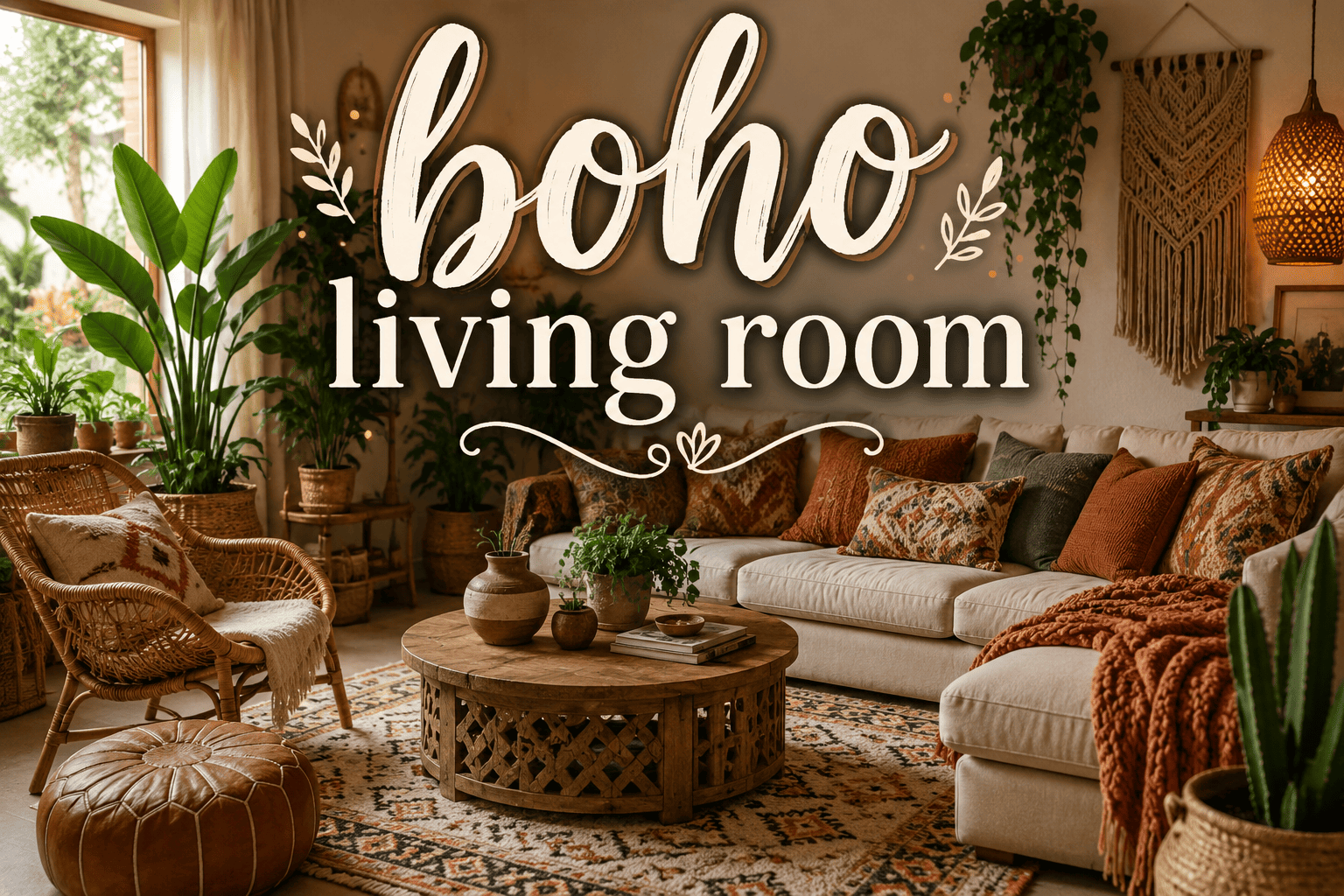
A boho living room turns everyday comfort into effortless style by blending earthy colors, natural textures, cozy furniture, greenery, vintage accents, and meaningful decor. Rather than matching every piece, boho design celebrates contrast and character, creating a warm, relaxed space that feels collected over time—not decorated all at once.
Introduction: What Makes a Boho Living Room Feel Different?
A boho living room is less about following a strict decorating formula and more about creating a space that feels warm, relaxed, personal, and naturally collected. Instead of perfectly matching furniture and accessories, bohemian interiors bring together earthy colors, natural materials, vintage finds, soft textiles, plants, and objects with character.
The beauty of boho style is its flexibility. You can create a colorful, eclectic room filled with patterns, or choose a quieter modern boho look with warm neutrals and carefully selected accents. What matters most is creating a room that feels comfortable rather than overly designed.
1. Start With a Mood Before Choosing Decor
Before buying furniture or accessories, decide how you want your living room to feel. Boho can mean many things, from desert-inspired and sun-washed to colorful, tropical, Moroccan, or minimalist.
Choose three words that describe your ideal room, such as warm, earthy, and relaxed. These words become a useful filter for every decorating decision. If a new item does not support the atmosphere you want, you probably do not need it.
This approach prevents the room from becoming a random collection of trendy boho accessories.
2. Build an Earthy Color Palette
Natural colors are an excellent foundation for bohemian interiors. Warm cream, sand, terracotta, rust, olive, camel, mustard, dusty rose, and chocolate brown can all work beautifully.
You do not need to use every shade. Choose one main neutral and two or three accent colors. For example, a warm cream sofa can be paired with terracotta cushions, olive plants, and dark wooden furniture.
Repeating these shades in different parts of the room creates cohesion without making everything look identical.
3. Let Texture Do the Decorating
Texture is one of the most important elements in a cozy boho living room. Even a neutral space can feel rich when different tactile materials are layered together.
Mix linen, jute, wool, cotton, rattan, raw wood, leather, and ceramic. A chunky wool throw beside a smooth leather chair creates more visual interest than adding several similar decorative objects.
When a room feels flat, consider adding texture before adding more color.
4. Choose a Sofa That Looks Inviting
A boho sofa should look comfortable enough to relax on. Deep cushions, relaxed upholstery, rounded edges, and soft fabrics can instantly make a living room feel more welcoming.
If you already own a structured modern sofa, there is no need to replace it. Add mismatched cushions in linen, cotton, or woven fabrics and drape a soft throw casually over one side.
The goal is comfort, not perfection.
5. Create Depth With Layered Rugs
Rugs help establish the visual foundation of a boho living room. A large natural-fiber rug can be layered with a smaller vintage-style or patterned rug for additional depth.
This technique works particularly well when the rugs share a color but have different patterns or textures. It creates a collected appearance without requiring more furniture.
For smaller rooms, however, one appropriately sized textured rug may be better than multiple layers.
6. Bring Nature Indoors With Intention
Plants add freshness, height, and movement to bohemian interiors. However, filling every corner with greenery can make a small room feel crowded.
Instead, use plants strategically. A tall plant beside the sofa, a trailing plant on a shelf, or a small plant on the coffee table can create a natural rhythm.
Vary the containers too. Terracotta pots, woven baskets, ceramic planters, and clay vessels can become part of the room’s overall design.
7. Mix Vintage With Contemporary Pieces
One of the easiest ways to create an authentic boho atmosphere is to mix different eras.
A modern sofa can sit beside an old wooden side table. A contemporary lamp can stand next to a weathered trunk. A clean-lined coffee table can be softened with a vintage rug.
This contrast prevents the living room from looking like a showroom and gives it the feeling of developing naturally over time.
8. Use Lighting to Create Warmth
Lighting becomes especially important after sunset. A single bright ceiling light can make even a beautifully decorated room feel cold.
Instead, use several light sources. Combine a floor lamp, table lamp, pendant, and small accent light where appropriate. Woven and rattan shades can add beautiful texture while producing a softer glow.
Warm lighting complements earthy colors and makes natural materials feel even richer in the evening.
9. Give the Walls a Personal Identity
Boho wall decor should add personality rather than simply fill empty space.
A large textile, woven wall hanging, organic-shaped mirror, gallery arrangement, or handmade artwork can become a strong focal point.
If the room already contains a heavily patterned rug and colorful cushions, choose simpler wall art. If the furniture is neutral, the walls can carry more visual interest.
The best wall decor responds to what is already happening in the room.
10. Introduce Curved and Organic Shapes
Rounded forms can soften a living room dominated by straight furniture.
Consider an arched mirror, round coffee table, curved accent chair, circular basket, or organically shaped ceramic. These forms create a subtle contrast that makes the room feel less rigid.
You do not need to redesign the entire room. One or two curved pieces can make a noticeable difference.
11. Create a Relaxed Seating Corner
A boho living room can have more than one place to sit.
A low pouf, floor cushion, woven chair, or small reading nook can create a relaxed secondary seating area. This is particularly useful in larger rooms where a single sofa arrangement leaves unused space.
Give the corner a simple purpose, such as reading, relaxing, or enjoying coffee, rather than filling it with unnecessary furniture.
12. Balance Rattan, Wood and Woven Materials
Natural materials are central to many boho interiors, but using the same material repeatedly can become predictable.
Mix light rattan with darker wood, smooth ceramic with rough jute, or a woven pendant with a polished wooden table.
The contrast between refined and raw surfaces gives the room depth and keeps the natural aesthetic from feeling repetitive.
13. Use Patterns Without Creating Chaos
Boho style allows pattern, but successful pattern mixing requires some control.
Choose one dominant pattern, such as a vintage rug or statement textile. Then allow smaller cushions and accessories to repeat one or two of its colors.
This creates variety while maintaining visual harmony. If every item introduces a completely different pattern, the room can quickly feel busy rather than cozy.
14. Give the Room One Hero Piece
Every successful living room decor benefits from a clear focal point.
In a boho space, this could be an oversized vintage rug, sculptural light fixture, unusual chair, dramatic artwork, or beautifully carved wooden table.
Once you have chosen your hero piece, allow the surrounding decor to support it instead of competing for attention.
15. Turn an Awkward Corner Into a Feature
Unused corners can become some of the most interesting parts of a boho living room.
Place a reading chair beside a floor lamp, add a tall plant, or create a small display with a wooden stool and handmade ceramic.
Repeat a color or material from the main seating area so the corner feels connected to the room rather than randomly decorated.
16. Add Vintage Pieces With a Story
A vintage object does not need to be expensive to add character.
A secondhand mirror, old tray, inherited side table, vintage textile, or aged wooden box can introduce a sense of history.
The small imperfections found in older pieces often make them more interesting than perfectly manufactured accessories. One or two meaningful vintage pieces can be enough to give the whole room a collected appearance.
17. Choose Handmade Details
Handmade decor adds individuality because each piece tends to have subtle variations.
Hand-thrown ceramics, woven baskets, embroidered cushions, carved wooden bowls, and artisan textiles can make a room feel more personal.
Rather than covering every surface with accessories, select a few pieces that you genuinely like. Thoughtful choices always look better than excessive decoration.
18. Make a Small Boho Living Room Feel Spacious
Boho style can work in compact rooms, but layering needs to be more controlled.
Choose furniture that leaves comfortable walking space and avoid oversized pieces that dominate the room. One textured rug, a few cushions, and one statement plant may be enough.
Wall-mounted shelves can display books and accessories while preserving floor space. Warm neutral walls can also make a small room feel lighter without sacrificing the earthy character of boho design.
19. Create a Sophisticated Modern Boho Look
If traditional boho feels too colorful or layered, modern boho may be a better choice.
This approach combines warm neutrals, clean furniture lines, natural wood, subtle patterns, organic shapes, and fewer decorative pieces.
The key is editing. Keep the objects that add meaning, texture, or visual interest and remove those that simply create clutter.
The result is a calmer room that still feels warm and relaxed.
20. Make Boho Decor Look Expensive on a Budget
Boho style is naturally suited to budget decorating because character does not always come from expensive furniture.
Look for secondhand wooden pieces, vintage mirrors, woven baskets, and unique textiles. You can also refresh existing furniture with new cushion covers, throws, artwork, or a different arrangement.
If your budget is limited, prioritize pieces you use every day, such as the sofa and main rug. Smaller accessories can be sourced affordably and changed over time.
21. Finish With Details That Feel Lived-In
The final layer of a boho living room should be subtle.
A stack of books, a casually placed throw, a favorite ceramic, a small collection of photographs, or a handmade object can make the room feel like a real home.
Do not try to make every cushion perfectly aligned or every surface completely empty. A little imperfection gives boho interiors their relaxed character.
Boho Living Room Color Combinations to Try
If you are unsure where to begin, try one of these combinations:
- Cream + terracotta + olive: warm and naturally earthy
- Sand + rust + chocolate brown: rich and grounded
- Warm white + dusty pink + sage: soft and relaxed
- Camel + charcoal + burnt orange: dramatic but welcoming
- Beige + natural wood + muted green: clean modern boho
The important thing is to repeat your chosen colors throughout the room rather than introducing a new shade with every accessory.
Best Materials for a Boho Living Room
The most useful materials for bohemian interiors include rattan, jute, linen, cotton, wool, raw wood, clay, ceramic, and aged metal.
Instead of using one material repeatedly, create contrast. Pair rough jute with soft linen, smooth ceramic with raw wood, or aged metal with woven fibers.
This mixture gives the living room the tactile depth that makes boho interiors feel cozy rather than flat.
Modern Boho vs. Classic Boho
Classic boho usually embraces stronger patterns, richer colors, abundant textiles, and more collected objects. It feels expressive, artistic, and eclectic.
Modern boho keeps the same relaxed spirit but reduces the visual noise. Warm neutrals, clean-lined furniture, natural materials, and carefully chosen accessories create a more refined appearance.
Both styles can work beautifully. Your choice depends on whether you prefer a room that feels expressive and layered or calm and curated.
Common Boho Living Room Mistakes to Avoid
The biggest mistake is assuming that more decoration automatically means more boho.
Avoid matching furniture sets, excessive accessories, too many competing patterns, and plants placed without considering the room’s layout. Also avoid relying entirely on overhead lighting because it can flatten the atmosphere.
Boho works best when the room has layers but still has breathing space.
How to Make Your Boho Living Room Personal
The most memorable boho interiors contain something that could belong only to the people who live there.
Display books you actually enjoy, photographs that have meaning, souvenirs from memorable trips, handmade pottery, inherited furniture, or textiles you genuinely love.
You do not need to copy a perfect online room. Let your interests and memories influence the decor. That is what transforms boho style from a trend into a personal home.
Conclusion: Create a Boho Living Room That Feels Like You
A beautiful boho living room is not created by buying a complete collection of matching decor. It develops through thoughtful layers of color, texture, natural materials, comfortable furniture, greenery, vintage character, and meaningful objects.
Start with the feeling you want, establish a simple earthy palette, and then build the room gradually. Mix old with new, rough with refined, and structured pieces with softer organic shapes.
Most importantly, leave room for personality. The best bohemian interiors are not perfect showrooms. They are warm, collected spaces that look comfortable enough to live in and interesting enough to keep discovering.
That balance of comfort, texture, nature, and individuality is what makes a boho living room truly inviting.
Frequently Asked Questions About Boho Living Rooms
What Makes a Living Room Boho?
A boho living room combines relaxed furniture, earthy colors, natural materials, layered textures, plants, vintage pieces, and personal decor. The style feels collected rather than perfectly matched, with materials such as rattan, jute, linen, wood, and woven textiles adding warmth and character.
What Colors Work Best in a Boho Living Room?
The best boho living room colors are inspired by nature, including warm cream, beige, sand, terracotta, rust, olive green, camel, mustard, dusty pink, and chocolate brown. For a balanced look, start with a warm neutral and add two or three earthy accent colors throughout the room.
How Do I Make My Living Room Look Boho on a Budget?
Start with what you already own and focus on affordable changes such as textured cushions, woven baskets, secondhand furniture, plants, vintage accessories, and warm lighting. Shopping thrift stores and secondhand marketplaces can also help you find unique pieces without spending heavily. You do not need to replace the entire room to create a boho atmosphere.

Leave a Reply