
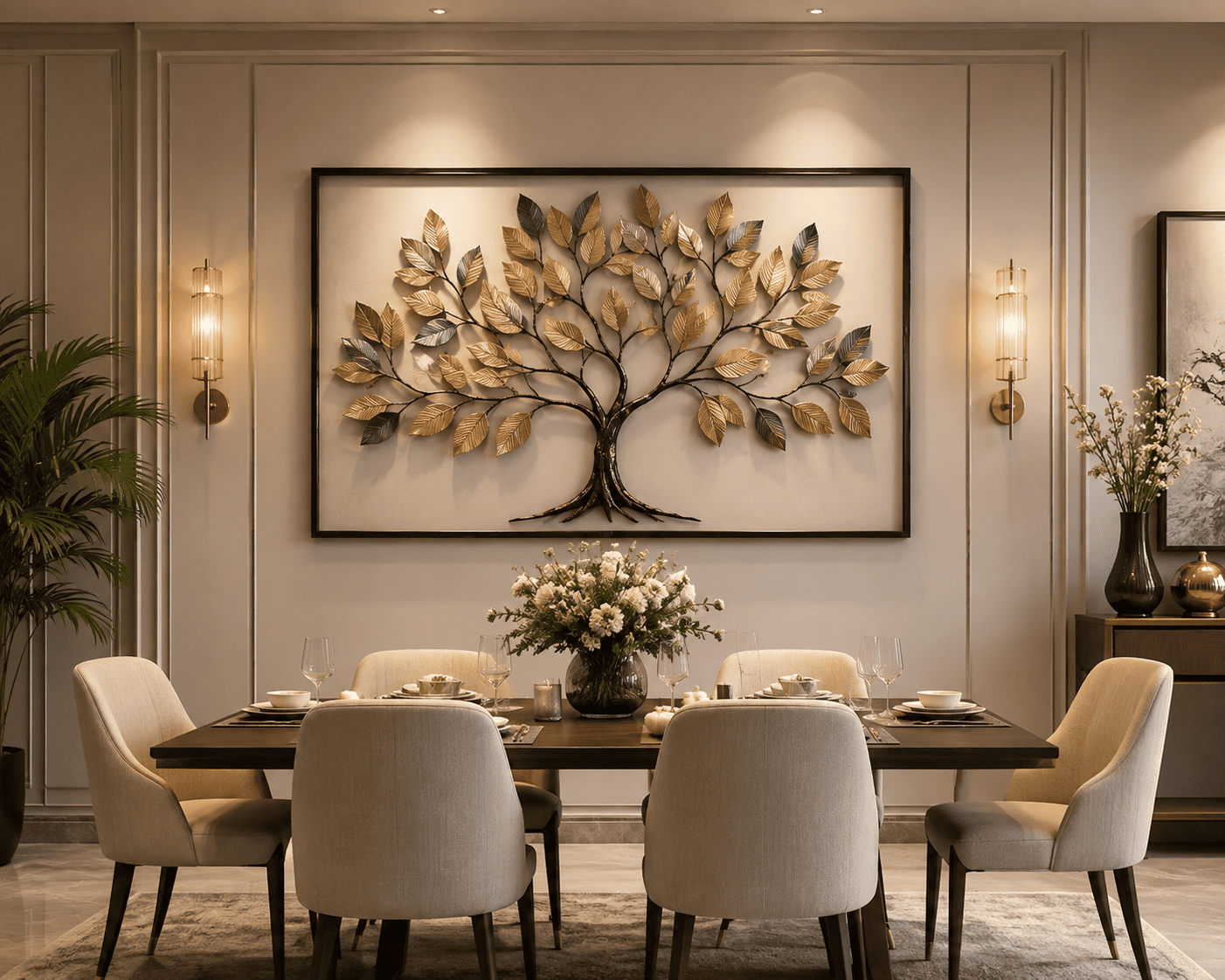
The best dining room wall decor balances the size of the wall, the proportions of the dining table, the room’s lighting, and the overall decorating style. Oversized artwork, painted arches, textured plaster, wood slats, ceramic displays, murals, and sculptural pieces can all create a strong focal point.
For a polished look, avoid filling the wall with unrelated decorations. Instead, choose one dominant feature and support it with subtle colors, textures, or lighting. For small dining rooms, lighter colors and strategically placed mirrors can help maintain an open feeling, while larger rooms can handle bolder artwork and architectural treatments.
Introduction
Dining rooms are often designed around the table, chairs, and statement light fixture, while the walls are treated as an afterthought. That is a missed opportunity. The right dining room wall decor can add personality, define the mood, and make even a simple dining area feel thoughtfully designed.
You do not need to cover every inch with artwork or accessories, either. Sometimes a single oversized piece, a textured finish, or an architectural detail can have more impact than an entire collection of small decorations. The key is choosing something that works with your room’s scale, lighting, furniture, and existing color palette.
Whether your dining space is modern, traditional, minimalist, eclectic, or compact, these 17 unexpected ideas can help you turn an ordinary wall into one of the most memorable features of the room.
Why Dining Room Walls Deserve More Attention
A dining room wall does more than fill empty space. Because the table is usually the visual center of the room, the wall behind or around it becomes an important backdrop.
A completely blank wall can make beautiful furniture feel disconnected from the rest of the space. On the other hand, an overly decorated wall can compete with the table and make the room feel busy. Good wall design sits somewhere between these extremes.
Think about your dining room as a composition. The table provides the foundation, the lighting creates atmosphere, the chairs add shape, and the walls provide the opportunity to introduce color, artwork, texture, or architectural character.
17 Unexpected Dining Room Wall Decor Ideas
1. Paint a Dramatic Arch Behind the Table
A painted arch is an easy way to create an architectural feature without construction. Choose a color that contrasts gently with the surrounding wall and position the arch so it visually frames the dining table.
For a sophisticated effect, avoid making the color dramatically brighter than everything else. Earthy green, warm beige, muted terracotta, deep blue, or soft charcoal can create a strong backdrop without overwhelming the room.
2. Choose One Giant Statement Canvas
Instead of creating a traditional gallery wall, consider one oversized artwork above the dining table. A large abstract canvas can make the room feel more intentional while reducing visual clutter.
The artwork should generally feel substantial enough to relate to the table beneath it. A tiny frame floating above a large dining table can look accidental, whereas a generously sized piece creates a deliberate focal point.
3. Turn Curtains Into a Full-Wall Feature
Curtains do not have to stop at windows. Floor-to-ceiling fabric across a dining wall can introduce softness, movement, and texture while making the ceiling appear taller.
This works particularly well in dining rooms that feel cold because of hard flooring, glass tables, or metal furniture. Linen-look or softly textured fabrics can create warmth without making the space feel overly formal.
4. Create a Curved Decorative Nook
A curved wall niche can transform an ordinary dining wall into an architectural feature. Use it to display ceramics, candles, artwork, or a few carefully selected decorative objects.
If a permanent renovation is not practical, you can create a similar effect with a freestanding curved shelving unit. The important part is maintaining a limited collection so the niche looks curated rather than crowded.
5. Try a Textured Plaster Finish
Paint is not the only way to add interest. Limewash, Venetian plaster, or other textured wall finishes can introduce subtle variation that changes beautifully as natural light moves across the surface.
This approach works especially well when you want an elegant dining room without relying on lots of artwork. The wall itself becomes the decoration.
6. Add Backlighting Behind an Art Panel
A backlit art panel can create a completely different atmosphere after sunset. Soft LED lighting behind a textured panel, artwork, or decorative screen creates depth and a gentle glow.
Use warm-toned lighting rather than extremely bright white light if your goal is an intimate dining atmosphere. Keep the light subtle enough that the artwork remains the focus.
7. Use Oversized Typography With Meaning
Large typography can give a dining room a surprisingly personal character. Instead of using a generic quote, choose a short phrase, family name, date, or word that has genuine meaning.
Keep the design simple. A restrained typeface and limited color palette will usually look more sophisticated than overly decorative lettering.
8. Experiment With a Color-Washed Wall
A color-washed wall uses variations of one color instead of a completely uniform paint finish. The result is subtle, atmospheric, and much more dimensional than standard flat paint.
Warm clay, dusty rose, olive, creamy beige, or muted blue can work beautifully depending on the room. Pair the wall with tonal accessories instead of introducing several unrelated accent colors.
9. Introduce Architectural Pilasters
Decorative pilasters or wall moulding can give a dining room a sense of architectural depth without requiring major structural changes.
This idea works particularly well with traditional, transitional, or European-inspired interiors. Keep the surrounding decor relatively restrained so the architectural detail remains visible rather than competing with multiple decorative elements.
10. Display Ceramics as Wall Art
Plates and handmade ceramics can become beautiful dining room wall art when arranged thoughtfully. Instead of placing identical pieces in a rigid grid, vary their sizes slightly while maintaining a common color or material.
This is especially effective in warm organic, farmhouse, Mediterranean, and eclectic interiors because ceramics introduce both color and texture.
11. Install Vertical Wood Slats
Vertical wood slats create instant architectural interest while adding warmth to a dining room. They can also visually emphasize ceiling height, making them useful for spaces that feel short or boxy.
You do not necessarily need to cover the entire wall. A partial slatted section behind the dining table can create a feature wall while keeping the rest of the room visually light.
12. Create a Black-and-White Photography Wall
Large black-and-white photographs can bring sophistication without introducing a complicated color scheme. Consider architectural photography, landscapes, portraits, or meaningful family photographs.
For a more contemporary result, use large frames with generous spacing. For a traditional feel, choose classic frames and symmetrical placement.
13. Arrange Hanging Plants Like Living Artwork
Instead of placing plants only on the floor or table, use wall-mounted planters or hanging greenery to create a vertical botanical display for cozy living room.
Trailing plants add movement and soften hard surfaces such as wood, stone, or metal. Just make sure the plants receive suitable light and are positioned where watering will not damage the wall or nearby furniture.
14. Add a Controlled Metallic Accent
Metallic details can make dining room wall decor feel more luxurious, but moderation is important. A brass wall sculpture, subtle metallic panel, or reflective decorative tile can catch light beautifully during evening meals.
Rather than covering an entire wall in shiny materials, use one metallic feature and repeat the same finish in smaller details such as lighting or table accessories.
15. Build a Display Wall for Beautiful Objects
If you have attractive glassware, ceramics, books, or collected pieces, turn storage into part of the wall design. Open shelving or glass-front cabinetry can provide both function and visual interest.
Arrange objects with breathing room instead of filling every shelf. Mixing heights, shapes, and textures will make the display feel collected rather than staged.
16. Make a Hand-Painted Mural the Star
A mural can completely change the identity of a dining room. Botanical forms, abstract brushwork, landscapes, or geometric patterns can create a one-of-a-kind backdrop.
If a full mural feels too bold, use it only on the wall behind the dining table. Keep the furniture and accessories relatively simple so the mural remains the star.
17. Let One Sculptural Piece Stand Alone
One of the most unexpected approaches is also one of the simplest: leave most of the wall empty and display one striking sculptural piece.
A large organic sculpture, dimensional artwork, carved wood panel, or unusual handmade object can become a conversation starter. The surrounding negative space gives the piece room to breathe and prevents the wall from feeling overcrowded.
How to Choose the Right Dining Room Wall Decor
Start With the Wall Size
Before buying anything, measure the wall. A large blank wall usually needs a substantial feature, while a narrow wall may look better with vertical artwork, shelving, or a slim architectural treatment.
Scale matters more than price. An appropriately sized affordable piece can look far better than an expensive piece that is too small.
Use the Dining Table as Your Guide
The wall feature should visually relate to the dining table beneath it. If the table is long and rectangular, a horizontal artwork or extended feature can reinforce its shape. For a round table, consider a round mirror, circular artwork, or vertically centered sculptural piece.
The goal is visual harmony rather than exact matching.
Coordinate Rather Than Match Colors
Your wall decor does not need to match your dining chairs or curtains exactly. Instead, choose colors that belong to the same visual family.
For example, warm wood furniture can work with earthy artwork, while cool gray furniture can be complemented by muted blue, charcoal, or soft green accents.
Consider Lighting Before Installation
Natural light can change how colors and textures appear throughout the day. At night, your pendant, chandelier, sconces, or accent lighting will create a completely different effect.
Place reflective materials where they catch light intentionally, but avoid positioning mirrors or glossy pieces where they create distracting glare.
Create One Main Focal Point
A dining room usually looks more sophisticated when the eye has somewhere specific to land. Choose one dominant feature and let smaller elements support it.
This prevents the common mistake of combining a gallery wall, dramatic wallpaper, large mirror, plants, and multiple shelves on the same wall.
How to Make Dining Room Wall Decor Look More Expensive
You do not need a luxury budget to create an upscale effect. Start with scale: one substantial piece often looks more refined than many inexpensive small objects.
Next, introduce texture. Wood, ceramics, plaster, linen, metal, and woven materials can make a room feel layered without requiring excessive decoration.
Finally, pay attention to spacing. Giving artwork and decorative objects enough breathing room makes the entire arrangement feel more intentional. A little negative space can be just as important as the decoration itself.
Dining Room Wall Decor for Different Styles
Modern Dining Room
Choose oversized abstract artwork, vertical wood slats, sculptural lighting, or a restrained metallic feature. Keep the shapes clean and the palette controlled.
Minimalist Dining Room
Less is more. A textured wall, one sculptural object, or a single oversized artwork can provide enough interest without compromising the minimalist aesthetic.
Warm Organic Dining Room
Wood, handmade ceramics, woven textures, botanical elements, and earthy colors create a relaxed and inviting backdrop.
Traditional Dining Room
Decorative moulding, classic artwork, elegant sconces, and architectural details can reinforce a timeless character.
Eclectic Dining Room
Mix artwork, ceramics, unusual objects, and contrasting textures, but connect them through a repeating color or material so the arrangement still feels intentional.
Common Dining Room Wall Decor Mistakes to Avoid
Choosing artwork that is too small: Tiny pieces can disappear on a large wall and make the furniture feel disconnected.
Ignoring proportions: Wall decor should relate to the size and shape of the dining table rather than being chosen independently.
Using too many focal points: Several dramatic elements fighting for attention can make even a large dining room feel chaotic.
Ignoring negative space: Empty areas are not wasted space. They help important decorative pieces stand out.
Mixing unrelated styles: A wall can include different materials and objects, but there should still be a visual connection between them.
Final Thoughts
The best dining room wall decor does more than fill an empty wall. It creates atmosphere, supports the furniture, and gives the room a sense of personality.
You could choose a dramatic painted arch, textured plaster, vertical wood slats, a hand-painted mural, or simply one sculptural statement piece. The right choice depends on your wall size, dining table, lighting, budget, and personal style.
Instead of decorating every available surface, focus on creating one memorable feature with the right scale, texture, and visual balance. That simple approach can make your dining room feel more polished, welcoming, and genuinely alive.

Leave a Reply