
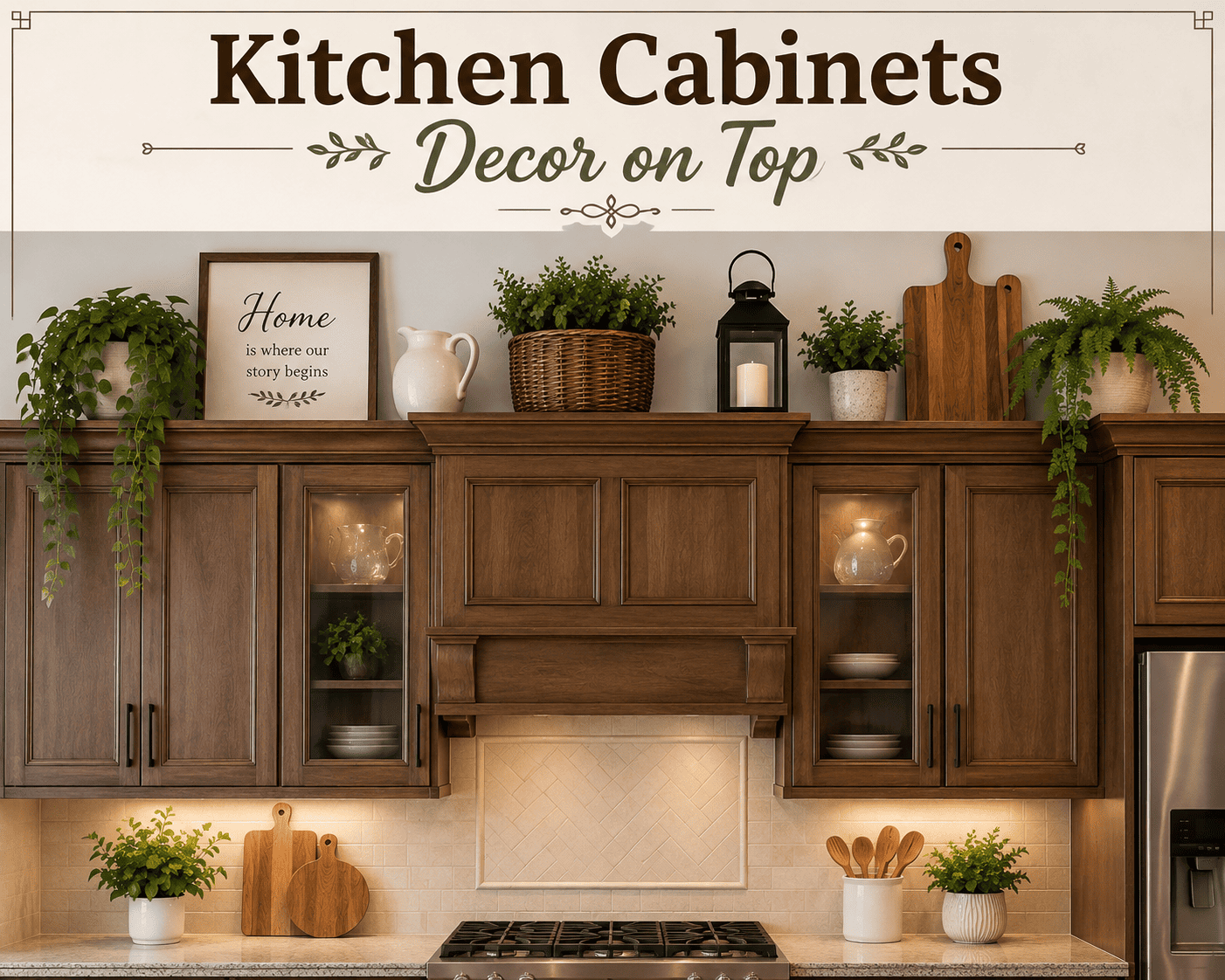
A small collection of appropriately sized pieces that echo the colors and materials already in the room. Oversized pottery, artwork, wooden objects, decorative plates, sculptural pieces, and subtle greenery all work well when given room to breathe. Avoid filling the entire cabinet top — balance comes from varied heights, a repeated color or two, and deliberate empty space
Introduction
The space above kitchen cabinets is one of the most awkward areas to decorate — too high for everyday use, too visible to ignore, and often large enough to make a kitchen feel unfinished when left bare. Fill it carelessly, though, and the whole room can start to look cluttered instead of stylish. The secret isn’t decorating every inch — it’s making the space feel like an intentional extension of the kitchen itself.
Good kitchen cabinets decor on top comes down to scale, color, texture, repetition, and negative space — a few carefully composed moments beat a shelf full of small trinkets. Here are 15 ideas to turn that forgotten strip into a genuine design feature.
1. Extend the Cabinet Color Toward the Ceiling
One of the cleanest, most effective solutions is to visually extend the cabinets upward. If there’s a narrow gap, paint it the same color as the cabinetry so the whole installation reads taller and more seamless. For a permanent fix, matching panels or extra cabinetry can close the gap entirely.
This works especially well in contemporary and minimalist kitchens, and it’s a practical choice if you’d rather not dust objects in a hard-to-reach spot. If you’re renovating rather than just decorating, it’s often a better long-term call than trying to style an unusually narrow gap.
2. Add Crown Molding for a Custom-Cabinet Look
In a traditional or transitional kitchen, decorative molding makes a real difference. Crown molding visually connects the upper cabinets to the ceiling, making them look more substantial and custom-built — turning the gap into part of the architecture rather than a spot to fill with objects.
Match the profile to your existing cabinetry — overly ornate trim can feel disconnected on simple cabinets, while a clean, modest profile adds just enough detail to make standard cabinetry look refined. This works especially well when cabinets stop only a few inches below the ceiling.
3. Create an Old-House-Inspired Display
For a kitchen decor with character, style a display that looks collected over time rather than bought as a matching set. Aged pottery, weathered wooden objects, antique-inspired frames, stoneware, old cutting boards, or architectural fragments all work — you’re not building a literal antique collection, just choosing a handful of pieces with imperfect finishes and interesting shapes.
A limited palette keeps this sophisticated — cream, muted brown, faded blue, warm gray, and natural wood pair well. The result should feel personal and layered, not themed.
4. Build a One-Color Statement
To make a neutral kitchen more memorable, pick one accent color and repeat it above the cabinets. A white kitchen might use several cobalt-blue pieces; a warm beige kitchen could lean into terracotta; charcoal or deep green can add drama to a lighter space.
The important part is repetition — rather than one colorful object lost among unrelated decorations, repeat the same shade two or three times. That gives the eye a clear path across the room and ties the whole arrangement together.
5. Use One Oversized Letter or Monogram
A large initial or understated monogram works surprisingly well because it provides scale without requiring a pile of accessories. Choose a piece in wood, metal, or ceramic that complements the kitchen, and let it stand alone as a focal point against plain cabinetry.
Restraint is the trick — don’t pair large lettering with multiple farmhouse signs or themed quotes. One substantial piece usually reads far more sophisticated than a collection of small ones.
6. Turn Decorative Plates Into Wall-Style Art
Instead of stacking plates, display them vertically as a collection. Mix sizes and patterns while keeping at least one color consistent throughout, and lean them against the wall or secure them with plate stands, depending on the space.
Place larger plates at key visual points, then use smaller ones to build movement around them — a great way to add pattern without committing to wallpaper or a large piece of artwork.
7. Create One “Hero” Cabinet Section
Rather than decorating every section equally, pick one area as the focal point — a statement vessel, oversized artwork, sculptural piece, or framed panel — and keep the neighboring sections much simpler.
This creates hierarchy — the eye knows where to look, while the quieter sections give it room to rest, and the result feels like professional styling rather than a row of objects lined up on a shelf.
8. Echo the Kitchen Island
Cabinet-top decor doesn’t need to match the kitchen exactly, but it should feel connected to it. Look to the island for cues — natural wood on the island suggests a wooden object or two above the cabinets; black hardware suggests a touch of black up top; warm brass details suggest a subtle brass accent.
That creates a visual bridge between different parts of the kitchen, so the cabinet tops feel like part of the room’s story rather than a separate decorating zone.
9. Create a Mini Landscape Gallery
Small landscape paintings give a kitchen an unexpectedly sophisticated feel. Choose a few prints or paintings with related colors and frames, and lean them casually against the wall at slightly varied heights rather than spacing everything with perfect precision after that we will get a outstanding wall decor.
Landscape art is especially good here — soft color and visual depth without making the kitchen feel overly decorated. Muted greens, earthy browns, and soft blues keep a neutral kitchen calm while still adding interest.
10. Add Sculptural Branches for Vertical Drama
In a kitchen with high ceilings, low decorative objects can disappear visually — this is where tall branches help. Place a few dramatic branches in a large vessel where they can break up the long horizontal line of the cabinets.
Curly willow or other dried, sculptural varieties create height without looking as formal as a traditional floral arrangement — just keep them away from cooking appliances and ventilation.
11. Introduce Metallic Accents Carefully
Brass, aged bronze, copper, and matte black can all add depth and a subtle sense of luxury, depending on the finishes already in the kitchen. The easiest approach is to repeat an existing one — if your cabinet handles are brushed brass, a small brass object up top reinforces that detail; if your lighting is black, a dark metal sculpture creates the same connection.
Use metal as an accent, not the main theme — too many shiny objects together can quickly start to feel busy and dated.
12. Create a Subtle Coffeehouse Display
For coffee lovers, the cabinet-top area can become a small tribute to the morning ritual — an attractive coffee tin, a few ceramic cups, a vintage-style coffee sign, or a framed café print all work.
The key word is subtle — two or three well-chosen pieces communicate the idea without turning the whole kitchen into a coffee-shop theme.
13. Follow the Rhythm of the Cabinets
Let the cabinet doors themselves guide where decorations go. Instead of placing objects at random intervals, use the cabinet divisions as natural visual boundaries — a small group above one section, another section left open, spacing varied rather than repeated identically across the run.
This gives the display real structure without forcing perfect symmetry.
14. Leave One Section Completely Empty
Empty space isn’t wasted space — in good design, it’s often what makes the decorated areas look better. Leave one section of a long cabinet run completely bare.
That pause keeps the kitchen from feeling overloaded and lets your more important pieces stand out. If the rest of the room is already busy — patterned backsplash, open shelving, bold lighting — leaving the cabinet top emptier is usually the smarter choice.
15. Create a Ceiling-to-Counter Visual Story
For the most cohesive result, connect the cabinet tops to the rest of the kitchen instead of treating them as a separate zone. Find a color, material, shape, or finish that can show up at three levels: above the cabinets, on the countertops, and somewhere lower in the room.
Natural wood might appear in a cabinet-top bowl, a countertop cutting board, and nearby stool legs. A warm metal could turn up in the hardware, a decorative object, and the lighting — repeated details that build a quiet rhythm across the kitchen.
How to Style Above Kitchen Cabinets Based on the Gap
Small gap — keep it low and simple. With only a few inches to work with, don’t force in tall objects. Low-profile artwork, shallow trays, decorative plates, and slim pieces suit narrow spaces best — in very tight gaps, painting to match the cabinets can look better than adding decor at all.
Medium gap — mix heights. Combine one taller focal object with two or three lower pieces. Avoid making everything the same height; small differences create movement and keep the row from looking identical.
Large gap — think vertically. A large gap needs objects with real scale — oversized artwork, tall vessels, sculptural branches, architectural pieces, or large pottery — so the vertical space feels proportionate to the rest of the kitchen.
How to Make Kitchen Cabinet Top Decor Look Expensive
A sophisticated display usually comes down to editing, not spending more. Start with one focal point and let supporting pieces stay quieter. Repeat one or two colors already present in the kitchen rather than introducing a new palette.
Mix textures — ceramic, wood, woven material, aged metal — and vary heights and shapes so the arrangement feels natural rather than assembled. Leave negative space between groups; even expensive decor looks cluttered when every inch is filled. And skip the matching decor set — individually chosen pieces almost always read as more collected and authentic.
What Not to Put on Top of Kitchen Cabinets
Avoid tiny accessories that disappear visually but still collect dust. Be cautious with excessive faux flowers, generic quote signs, and anything with no real connection to the kitchen’s style.
Keep fragile or unstable objects where they can’t fall, and keep decor away from heat, steam, grease, or splatter. Above all, never block ventilation — a beautiful display isn’t a success if it becomes a maintenance headache.
The Easiest Cabinet-Top Transformation
If your cabinet tops currently look empty or messy, use this formula:
Start with one focal piece → add two or three supporting pieces → repeat an existing color → vary the heights → leave intentional empty space.
For example: a large ceramic vessel to one side, a smaller wooden bowl nearby, a backsplash color echoed in one object, and part of the top left empty. The difference can be dramatic without a full kitchen makeover.
Final Thoughts
The space above kitchen cabinets doesn’t need to become a storage shelf or a crowded display case. Done right, it quietly reinforces the style of the whole kitchen.
The best kitchen cabinets decor on top relies on proportion, repetition, contrast, and negative space to feel intentional. Sometimes that means a beautiful collection of objects; other times, it means simply extending the cabinetry or leaving the space clean.
Start with what your kitchen already has, choose pieces that support its existing style, and resist the urge to fill every empty spot. The goal isn’t more decoration — it’s better composition.
FAQs
What should I put on top of kitchen cabinets? A few well-scaled pieces — pottery, artwork, decorative plates, wooden objects, sculptural items, or subtle greenery — chosen to complement the kitchen’s existing colors and materials.
How do I decorate the awkward space above kitchen cabinets? Start with the size of the gap: low-profile pieces for narrow spaces, larger vertical objects for tall ones. Always leave some empty space so the arrangement doesn’t feel crowded.
How can I make the space above kitchen cabinets look modern? Use fewer, larger pieces, a restrained color palette, clean shapes, and generous negative space. Skip the small accessories and matching decor sets.
Should you decorate every cabinet top? No — leaving some sections empty often makes the whole arrangement look more balanced. One or two focal areas usually beat decorating every cabinet equally.
How do you make kitchen cabinet decor look expensive? Focus on scale, cohesive colors, varied textures, and intentional spacing. Repeat finishes already found in the kitchen and avoid overcrowding.
Is decorating above kitchen cabinets outdated? Not inherently — what looks dated is clutter, too many small objects, generic signs, and overly themed displays. A restrained, curated approach still reads modern.

Leave a Reply