
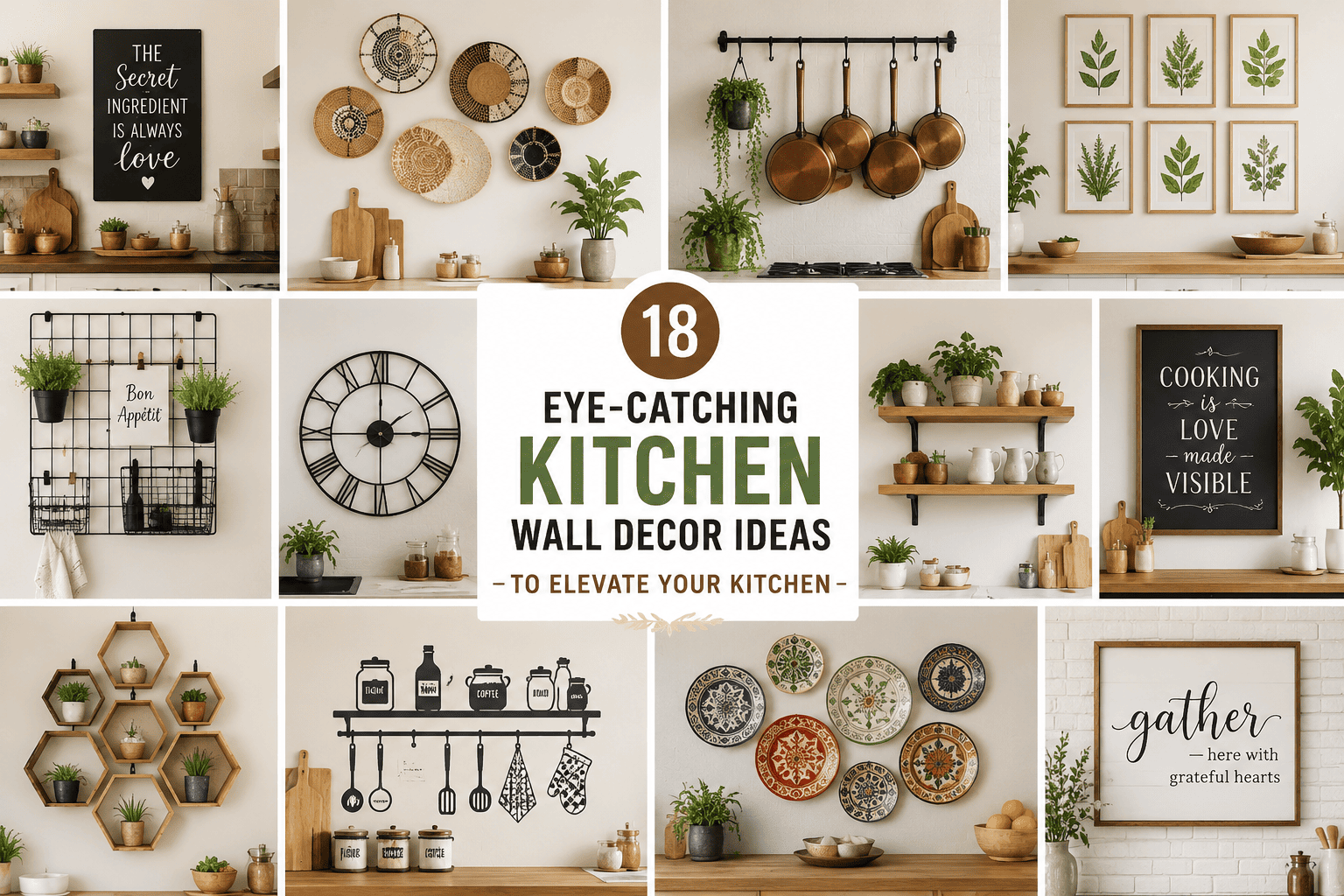
The best kitchen wall decor combines visual interest with the character of the room. Instead of filling blank walls with random accessories, consider textured finishes, sculptural pieces, statement lighting, murals, tonal colors, wall niches, meaningful objects, or one oversized focal point. For small kitchens, vertical details, mirrors, and texture can create impact without making the space feel crowded.
Introduction
Kitchen wall decor has moved far beyond the predictable combination of framed prints, floating shelves, decorative plates, and oversized clocks. Today, the most impressive kitchens treat their walls as part of the overall design rather than empty surfaces waiting to be filled.
The goal is not to decorate every inch. It is to create a wall that feels intentional through texture, lighting, color, architecture, art, and personality. Whether you have a spacious open-plan kitchen or a compact cooking area, the right kitchen wall decor can make the room feel more polished, welcoming, and uniquely yours.
The best approach is simple: choose fewer elements, give them enough breathing room, and make sure they connect naturally with the cabinets, countertops, flooring, and lighting.
The best kitchen wall decor combines visual interest with the character of the room. Instead of filling blank walls with random accessories, consider textured finishes, sculptural pieces, statement lighting, murals, tonal colors, wall niches, meaningful objects, or one oversized focal point. For small kitchens, vertical details, mirrors, and texture can create impact without making the space feel crowded.
1. Create a Quiet Luxury Kitchen Wall
A quiet luxury kitchen wall does not need dozens of decorative pieces. Its appeal comes from restraint, proportion, and beautiful materials.
Choose one strong feature such as a large ceramic piece, natural stone detail, textile artwork, or refined sculptural object. Surround it with plenty of negative space and keep the surrounding colors understated. This makes the chosen feature feel intentional rather than lost among competing decorations.
2. Turn an Empty Wall Into a Material Moment
Instead of placing decor on the wall, make the wall itself the decoration. This is especially effective when you want a sophisticated kitchen without adding clutter.
Consider combining limewash-style texture with natural wood, stone with fluted surfaces, or handmade-looking tiles with a smooth painted section. Keep the combination limited to two or three complementary materials so the result feels layered rather than busy.
3. Use Vertical Decor to Make the Kitchen Feel Taller
A narrow kitchen can feel even tighter when everything is arranged horizontally. Vertical kitchen wall decor creates the opposite effect by drawing attention upward.
Try an elongated mirror, tall artwork, a slim shelving column, or a vertical panel that reaches toward the ceiling. This does not physically increase the room’s size, but it can make the ceiling feel higher and the entire kitchen more spacious.
4. Add Sculptural Wall Decor
Flat artwork is not your only option. Sculptural wall decor introduces depth and creates interesting shadows as natural or artificial light changes throughout the day.
Look for carved wood, plaster reliefs, dimensional ceramic pieces, or abstract wall sculptures. A single substantial piece can work beautifully on a blank wall because it provides texture and movement without requiring several smaller decorations.
5. Make a Kitchen Mural the Focal Point
A mural can completely change the personality of a kitchen. Instead of a conventional framed print, use an artistic design across one uninterrupted wall.
A botanical illustration, abstract composition, hand-painted pattern, or oversized landscape can create an immersive focal point. For a balanced result, keep the remaining decor relatively simple so the mural remains the star.
6. Let Lighting Become Part of the Wall Decor
Lighting should not be treated as an afterthought. The right fixture can function as both illumination and decoration.
Sculptural sconces, picture lights, wall-mounted fixtures, or warm LED lighting around shelving can highlight artwork and architectural features. Layered lighting also changes how materials look in the evening, making textured walls and decorative objects feel richer.
7. Add One Unexpected Element
A memorable kitchen often contains one detail that breaks the predictable design formula. This could be an unusual ceramic sculpture, handmade object, vintage-inspired piece, or distinctive artwork.
The important part is not choosing something strange for the sake of being different. Choose something that reflects your personality or adds contrast. One unexpected element can make a carefully designed kitchen feel personal instead of showroom-perfect.
8. Turn Awkward Walls Into Design Features
Almost every kitchen has an awkward area: a narrow strip beside the refrigerator, a protruding column, an unused corner, or an oddly shaped wall.
Rather than trying to hide these areas, design around them. A narrow wall could hold a tall mirror or slim artwork. A structural column could be finished with complementary tile or textured material. When an awkward feature looks intentional, it becomes part of the architecture instead of a problem.
9. Try a Tonal Kitchen Wall
A tonal wall uses several shades from the same color family instead of relying on strong contrast. This creates depth while keeping the overall look calm.
For example, warm beige can be combined with creamy white and soft taupe, while muted terracotta can work with lighter clay and sandy tones. The result is subtle but sophisticated because the visual interest comes from variation in tone and texture rather than excessive decoration.
10. Decorate the Space Above the Counter Carefully
The wall area above a countertop can sometimes feel forgotten, particularly when it is not completely covered by cabinets.
A slim ledge, small artwork, or carefully selected decorative object can make this area feel finished. However, scale is important. Avoid anything bulky or difficult to clean, especially near cooking zones. Wall decor should enhance the kitchen without interfering with everyday tasks.
11. Add a Custom-Looking Wall Niche
A recessed wall niche instantly gives a kitchen a more architectural appearance. If you are renovating, a built-in niche can provide both display space and practical storage.
Use it for ceramics, a small plant, attractive bottles, or frequently used kitchen objects. Keep the arrangement edited rather than filling every available inch. The niche itself creates visual structure, so it does not require excessive decoration.
12. Let Texture Be the Main Character
Sometimes the strongest kitchen wall decor is not an object at all. A textured surface can provide everything the room needs.
Limewash-style finishes, microcement, fluted panels, textured plaster, and handmade-style tiles create visual depth because they respond differently to light. This approach is especially useful when you want a minimalist kitchen that still feels warm and detailed.
13. Combine Decoration With Function
Kitchen walls have to work hard, so why not combine beauty with usefulness?
An open shelf can display ceramics and cookbooks while keeping frequently used items accessible. A wall rail can hold utensils while contributing to the overall composition. A framed print can sit beside functional storage to create a balanced gallery-meets-utility wall.
The key is styling practical objects intentionally so they look like part of the design rather than clutter.
14. Bring Furniture-Like Elements Against the Wall
A completely empty wall does not always need artwork. A slim console, wall-mounted cabinet, built-in bench, or furniture-style storage piece can add depth and scale.
This approach works particularly well in kitchens connected to dining or living areas. The furniture element helps bridge the visual gap between cooking and living spaces while giving the wall a more layered appearance.
15. Create a Color-Blocked Wall
If a conventional accent wall feels too predictable, try color blocking. Use two complementary shades to create an intentional geometric area behind a shelf, dining corner, window, or architectural feature.
A painted arch, framed rectangle, or vertical color section can visually define an area without requiring physical partitions. Keep the shapes clean and repeat at least one of the colors elsewhere in the kitchen for cohesion.
16. Pair a Dark Wall With Warm Lighting
Dark walls can give a kitchen a dramatic and intimate atmosphere, especially when balanced with warm lighting.
Charcoal, deep blue, rich brown, or another moody shade can work beautifully when paired with warm sconces or under-shelf lighting. The combination is particularly effective in kitchens that double as entertaining spaces because it creates a more relaxed evening mood.
17. Use Personal Objects to Tell a Story
The most meaningful kitchen wall decor does not necessarily come from a home decor store. Personal objects can make a kitchen feel connected to real life.
Display a handmade ceramic piece, meaningful photograph, travel find, family artwork, or an object with sentimental value. These pieces do not need to match perfectly. In fact, slight differences in color, texture, and origin can create the collected look that makes a space feel authentic.
18. Design a Signature Wall
If you want your kitchen to have a memorable focal point, create one signature wall rather than decorating every wall equally.
Combine two or three elements such as textured material, artwork, warm lighting, and one personal object. The result should feel cohesive rather than crowded. Once the signature wall is established, keep the remaining walls quieter so the main feature has room to stand out.
Kitchen Wall Decor Ideas for Small Kitchens
Small kitchens benefit from editing rather than adding more decoration. Use tall and narrow elements to draw the eye upward, while mirrors can reflect light and create visual depth.
A single focal point is usually more effective than several small decorative areas. Texture is another smart choice because a textured wall adds character without taking up physical space. Keeping the palette tonal also allows the eye to move smoothly around the room instead of breaking the space into too many visual sections.
How to Make Kitchen Wall Decor Look Expensive
You do not necessarily need an expensive budget to create an elevated kitchen wall. Scale, spacing, texture, and lighting often matter more than price.
One well-proportioned statement piece can look more sophisticated than several inexpensive decorations. Leave negative space around important objects, repeat materials or colors already found elsewhere in the kitchen, and use warm layered lighting to bring out texture.
Most importantly, avoid buying decor simply because a wall looks empty. Empty space can be part of the design.
Kitchen Wall Decor Mistakes to Avoid
The biggest mistake is overcrowding. When every section of the wall contains something, there is no clear focal point.
Poor scale can create a similar problem. Tiny artwork can disappear on a large wall, while an oversized piece can overwhelm a narrow area. Mixing too many unrelated frame styles, colors, and materials can also make the kitchen feel chaotic.
Finally, remember practicality. Decor placed too close to cooking areas may collect grease or interfere with everyday movement. Beautiful kitchen wall decor should still work with the way the room is actually used.
Frequently Asked Questions About Kitchen Wall Decor
What can I put on a blank kitchen wall?
You can use artwork, sculptural pieces, textured finishes, a mural, a mirror, a wall niche, functional shelving, or meaningful personal objects. The best option depends on the wall’s size, location, and relationship to the rest of the kitchen.
How can I make my kitchen wall look expensive?
Focus on proportion rather than quantity. Choose one strong focal point, use complementary textures, maintain generous negative space, and add warm layered lighting. A carefully edited wall usually looks more sophisticated than an overcrowded one.
What is a good kitchen wall decor idea for a small kitchen?
Vertical artwork, slim mirrors, tonal colors, textured finishes, and one strong focal point work especially well in small kitchens. They add personality without taking up valuable space.
How do I decorate a kitchen wall without making it cluttered?
Start with one focal point and build around it only when necessary. Leave breathing room between elements, repeat colors or materials from the kitchen, and avoid decorating every empty section simply because it is available.
How can I add personality to my kitchen walls?
Use objects that have meaning to you, such as handmade ceramics, family photographs, travel finds, or original artwork. Personal pieces create character without requiring a large collection of decorative accessories.
Final Thoughts
The most successful kitchen decor does not come from filling every blank surface. It comes from making thoughtful design decisions about scale, texture, lighting, color, function, and personality.
Whether you choose a sculptural feature, textured wall, dramatic color, personal artwork, or a carefully designed signature wall, the goal is the same: make the kitchen feel intentional and connected to the people who use it.
A beautiful kitchen wall does not need more things. It needs the right things in the right place.

Leave a Reply